

 1 hour ago
7
1 hour ago
7
ARTICLE AD BOX
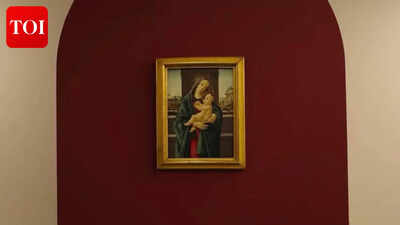
Master of the renaissance Sandro Botticelli's Madonna and Child
One Mother, Many Mother Tongues - The exhibition begins with a paradox. Everyone knows what they are looking at. A mother and a child.And yet, according to Prof. Naman Ahuja, no two viewers are ever looking at the same image."Each person will be able to read that image in their own way," he says. "I may think of Parvati and celebrate it like that, or I might look at it as Mansa, or Jeshta, or Revati. It depends on whichever community I'm coming from. But everyone recognises that it's a mother and child."This recognition and interpretation animates One Mother, Many Mother Tongues, the exhibition co-curated by Naman Ahuja and Andrea Anastasio, Director of the Italian Cultural Institute, Delhi.
Bringing together just 24 works, including 12 major masterpieces from India and Italy, the exhibition is less concerned with tracing a single iconographic lineage than with understanding how images travel, survive and acquire new meanings while appearing remarkably unchanged.Curators say that most importantly, this little jewel of an exhibition also forces us to see how certain ideas were reinforced through images. The curators have raised questions like: Is motherhood the only rubric under which the feminine is granted agency? Does society cast parenthood as only a feminine role? Are there any cultures that celebrate the baby girl or do artworks only show little boys with their mother-goddess? And are all ancient images of the feminine made only because they are, one or another kind of 'Mother Goddess'?

Andrea Anastasio, Director, Italian Cultural Centre
We understood that it would be a great opportunity to address issues that are very powerfully interesting in terms of visuality and artistry: Andrea AnastasioThe starting point was a masterpiece painting.
A few months ago, while discussing collaborations, Andrea Anastasio, director of Italian Cultural Institute and Naman Ahuja were discussing the image of Sandro Botticelli's Madonna and Child, which Andrea has brought to India. He recalls,"Immediately, Naman said, 'That would go so well with the Hariti (from Skarah Dheri).The remark lingered.And Andrea Anastasio reread an essay Ahuja had written a decade earlier, titled One Mother, Many Mother Tongues.
There, he found the conceptual framework for what would become the basis of this upcoming exhibition.Andrea says,"We immediately clicked on that. We understood that it would be a great opportunity to address issues that are very powerfully interesting in terms of visuality and artistry. But they're even more powerful when contextualized in the contemporary scenario we're going through."Andrea shares,"We wanted to show that despite these globalised things, despite the globalised iconography that could be approached as something uniform and simple, there is a complexity of identities that, through centuries, has survived and managed to be represented by the iconography itself."'Everyone is able to recognise the motif, and everyone reads that motif in their own way'The exhibition will make that argument through artworks.At one end stand will be the monumental Hariti from Skarah Dheri. From Italy come images of Mater Matuta, the Etruscan goddess associated with dawn, regeneration and the protection of children. Looking at them today, one cannot help but see distant echoes of Madonna and Child.
But that instinct, Anastasio suggests, reveals how deeply history conditions vision.Andrea says,""But very rarely do people in the Western world realise that this iconography is not Christian; it's much older. It's pre-Christian. And despite the fact that one might think there is only one Madonna and Child, in reality there is a huge variety that has survived, drawing from folk culture, regional stories and oral traditions that have been added to this iconography.
And that matches extremely well with the complexity and diversity of voices and identities that Naman addresses in his essay.
"Everyone is able to recognise the motif, and everyone reads that motif in their own way: Naman AhujaAs an art historian, Naman says, he was trained to reconstruct contexts, to identify a sculpture's original location, function and audience. Yet the mother-and-child motif seemed to resist those boundaries.Naman says,"Everyone is able to recognise the motif, and everyone reads that motif in their own way. Sometimes this flies in the face of what historians do because you've always been taught to contextualise the material. But it's so weird because you're just like, how many contexts does the same image survive in? The context can change. Right? And that's when I began to think that, what is this double highway that I'm studying, where it's one mother, and yet divergence.
And it's sort of making me think about that plurality and pluralism, diversity, and yet there is something unifying."This question will hang over the exhibition.How does a visual form survive the collapse of empires, the emergence of new religions and the transformation of entire societies?He says,"The same iconography, the same image has been used in the Roman Forum, then it's being used in the Renaissance. Religion can change and new societies can come and generate.
But that same image can reinvent itself for a completely different audience and a different community."Mater Matuta herself is evidence of that process. Long before Christianity, she embodied ideas of birth, protection and renewal. For Anastasio, her association with dawn is particularly revealing.Andrea explains,"Mater Matuta means the mother of the dawn. There is a complex, sophisticated and yet very direct link between giving birth, being a mother and at the same time resurrecting.
The dawn happens every day."'The difference between public sculptures and smaller, mass-produced sculptures intended for domestic spaces is a very important aspect of the exhibition'The exhibition also explores where images live. Monumental sculptures intended for public worship are juxtaposed with smaller works designed for domestic settings. The distinction is not merely formal.Andrea adds, "The difference between public sculptures - sculptures that were meant to be seen in public spaces - and smaller, mass-produced sculptures intended for domestic spaces is a very important aspect of the exhibition.
It helps viewers understand that there are a huge number of layers that travel with a single image. The private sphere allows endless possibilities, whereas the public image is, in a way, framed by public space.
"The exhibition is schedule from June end to August 8 at Humayun Museum.What to expect at the exhibition-The enormous Hariti from Skarah Dheri (Peshawar District) from the Government Museum and Art Gallery, Chandigarh will form the focus of one part of the exhibition.
Being one of the few dated sculptures from Gandhara, it is critical for art history.-Another Kushan period Hariti from the Mathura Museum is paired with one from Andhra Pradesh-showing how widespread this cult was by the second century AD. From the forgotten and now dismembered ancient temple to skandamatas at Thaneshwar near Udaipur, comes a masterpiece of the sixth century. Like it, there are objects from various sites scattered in remote places that have found their way to provincial Museums that most people don't visit.-From Italy come a variety of ancient Etruscan images of the Mater Matuta - the protector goddess of children, the symbol of the new dawn, of regeneration. Like the Indian Matrikas, and Hariti, Mater Matuta also morphed into other goddesses in her own society. These images became the model for the cult of the divine mother in the Roman Forum, they conflated with regional goddesses in Rhineland (central Europe and Gaul (France) and even with ancient Byzantine Christian Cultures.
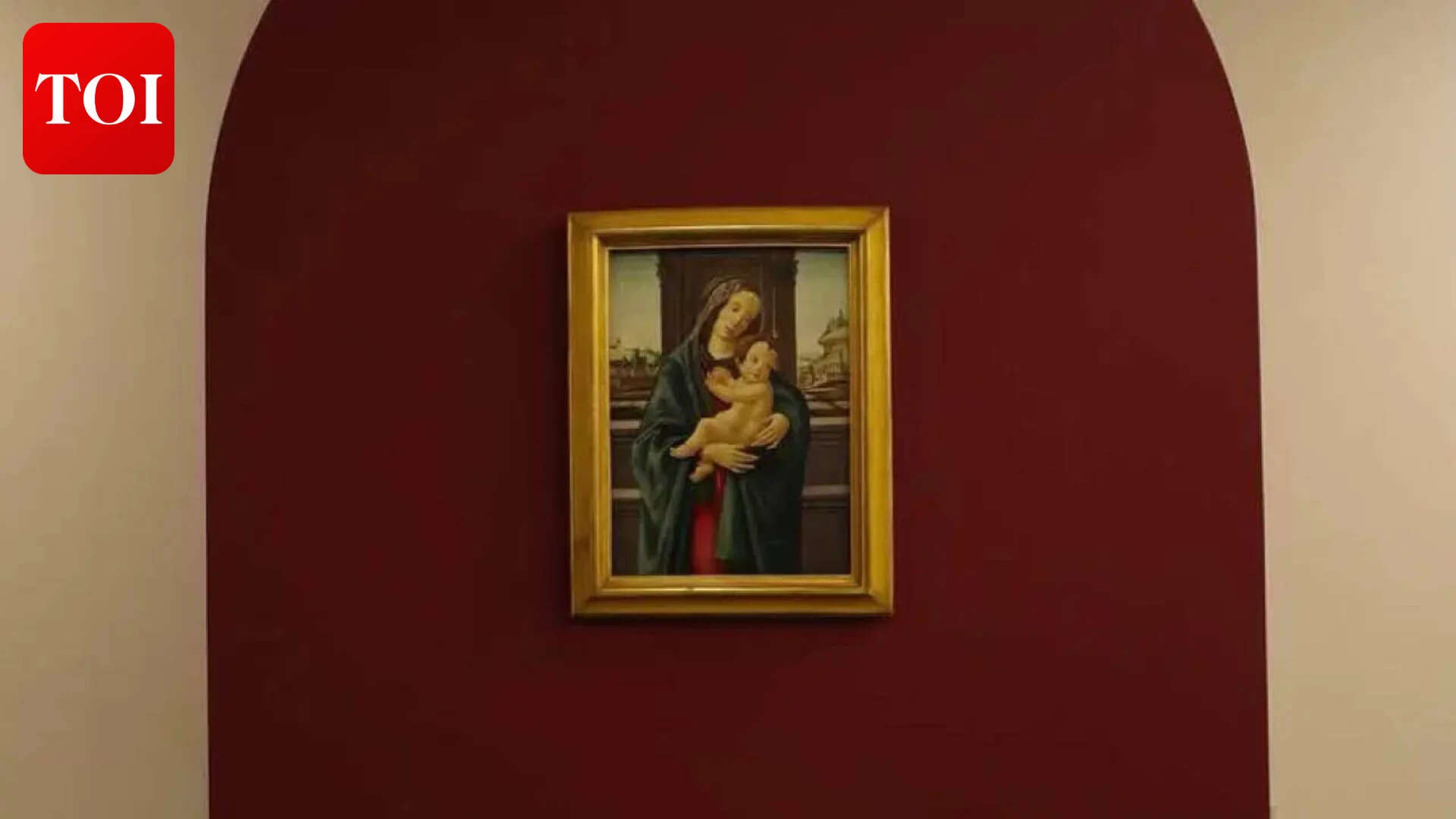
Master of the renaissance Sandro Botticelli's Madonna and Child







 English (US) ·