

 1 hour ago
4
1 hour ago
4
Parrying the questions raised by the Opposition regarding the reported central role played by Pakistan in mediating between the U.S. and Iran, External Affairs Minister S. Jaishankar on Wednesday termed the neighbouring country a “dalal” and said that it had been playing this role since 1981.
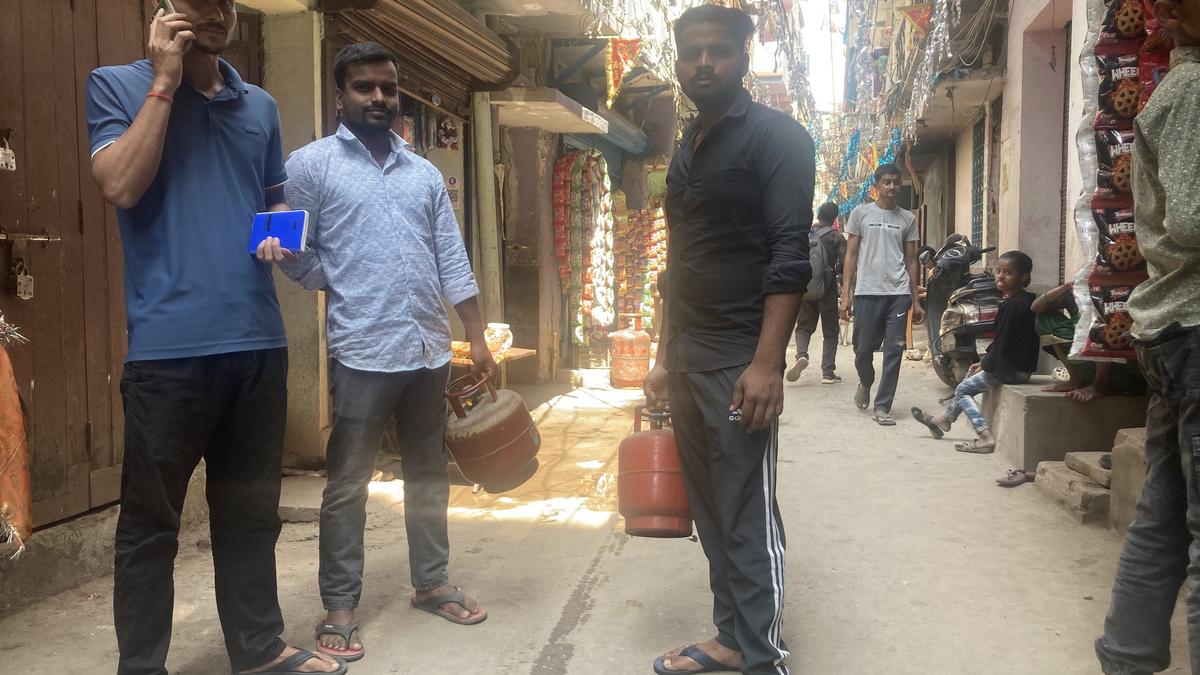
He was addressing an all-party meeting chaired by Defence Minister Rajnath Singh on the recent developments in West Asia and their impact on India. Union Petroleum Minister Hardeep Puri also assured the gathering that India continued to maintain a strategic petroleum reserve of 74 days. While the country was not facing any imminent energy crisis, he noted that the supply cycle for Liquified Petroleum Gas (LPG) had extended from 20 days to 45 days. This, he said, should stabilise soon.
Responding to criticism over India’s “silence”, Mr. Jaishankar asserted that with nearly one crore Indians living in West Asian countries, it was crucial for India’s strategic and economic interests to maintain a balanced position. India, he said, remained in a unique position, able to communicate with all sides.
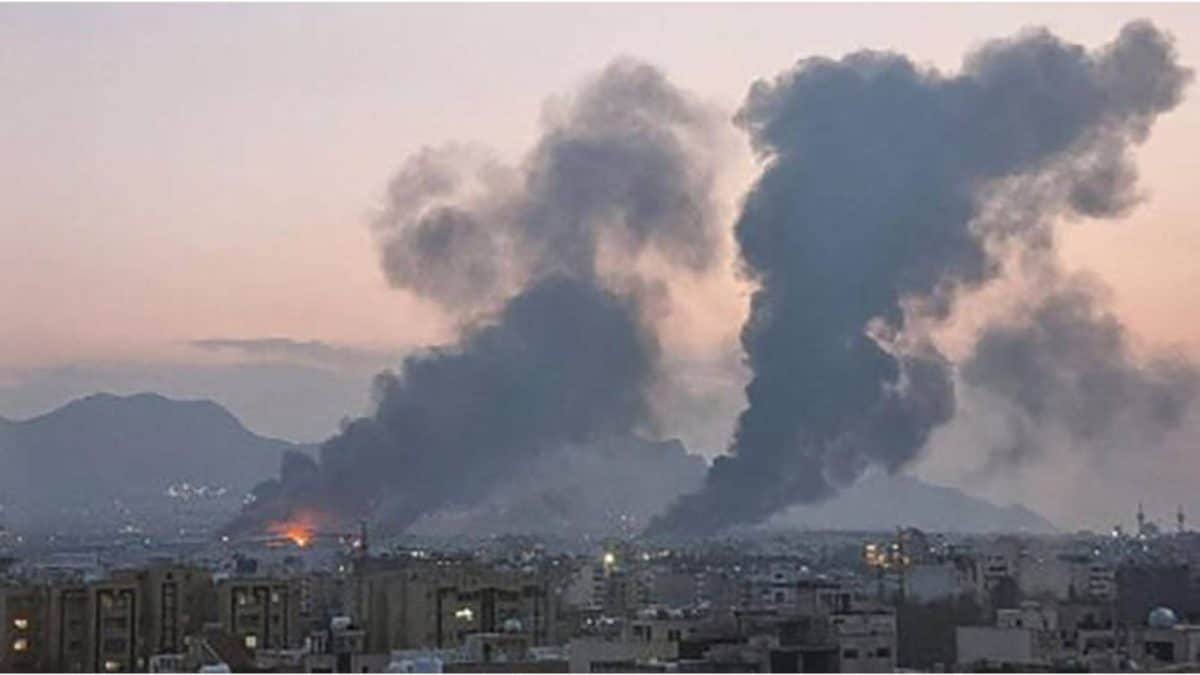
Iran-Israel war updates on March 25, 2026
Citing Prime Minister Narendra Modi’s recent talks with Iranian authorities, he said two Indian ships had been allowed to sail through the Strait of Hormuz, while 18 others still in the region would soon set sail for Indian shores. He said that the U.S. continued to be India’s biggest trading partner, while Israel was a key technological partner.
The External Affairs Minister also said that the U.S. sanctions on India had a long history and that previous administrations in Washington had deployed them in past. While the Opposition “shamed” the government, he said that India’s import of Russian oil never completely stopped.
Barring the Trinamool Congress, all Opposition parties attended the meeting. Their questions covered India’s silence on the assassination of Iran’s late Supreme Leader Ayatollah Ali Khamenei; the timing of Prime Minister Narendra Modi’s visit to Tel Aviv — two days before the U.S. and Israel launched strikes on Iran; Pakistan’s role as a mediator; the rise in LPG prices due to the ongoing crisis; and India’s commitment to the Non-Aligned Movement.

The meeting began with a 15‑minute presentation by Foreign Secretary Vikram Misri, after which Mr. Jaishankar and Mr. Puri fielded most of the Opposition’s questions. The Other NDA leaders present did not intervene.
Congress Rajya Sabha member Mukul Wasnik opened the questioning by highlighting Pakistan’s central role as a mediator in the crisis. According to sources, he said that the Manmohan Singh-led United Progressive Alliance government had succeeded in isolating Pakistan globally after the 26/11 attacks, whereas today Pakistan occupied a prominent position in global diplomacy.
Mr. Jaishankar, in response, traced the history back to 1971, during the India‑Pakistan conflict, when Pakistan brokered communication between the U.S. and China in an effort to corner India. If Pakistan’s current mediatory role is viewed as a setback for Indian diplomacy, he reportedly said, “then the setback began in 1981, when Pakistan began working as interlocuter between the U.S. and Iran”.
Mr. Jaishankar also pointed to Pakistan’s role in mediating talks between the U.S. and the Taliban in 2004. “We don’t run around asking countries what kind of brokerage (dalali) we can do,” Mr. Jaishankar reportedly said.
Senior CPI(M) leader John Brittas asked whether the government had adopted “silence as statecraft”, pointing out that while India was quick to criticise Iran’s “egregious” attack on the West Asian countries, no such comment had been made when the U.S. and Israel first struck Iran. Speaking in a similar vein, AIMIM leader Asaduddin Owaisi said India was “silent on the war”, “silent on Ayatollah Khamenei’s assassination”, and “silent when the U.S. torpedoed an Iranian ship in the Indian Ocean”.
Mr. Brittas also flagged the long-term impact of the crisis on LNG supply lines from Qatar, urging the government to present a White Paper on the broader economic implications. Qatar supplies 41% of India’s LNG requirement.
Samajwadi Party leader Dharmendra Yadav and AAP leader Sanjay Singh questioned the timing of the Prime Minister’s visit to Tel Aviv on the eve of the conflict. NCP (Sharad Pawar) leader Supriya Sule asked what “tangible benefit” India had gained by aligning with the U.S. and Israel. Sarfraz Ahmed of the Jharkhand Mukti Morcha asked whether India still considered itself part of the Non-Aligned Movement.
Speaking to presspersons after the meeting, senior Congress leader Tariq Anwar described it as “unsatisfactory.”
“We sought clarification from the government, but the meeting was unsatisfactory,” he said, reiterating the Congress’s demand for a structured debate in both Houses of Parliament.
Mr. Brittas added, “All the Opposition leaders who spoke said that the government should have taken a position on the unilateral attack by the United States against a sovereign, independent country, Iran.”




 English (US) ·