

 1 hour ago
6
1 hour ago
6
ARTICLE AD BOX
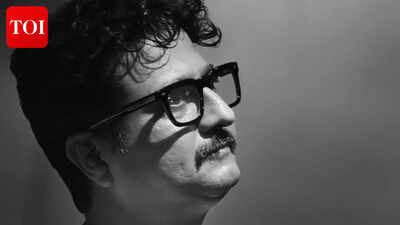
Fresh from the success of 'Tumbadchi Manjula' and his much-talked-about appearance alongside Bobby Deol in 'Bandar', acclaimed actor and poet Jeetendra Joshi is gearing up for another exciting project. The versatile performer will next be seen in 'Mardini', a film backed by actor-producer Shreyas Talpade.Known for effortlessly moving between commercial entertainers, content-driven cinema, theatre, and poetry, Joshi remains one of Marathi cinema's most respected voices. In an exclusive conversation with ETimes, the actor opened up about choosing 'Mardini', his character in the film, the evolving Marathi film industry, social media trolling, and the role that transformed him as a person.
Why 'Mardini' was an easy yes
For Joshi, saying yes to 'Mardini' was not just about the script but also about a friendship that spans nearly three decades."'Mardini' is a completely different genre. First of all, I liked the storyline. It's a commercial film, and secondly, it's my friend's film," he said, recalling his long association with Shreyas Talpade.The actor fondly remembered meeting Talpade soon after arriving in Mumbai from Pune."It was December 2, 1997. When I came to Mumbai from Pune, he was the first person from Mumbai whom I met. Since then, we have remained friends.
We have seen each other's journeys closely. One day he called me and narrated the story. I thought it was a good story and a significant role, so I agreed to do it.
An aggressive cop with shades of grey
In 'Mardini', Joshi steps into the shoes of a police officer unlike the conventional heroic cops often seen on screen.Jeetu said, "I am playing a cop who has an aggressive side to him. He doesn't particularly like his subordinate, played by Abhijeet Khandkekar.
My character is very aggressive and at times even obnoxious in his behaviour." The actor revealed that the character is careless, difficult, and unconcerned about hierarchy. "He doesn't care much about his seniors or his juniors. I have tried my best to make the character look different and feel different.
"For Joshi, screen time has never mattered as much as impact. "Even if it's just one or two scenes, I like having fun with the role.
In 'Kranti Jyoti' I had only one scene, but people liked it. In 'Raja Shivaji' there were just three or four scenes. I always try my level best to bring something unique to every character."
Jeetendra Joshi on theatre and cinema
Having earned acclaim on both stage and screen, Joshi believes comparing theatre and cinema is difficult because each medium tests an actor differently."On stage, there are no retakes. The audience is sitting anywhere between ten feet and two hundred feet away from you, and you are performing live in front of them.
Whatever happens, happens in that moment." Cinema, he says, demands a completely different kind of discipline. "You don't shoot chronologically. You might shoot scene number 15 first, then scene 67, then scene 1. You have to keep the graph of the film and the arc of your character in mind all the time.
" Yet, what fascinates him most is the permanence of cinema. "A play exists in the memory of the audience and the performers.
Once it is done, it is gone. But films remain forever," he added.
The role that changed Jeetendra forever
Among the many memorable characters he has portrayed, one role stands above all others in shaping him personally. The 'Bandar' actor confessed, "As a person, the character that changed me the most was Tukaram. It affected me deeply, obviously in a positive way." Playing the revered saint poet gave him a fresh perspective on life. "The experience of portraying Tukaram Maharaj and understanding what he stood for had a profound impact on me.
It changed the way I looked at many things."
Marathi cinema deserves more screens.
The conversation inevitably turned towards Marathi cinema's long-standing struggle for adequate screens and show timings.Joshi believes Marathi films deserve greater visibility but insists that audience support remains the biggest catalyst for change. "Absolutely, Marathi cinema deserves more screens. But things will change only if audiences continue to grow," he stated.
Pointing to recent box-office trends, he noted that several Marathi films have found audiences despite limited screenings. "We saw that with 'Tumbadchi Manjula' as well.
There may have been fewer screens and only one show a day at some places, but theatres still had people coming in. Audience is king." According to him, exhibitors will eventually have to respond if viewers continue backing quality regional cinema.
Marathi cinema is still experimental states Jeetendra Joshi
Contrary to the perception that Marathi cinema has become overly formulaic, Joshi feels the industry continues to push creative boundaries. "No, I don't think Marathi cinema has become safer," Jeetu feels. He cited films like 'Teeghi' and 'Sabar Bonda' as examples of storytellers exploring unconventional themes while filmmakers like Hemant Dhome have successfully balanced commercial appeal with meaningful content.
"We need all kinds of films. Different audiences are following different trends, and that's why everything is moving forward."
Why the poet in Jeetendra Joshi is more honest than the actor
Apart from acting, Joshi is also celebrated for his poetry. Interestingly, he believes the poet within him is more truthful than the performer. "The poet is definitely more honest." Explaining the difference, he said acting fundamentally involves portraying someone else. "When I play a rapist, it doesn't mean I am one.
When I play a killer, it doesn't mean I kill people. Acting is about portraying someone else." Poetry, however, emerges directly from personal experience and emotion.
"I write only when I genuinely feel like writing. It comes directly from within. So yes, poetry is the more honest version of me" he admited.
Success doesn't simplify life, feels Jeetendra Joshi
Having witnessed both highs and lows throughout his career, Joshi has developed a balanced perspective on success.
"Life is complicated whether you are successful or not. It's not success that makes life easy or difficult. Life itself is complicated." He believes success mainly changes how others perceive you. "What success does is make your family, friends and neighbours happy. People start feeling confident about you.
" Ultimately, he sees success and failure as inseparable. "If you can reach a stage where you are not overly affected by either happiness or sorrow, then you have found your own balance."
Jeetendra Joshi doesn't take trolling seriously
In an era dominated by social media outrage and online negativity, Joshi remains unfazed by trolls. "I think there are two ways of looking at social media. People who want to make it toxic will make it toxic. People who want to use it for the betterment of society will use it that way." While acknowledging that fake accounts and online abuse have become common, he refuses to give trolls any importance. "I don't take trolling seriously at all.
I take my audience seriously. I take genuine feedback seriously, whether it is positive or negative. But trolling? Forget it. It's a pointless thing." As he prepares for the release of 'Mardini', Jeetendra Joshi continues to embody the rare balance of a performer who thrives in commercial cinema, embraces meaningful storytelling, and remains grounded by the perspective of a poet—qualities that have made him one of Marathi cinema's most admired artists.





 English (US) ·