

 1 hour ago
3
1 hour ago
3

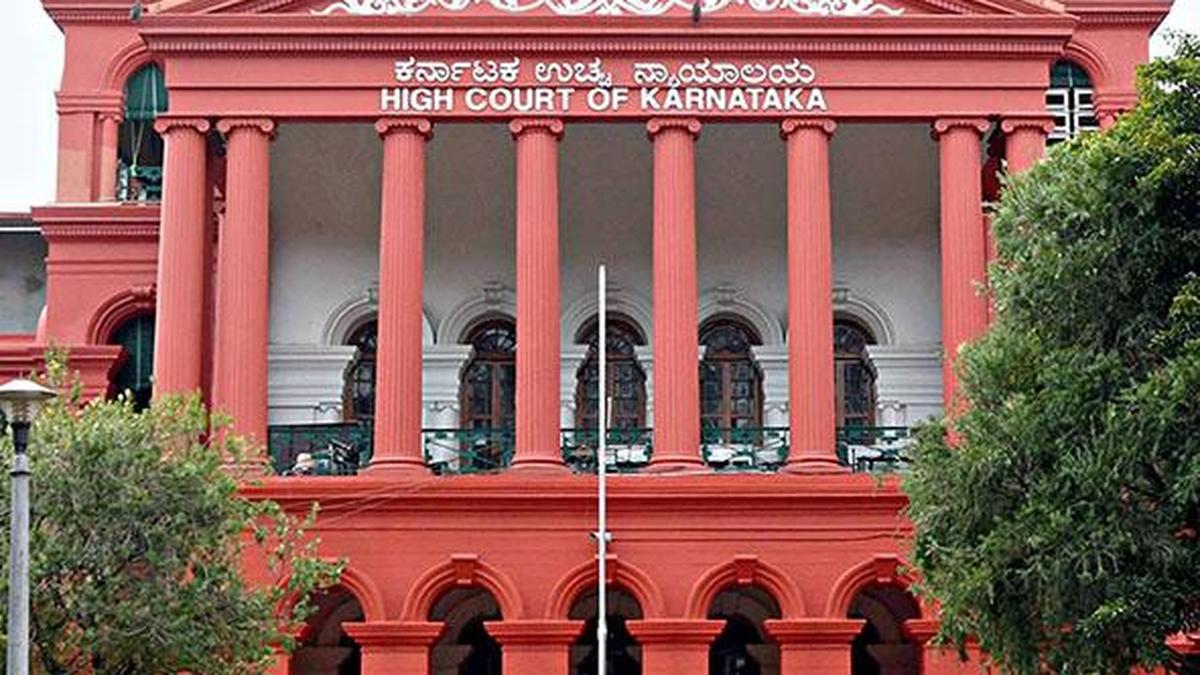
Expressing serious concern over recent incidents of involvement of inter-State migrant labourers, engaged in domestic or construction works, in heinous crimes at their workplaces, the High Court of Karnataka has suggested that the State government formulate guidelines for mandatory police verification of migrant workers employed in households and private establishments.
A structured and mandatory police verification mechanism, similar to tenant verification systems, with simplified online registration portals accessible to the public, the court said.
Pointing out that the house owners or employers, in many cases, engage the migrant workers without conducting any background verification, identity confirmation, or registration with the authorities concerned, the court said this situation highlights the urgent need for preventive safeguards through strict enforcement of existing labour and criminal regulatory mechanisms.
Four convicted
A Division Bench comprising Justice H.P. Sandesh and Justice Venkatesh Naik T. made these observations while convicting four migrant workers in the 2009 triple murder case of R.T Nagar and setting aside the trial court’s 2016 verdict of acquitting the accused.
The accused persons, in the 2009 case, were from West Bengal, and had come to Bengaluru in search of job. A woman among them had entered the victim’s house as domestic help, conspired with her husband and others, committed triple murder by strangulation, robbed gold and silver valuables, and fled. Four of them were arrested after 20 months and one was still absconding, the Bench pointed out.
The Bench imposed imprisonment for life to all four, Deepak Haldar, his wife Suchitra Haldar, their accomplices Mohammed Sarba, alias, Raj and Bidan Shikari.
Suchitra had joined as a domestic help in the house of Purushotham Lal Sachdev, 71, who was a retired professor of Indian Institute of Science and was staying in his outhouse along with her husband, Deepak. The accused had killed Sachdev, his wife Rita Sachdev, 62, and their son Deepak Sachdev, 35.
Not to stigmatise
However, while strengthening preventive mechanisms, it is equally important to ensure that migrant workers are not stigmatised as a class, since criminal liability is individual in nature and the constitutional guarantees under Articles 14 and 21 of the Constitution of India protect the dignity and equality of all persons, the Bench said.
Meanwhile, the Bench said that widespread public awareness campaigns through print, electronic, and social media platforms should be undertaken to educate citizens about safe hiring practices.






 English (US) ·