

 1 hour ago
3
1 hour ago
3
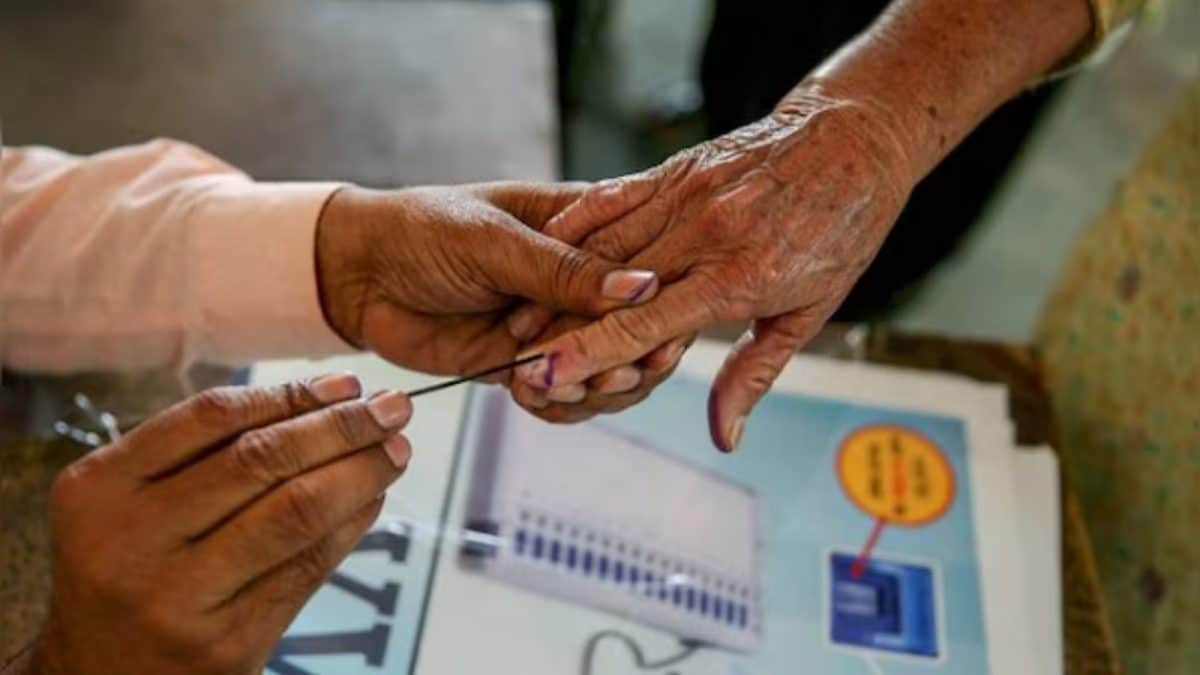
With Kerala gearing up for its 2026 Assembly elections, all the three major political fronts in the State are adapting their strategies in response to the recent local body election results.
In the civic body polls, the Left Democratic Front (LDF) suffered a blow.

Though the LDF, led by the Communist Party of India (Marxist), has historically held a strong position in local governance in the State, the 2026 local elections saw the Congress-led United Democratic Front (UDF) consolidating its support base which it had lost to the Left back in 2016.
Key alliances in Kerala
The political scene in Kerala is currently characterised by a three-way contest among the LDF, the UDF and the National Democratic Alliance (NDA). Let’s have a look at each coalition and their political ambitions:
1. Left Democratic Front (LDF)
LDF is primarily led by alliance partners Communist Party of India (Marxist), or CPI(M), and the Communist Party of India (CPI), among other parties. The front has an ideological foundation rooted in leftist principles and has historically focused on issues such as social justice, land reforms and workers’ rights.
The LDF is striving to secure a historic third consecutive term in office, which has never happened in Kerala's political history. If their aspirations are realised, it would stand in contrast to the State’s typical pattern of alternating between different ideological parties, which was, however, broken in the 2021 elections when the LDF retained power.
The key constituents of the LDF are:
- Communist Party of India (Marxist)
- Communist Party of India
- Kerala Congress (Mani)
- Nationalist Congress Party
- Indian Socialist Janata Dal
- Janadhipathiya Kerala Congress
- Rashtriya Janta Dal
- Congress (S)
- Indian National League
- Kerala Congress (Balakrishna Pillai)
- National Secular Conference
- Revolutionary Socialist Party (Leninist)
2. United Democratic Front (UDF)
UDF is led by the Indian National Congress (INC) and includes several regional parties, notably the Indian Union Muslim League (IUML). The UDF has traditionally been seen as more centrist with a focus on inclusive development.
Following a strong showing in the 2025 local body elections, the coalition is posing itself as the principal challenger to the LDF.
Some of its key constituents are:
- Indian National Congress
- Indian Union Muslim League
- Kerala Congress (Joseph)
- Revolutionary Marxist Party of India
- Kerala Congress (Jacob)
- Revolutionary Socialist Party (RSP)
- Communist Marxist Party Kerala State Committe
- Trinamool Congress (Kerala unit)
3. National Democratic Alliance (NDA)
The National Democratic Alliance is led by the Bharatiya Janata Party (BJP) and represents a coalition of parties. The NDA’s rise in Kerala has been closely watched, with the BJP expanding its influence in a State traditionally dominated by the LDF and the UDF.
Despite securing just under 15% of the vote share and falling significantly behind its competitors, the NDA gained control of several gram panchayats, two municipalities, and for the first time, the Thiruvananthapuram City Corporation.
The key constituents of NDA include:
- Bharatiya Janata Party (BJP)
- Bharath Dharma Jana Sena (BDJS)
- Kerala Kamaraj Congress
- Janathipathiya Samrakshana Samithy (Thamarakshan Faction)
- Twenty20 party
Oppostion leaders to watch for
As Kerala’s 2026 Assembly elections approach, the Opposition’s front bench brims with leaders ready to turn the political tide.
At the forefront is V. D. Satheesan, Congress’s Leader of the Opposition, rallying with fierce critiques of the ruling LDF. Alongside him, other prominent leaders from the UDF include Ramesh Chennithala, Sunny Joseph, P. K. Kunhalikutty, Shashi Tharoor and K. Sudhakaran, among a host of others.
BJP’s Rajeev Chandrashekhar, the party’s State president, is a key figure who is aiming to rebuild the NDA’s momentum. The party is leaning on his organisational experience and national-level visibility to strengthen its appeal in Kerala.


 English (US) ·