

 6 days ago
8
6 days ago
8
ARTICLE AD BOX
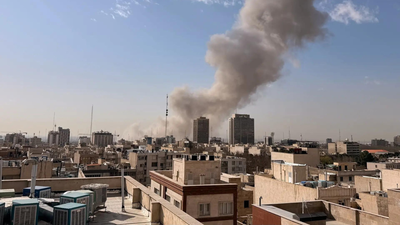
Hours after the killing of its supreme leader Ayatollah Ali Khamenei was confirmed and it vowed revenge, Iran signalled late Sunday that it was ready to de-escalate the conflict that has spread to West Asia, threatening instability in the region.
In an interview to Atlantic Magazine, US President Donald Trump said Iran's new leadership wants to talk to him and that he has agreed. "They want to talk, and I have agreed to talk, so I will be talking to them. They should have done it sooner. They should have given what was very practical and easy to do sooner. They waited too long," Trump said in the interview from his Florida residence.
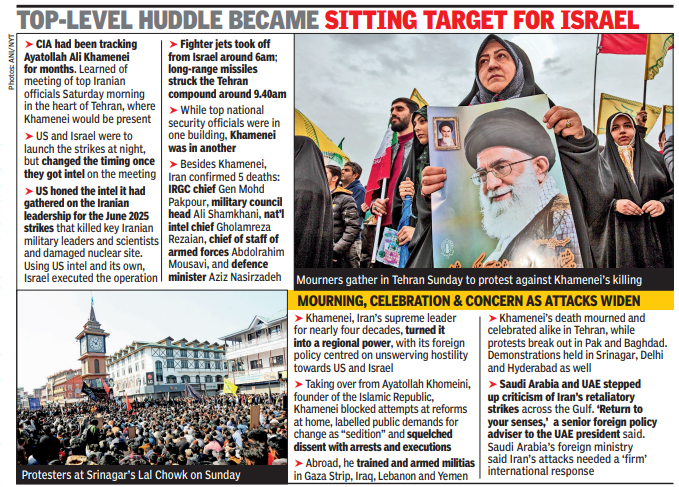
A White House official, speaking on condition of anonymity, said Trump says he is "eventually" willing to talk, but for now the military operation "continues unabated".
Earlier, a statement by Oman's foreign ministry, which has been mediating US-Iran talks, said Tehran is open to any serious efforts at de-escalation. Omani foreign minister Badr Albusaidi also urged a ceasefire on a call with his Iranian counterpart, Abbas Araghchi, after Tehran launched a second day of strikes in response to ongoing US-Israeli air raids. "It's moving along rapidly," Trump was quoted as saying in an interview with Fox News.
He later claimed US had sunk nine Iranian ships. "Nobody can believe the success we're having, 48 leaders are gone in one shot." Iran confirmed the death of five high-ranking figures, including the country's defence minister, and chief of staff of armed forces.The first US casualties were also confirmed by Pentagon on Sunday: three soldiers killed, while five others were severely wounded in the joint attack. Israel's rescue services said eight people were killed and 28 wounded in a strike that hit a synagogue in the central town of Beit Shemesh, bringing the overall death toll in the country to 10. UAE said three people had died in Iranian strikes, while 58, including an Indian national, were injured. agencies






 English (US) ·