

 1 hour ago
5
1 hour ago
5
ARTICLE AD BOX
Last Updated:March 03, 2026, 13:46 IST
Kintoor is known as the ancestral home of Syed Ahmad Musavi who was the grandfather of Ayatollah Ruhollah Musavi Khomeini, the leader of Iran’s 1979 Islamic Revolution.


Kintoor is located in Barabanki, Uttar Pradesh. (Photo Credit: Instagram)
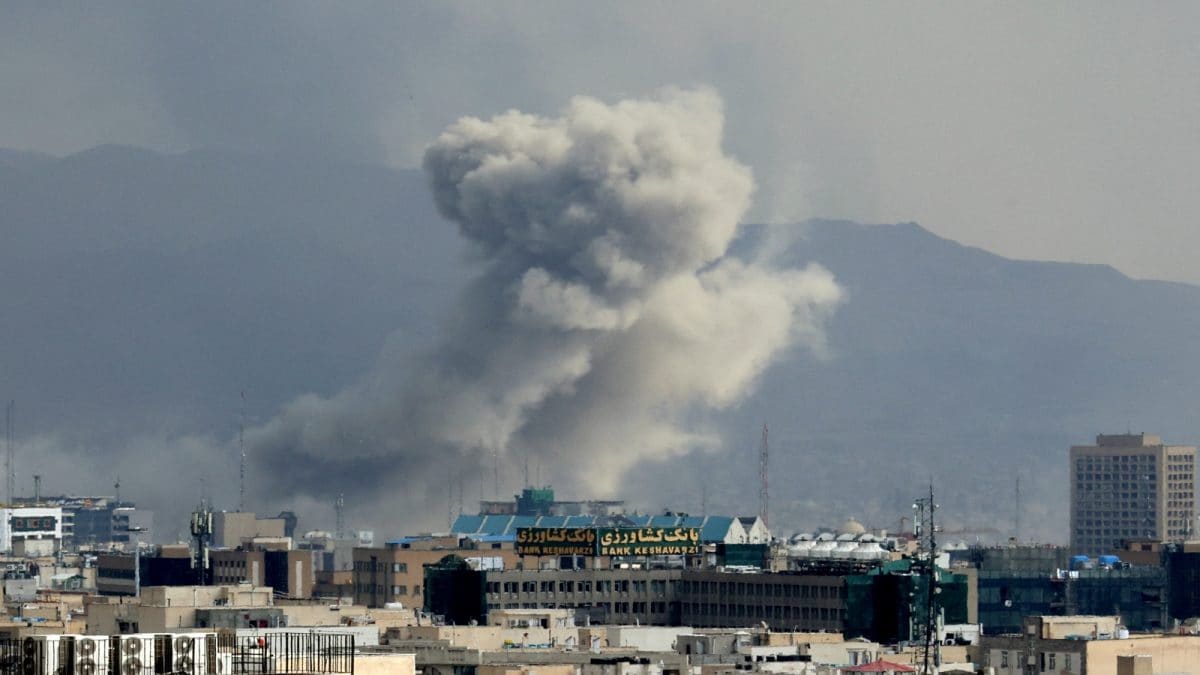
Iran’s Supreme Leader Ayatollah Ali Khamenei was killed in a joint strike by Israel and the United States. US President Donald Trump was the first to announce the development and said it offered Iranians their “greatest chance" to “take back" their country. Iranian media later confirmed the news.
In Tehran, crowds gathered in public squares and held placards with Khamenei’s image. At the same time, videos circulating online showed some people dancing, bursting crackers and honking car horns in celebration. But in Kintoor, a village about 70 kilometres from Lucknow in Barabanki district, the atmosphere turned heavy. For residents there, the developments in Iran are tied to family history.
Why UP’s Village Kintoor Suddenly In Spotlight Amid US-Iran Tensions
Kintoor, located along the banks of the Ghaghara river, is known as the ancestral home of Syed Ahmad Musavi who was the grandfather of Ayatollah Ruhollah Musavi Khomeini, the leader of Iran’s 1979 Islamic Revolution and founder of the Islamic Republic.
When news of Khamenei’s death spread through social media, prayers were offered in local mosques. According to a report in India Today, families gathered in courtyards and elders revisited stories passed down through generations. Saiyyadwara was once home to hundreds of Musavi families. Today, only a handful of households remain.
A video shared by Republic Bharat shows the lanes of the village where Musavi once lived before leaving India for West Asia, a journey that would eventually shape Iran’s political future.
70-year-old Syed Nihal Kazmi who has a framed photograph of Khomeini hanging in his drawing room told India Today, “Our connection is not merely emotional. It is genealogical."
Who Was Syed Ahmad Musavi ‘Hindi’?
The story connecting Kintoor to Iran begins nearly two centuries ago. Syed Ahmad Musavi was born in this village in Barabanki district in the early 1800s, at a time when British control in India was steadily expanding. He was known as a religious scholar who supported reform within the Muslim community during a period of social and political change.
In the 1830s, he left India and travelled westward. His journey first took him to Najaf in present-day Iraq where he spent several years in religious study and pilgrimage including visits to important Shia shrines. Later, he moved to the Iranian town of Khomeyn where he eventually made his home.
Even after settling abroad, he continued to identify strongly with his Indian roots and adopted the surname “Hindi" as part of his name. In Iran, he married three times and became father to five children. One of them, Mostafa, would later become the father of Ruhollah Khomeini who was born in 1902.
Syed Ahmad Musavi died in 1869 and was laid to rest in Karbala. Although he did not live to see the dramatic changes that would unfold in Iran decades later, his religious influence remained within the family. That legacy would eventually shape the thinking of his grandson who went on to lead the 1979 Islamic Revolution.
The Revolution That Changed Iran
In 1979, Khomeini led the Islamic Revolution that overthrew Shah Mohammad Reza Pahlavi and ended centuries of monarchy in Iran. He became the country’s first Supreme Leader and established the Islamic Republic. Under his leadership, Shiite clerics were placed at the centre of governance.
Supporters viewed him as a figure who resisted foreign interference. Critics argued that he built a strict religious state. After his death in 1989, Ali Khamenei took over as Supreme Leader who strengthened the clerical establishment and expanded the influence of the Revolutionary Guard.
What Happens After Khamenei?
With Khamenei’s death, questions about Iran’s political future have grown louder. The task of selecting the next Supreme Leader falls to the 88-member Assembly of Experts, a body of senior clerics. But there is no clear successor at present.
Under Iran’s constitution, a temporary three-member leadership council now handles responsibilities, CNN reported. It includes President Masoud Pezeshkian, judiciary chief Gholamhossein Mohseni Ejei and senior cleric Alireza Arafi. Parliament Speaker Mohammad Bagher Ghalibaf has said the government had “prepared ourselves for these moments" and “planned for all scenarios."
At the same time, Israeli strikes have killed several senior military leaders. As per the report, the armed forces chief of staff, Maj. Gen. Abdolrahim Mousavi; the commander of the Islamic Revolutionary Guard Corps, Maj. Gen. Mohammad Pakpour; and the secretary of Iran’s Defense Council, Ali Shamkhani, have all died.
Unlike in 1989, when Khamenei was named successor within a day of Khomeini’s death, the current transition may take longer due to ongoing tensions.
Location :
Delhi, India, India
First Published:
March 03, 2026, 13:46 IST
News india Ayatollah Ali Khamenei Death Spotlights Lucknow Suburb iran leader attack
Disclaimer: Comments reflect users’ views, not News18’s. Please keep discussions respectful and constructive. Abusive, defamatory, or illegal comments will be removed. News18 may disable any comment at its discretion. By posting, you agree to our Terms of Use and Privacy Policy.
Read More






 English (US) ·