

 1 hour ago
4
1 hour ago
4
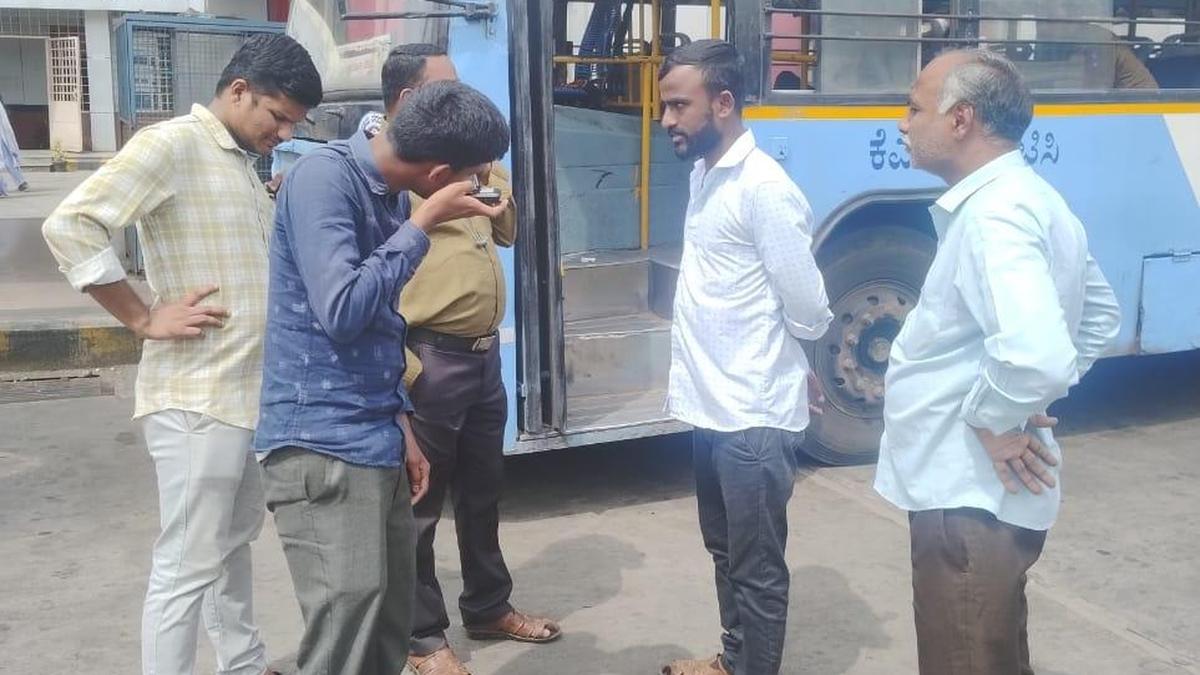
The Karnataka State Road Transport Corporation (KSRTC) will soon implement the long-awaited Vehicle Tracking and Monitoring System (VTMS), which will enable passengers to track KSRTC buses in real time through a newly-developed mobile application.
According to officials, commuters will be able to monitor the live movement of over 8,000 KSRTC buses, allowing them to plan their journeys more efficiently and reduce uncertainty during long waits at bus stops. As part of the project, a dedicated Command and Control Centre will also be established to manage and monitor VTMS operations.
“KSRTC has recently floated a tender to implement an advanced VTMS across its fleet, marking a major step towards modernising bus operations, improving passenger safety, and strengthening operational oversight,” a senior official told The Hindu.
As per the tender document, VTMS will be an integrated, AIS-140-compliant platform designed to track buses in real time, monitor adherence to routes and schedules, generate operational alerts, and respond to emergencies through panic buttons installed inside buses. The system will combine vehicle-mounted hardware, backend software applications, and a Central Control Station (CCS) to enable round-the-clock monitoring.
Emergency buttons
“KSRTC currently operates a fleet of 8,305 buses, of which 1,286 already have AIS-140-certified vehicle tracking devices and emergency buttons. Under the proposed project, VTMS will be deployed across the entire fleet, including existing and future vehicles, with provisions to integrate already installed devices,” the official explained.
Apart from the existing buses, KSRTC plans to induct 735 new buses, all of which will also be brought under the VTMS framework.
VTMS at a glance
Coverage: Entire fleet of 8,305 buses (including 735 upcoming buses)
Control centre: Mysuru Road Satellite Bus Station, Bengaluru
Key features:
Real-time bus tracking via mobile app
Estimated arrival and departure times
Route and schedule monitoring
Panic buttons for emergencies
Passenger information through displays and announcements
SOURCE: KSRTC
“Each bus will be fit with a Vehicle Tracking Unit (VTU) connected to GNSS/IRNSS satellites and cellular networks. These units will transmit location data at fixed intervals every 10 seconds for city services and every 60 seconds for other services along with alerts on speeding, route deviation, unauthorised stoppages, bunching of buses, and missed trips. The system is designed to function even in low-connectivity areas by storing data offline and transmitting it once network connectivity is restored,” the official added.
A key safety feature of the project is the installation of at least nine panic buttons per bus, eight for passengers and one for the driver. According to officials, when pressed, these buttons will immediately send emergency alerts and live location data to the CCS and the State backend, with SMS fallback in the absence of mobile data.
Central Control Station
The Central Control Station, which will be located at the Mysuru Road Satellite Bus Station in Bengaluru, will function as the nerve centre of the VTMS. It will facilitate live vehicle monitoring, accident and breakdown management, passenger information dissemination, call centre operations and data analytics for decision-making.
Passenger-friendly features
Meanwhile, the tender document states that the proposed VTMS will include passenger-friendly features that allow citizens to access near real-time information on the location and movement of KSRTC buses.
Speaking to The Hindu, Transport Minister Ramalinga Reddy said, “As part of the Passenger Information System (PIS), commuters will be able to view bus positions on digital GIS maps through web-based and mobile platforms. The system will also provide current location details on demand, along with estimated arrival and departure times at bus stops based on live vehicle movement data.”
In addition to online access, according to Mr. Reddy VTMS data will be integrated with multiple passenger information channels, including LED and LCD display boards at bus stations, depots and bus stops, as well as in-vehicle and at-station voice announcement systems.





 English (US) ·