

 1 hour ago
2
1 hour ago
2
ARTICLE AD BOX
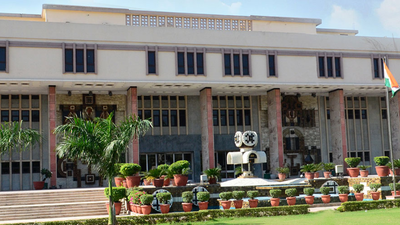
NEW DELHI: The Delhi High Court has rejected a writ petition filed by a Selection Grade DANICS officer challenging a disciplinary penalty imposed on him. The Court upheld the earlier decision of the Central Administrative Tribunal (CAT) and refused to interfere with the punishment.The case relates to actions taken by the officer in 2016 when he served as Land Acquisition Collector (LAC). He had passed an order approving a refund of over Rs 3.26 crore in a land acquisition matter and declared the acquisition proceedings closed. The order was issued after his transfer and after he had advanced the hearing date in the case.Following this, disciplinary proceedings were initiated against the officer, and two charges were framed.
The Inquiry Officer found one charge unproven but ruled that the officer acted in haste and did not follow proper procedures, amounting to misconduct. The Disciplinary Authority reduced his pay scale for three years, halted promotions during this period, postponed future increments, and affected his seniority.
The Appellate Authority upheld the penalty.The officer appealed to the CAT, which dismissed his application in July 2021.
However, the Tribunal allowed him to make a representation seeking reduction of the penalty. When this representation was rejected, he approached the High Court in 2025, nearly four years after the CAT’s ruling.The Court first noted the delay in filing the petition, stating that the officer had provided no satisfactory explanation for approaching the Court after such a long period. It clarified that the CAT’s liberty to reconsider the penalty did not reopen the entire case, and the writ petition was barred by delay and laches.On the merits, the Court found no grounds to intervene. It stated that under the Land Acquisition Act, once land vests in the government, a Land Acquisition Collector has no authority to restore the land or reverse acquisition by accepting compensation refunds. The officer failed to show any legal provision allowing such an order.The Court also dismissed the claim that the officer acted in a quasi-judicial capacity or based on legal advice. It highlighted that the High Court does not act as an appellate authority in disciplinary matters and can interfere only in cases of serious procedural violation or breach of natural justice, which was not established here.A plea of discrimination was also rejected. The officer had argued that his successor received relief, but the Court clarified that the successor was not similarly placed, as he merely implemented an order rather than passing it.






 English (US) ·