

 1 week ago
8
1 week ago
8
ARTICLE AD BOX
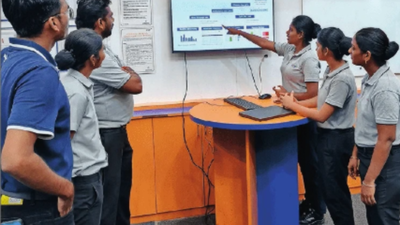
30% WORKFORCE IS WOMEN: Automation and digitisation have made hiring of women easier. Earlier, tyre building involved manual loading of rubber compounds, handling heavy beads or steel belts and physically demanding drum operations. Automated tyre-building machines standardise each step. Ergonomic fixtures and lift-assist devices reduce load, while conveyor-based tyre movement allows women to participate in building and curing operations without heavy lifting. Around 30% of CEAT Chennai facility workforce is now women. CEAT now aims to replicate this success across its other facilities
Sensors, computer vision models, and artificial intelligence have combined to help CEAT Tyres’ Chennai factory reduce defects, waste and energy use, and improve labour and machine efficiency. The factory today runs on algorithmsEnter the large Ceat Tyres factory located in the dusty industrial belt of Sriperumbudur on the outskirts of Chennai and you are greeted by humming machines and blinking sensor lights.
The manufacturing process here involves number crunching and monitoring computer screens more than heavy lifting. Over the past few years, 70% of the shop floor roles have been converted from heavy physical labour to skill-based automated work. That has also meant a lot more participation of women.Managing mixing complexitiesEach tyre has multiple compounds and materials, and these change depending on purpose – such as driving a car on a normal day, or driving the same car in snowy conditions, or pulling a truck.
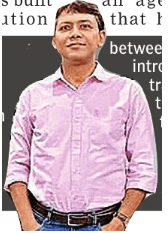
Durability and flexibility vary by each use case. Debashish Roy, CEAT’s chief digital transformation officer, says the mixing process is the critical first step in tyre manufacturing. Think of it as the industrial equivalent of kneading dough in a bakery.
In this stage, raw ingredients such as natural and synthetic rubber, carbon black and chemicals are thrown into a massive mixer to create the base material.The goal is to blend these ingredients until they are perfectly consistent.
.
Traditionally, factory machines followed a strict, pre-set recipe. For example, they might be programmed to mix for three minutes. However, the machine was blind and it did not know if the rubber was perfectly mixed after 2.5 minutes or if it needed four minutes. To make things more complex, natural rubber varies by batch. It might be harder or softer depending on the season. Even the temperature of the mixer changes if it has been running all day.
These parameters change how fast the rubber melts. Because the system could not adjust to these changes in real time, the factory had to often run the mixers longer than necessary. This led to wasted time and lower daily output.Roy says they built a gradient boosting regression model (machine learning model) to optimise these variations. This system continuously monitors key parameters such as temperature and energy consumption by comparing realtime data against historical “golden” batches.
Based on this comparison, intelligent adjustments are made to maintain optimal conditions and improve consistency in the mixing operation.This has resulted in an 18% reduction in mixing cycle time, a 29% reduction in power consumption, and a 32% increase in master mixer capacity. These are crucial given the factory’s scale. The company now produces 350 different types of tyres in an average week, a significant jump from just 100 six years ago.Predicting die dimensionsAs the company expands its presence across geographies, its need to develop new tyres for different terrains and environments is growing. To develop new tyres, CEAT has to design new dies. This is the process of creating the metal template or profile cutter through which hot rubber is squeezed to create specific treads, the part that touches the road. Think of it like toothpaste, where you squeeze the paste out in a specific shape depending on the nozzle attached to it.
However, designing this metal plate is difficult because rubber is elastic. As soon as it is pushed out of the metal die, it relaxes and expands in a phenomenon called die swelling. Roy says if you want a rubber strip that is 200 mm wide, you cannot cut a 200 mm hole. You need to cut a 180 mm hole because the rubber will swell by 20 mm. The exact number depends on the chemical recipe of the rubber, the temperature and the speed of the machine.Each tyre variant has roughly 60 data points, ranging from compound viscosity to machine parameters. In the past, employees mapped these points manually on spreadsheets to predict how the rubber would behave. This non-linear calculation was often inaccurate and required up to three physical trials to get it right. This iterative process resulted in longer time to take products to market and generated compound scrappage.To address this, the company deployed a machine learning model based on Gaussian process regression. This system predicts accurate die dimensions, and has resulted in a 37% reduction in time-to-market and a 30% reduction in wastage.Roy has also deployed AI models and solutions for export container optimisation and machine performance management. His team has built an agentic AI solution that helps junior engineers quickly understand what is wrong when a machine breaks down.
It converts unstructured breakdown resolution videos into a searchable knowledge base, and retrieves past solutions via a conversational chatbot. This has enhanced troubleshooting efficiency.WEF LighthouseThe initiatives have brought cultural shifts where employees are encouraged to think in data driven terms. Teams regularly attend external conferences and hackathons to learn best-in-class technologies. They evaluate if a production issue is a valid business problem and whether usable data exists before developing AI use cases. The technology at the Chennai factory has been validated by experts from IIT Madras and recognised with a Lighthouse certification from the World Economic Forum. The Lighthouse awards are given to leaders in the field of technology-driven industrial transformation.Big productivity gainsThe digital initiatives have resulted in improved yields and lower energy usage, and that in turn has reduced factory conversion costs (total expense required to transform raw materials into finished products) by 20-30%. The time from order placement to dispatch has been cut by more than half, while export turnaround times have dropped from 120 days to 55 days.DECENTRALISED DIGITAL TEAMSCEAT has built the tech solutions ground up with internal teams, and is thanks to digitisation efforts that began in 2021, involving the installation of sensors, manufacturing execution systems and dashboards.
The company now invests 10% of its manufacturing capital expenditure on digital transformation initiatives. To bridge the gap between technical teams and shop-floor reality, it introduced a new role called business translators.
These are folks with strong technical skills and work directly with shop floor operators to identify pain points. Debashish Roy , chief digital transformation officer, says it’s a decentralised digital team. Centralised teams, he says, may take years to learn a process.







 English (US) ·