

 1 hour ago
4
1 hour ago
4
ARTICLE AD BOX

Health professionals are shifting their focus, declaring that a typical Body Mass Index (BMI) isn't a foolproof indicator of wellness, particularly for the Indian population. The focus has now turned to visceral fat, which accumulates around the abdomen and is linked to a heightened risk of heart problems and diabetes. This insidious fat can hinder the body’s organ function.
A person can look fit, wear the right size, and still carry a silent risk. It sits around the waist, unnoticed and underestimated. For years, Body Mass Index (BMI) has been used as the standard way to define obesity.
But doctors now say this number tells only half the story.The real danger, especially for Indians, may lie in belly fat, what experts call visceral fat. This type of fat wraps itself around vital organs and quietly raises the risk of heart disease and diabetes. The concern is simple but serious: normal weight does not always mean low risk.
BMI is useful, but it has blind spots
BMI has been a trusted tool for decades. It uses height and weight to classify people as underweight, normal, overweight, or obese.But it does not show where fat is stored in the body. And that is where the problem begins.As Dr Pramila Kalra, Senior Consultant, Department of Endocrinology at Ramaiah Memorial Hospital, Bengaluru, explains, “Many times the patients may have normal BMI… but they may still be having abdominal obesity.”This means someone can fall under the “healthy” BMI category but still carry harmful fat around the abdomen. BMI misses this entirely.
It treats all weight the same, whether it is muscle or fat, and ignores distribution.
Why belly fat is more dangerous than it looks
Not all fat behaves the same way. The fat just under the skin is less harmful. But visceral fat, stored deep inside the abdomen, acts differently.It surrounds organs like the liver, pancreas, and heart. Over time, it disrupts their normal function.Dr Kalra puts it clearly, “Visceral fat leads to a lot of problems… it predisposes a patient to metabolic syndrome, diabetes, hypertension and cardiovascular disease.”This type of fat increases inflammation in the body. It affects insulin response, raises blood pressure, and alters cholesterol levels. All of these changes quietly push the body towards chronic disease.Dr Varun Suryadevara, Endocrinologist at Apollo Hospitals, adds another layer, “This fat tissue which is close to these visceral organs can directly damage these organs and can lead to metabolic complications.”So the risk is not just about weight. It is about where that weight sits.

Measuring waist circumference offers a clearer picture.
The Indian body type: A higher risk profile
There is a reason doctors stress this more in India. Research shows that South Asians tend to store more fat around the abdomen, even at lower BMIs.Dr Kalra notes, “An Indian who has a similar BMI to a Westerner may have more visceral fat.”This difference is not minor. It changes how risk is assessed. A person who appears “normal” by global BMI standards may still be at high risk in India.For broader context, the Indian Council of Medical Research (ICMR) has also highlighted rising metabolic disorders linked to central obesity.
Waist size matters more than you think
So how does one measure this hidden risk? The answer is surprisingly simple: a measuring tape. Doctors now recommend checking waist circumference along with BMI.The cut-offs for Indians are:
- Men: More than 90 cm
- Women: More than 80 cm
Dr Kalra emphasises, “We should be very careful with labeling a patient as normal… they may be having abdominal obesity.”Even if weight looks fine, a higher waist measurement signals higher risk. These individuals may face the same health threats as someone who is overweight.Dr Suryadevara adds, “Even if the BMI is normal, but if our waist circumference is on the higher side, our risk… will be high.”This simple check can reveal what BMI cannot.
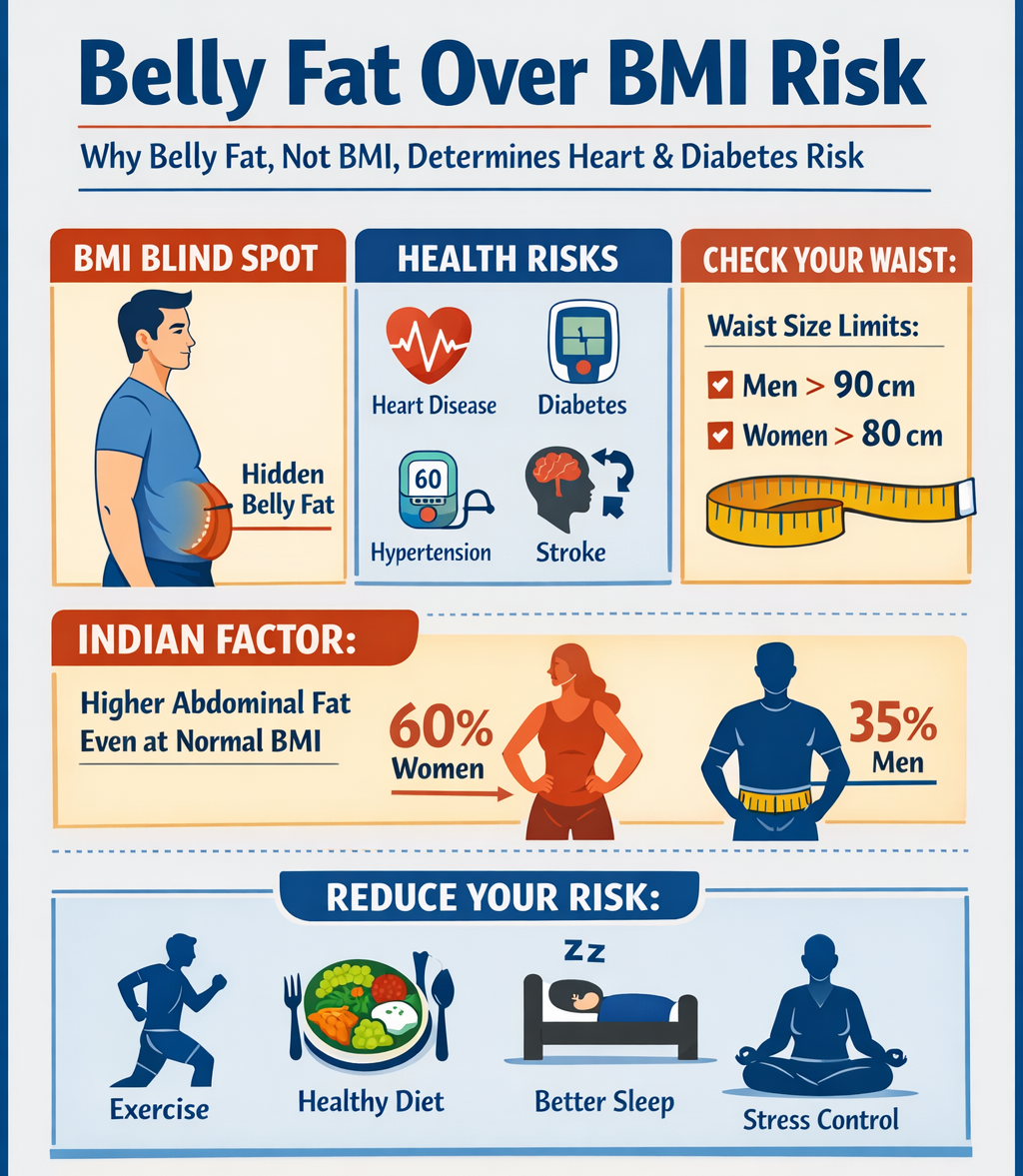
Addressing abdominal obesity through lifestyle changes can significantly reduce long-term health risks.
Who is most at risk today?
The pattern is shifting. It is no longer limited to those who are visibly overweight.People at higher risk include:
- Those with sedentary jobs and long sitting hours
- Individuals with high stress and poor sleep
- People consuming processed or high-sugar diets
- Those with a family history of diabetes or heart disease
- Even young adults who appear slim but inactive
The modern lifestyle plays a big role. Long work hours, low physical activity, and easy access to calorie-dense foods all contribute to fat accumulation around the abdomen.This is why some people develop diabetes or heart disease despite looking “healthy” from the outside.
Can reducing belly fat lower risk?
The encouraging part is that visceral fat responds well to lifestyle changes. Doctors agree that even small changes can make a difference. Losing abdominal fat reduces inflammation, improves insulin sensitivity, and lowers heart risk.As Dr Kalra explains, “If they lose visceral fat, their risk of metabolic diseases comes down.”Regular movement, balanced meals, better sleep, and stress control all help. The goal is not just weight loss, but fat distribution.A simple shift in focus, from weight to waist, can change outcomes.Medical experts consultedThis article includes expert inputs shared with TOI Health by:Dr Pramila Kalra, Senior Consultant, Department of Endocrinology at Ramaiah Memorial Hospital, Bengaluru.Dr Varun Suryadevara, Endocrinologist, Apollo Hospitals Bangalore.Inputs were used to explain why a normal body weight does not always mean low health risk, how excess belly fat can increase the chances of diabetes and heart disease, and why checking waist size along with BMI is important for early prevention.









 English (US) ·