

 1 hour ago
4
1 hour ago
4
ARTICLE AD BOX
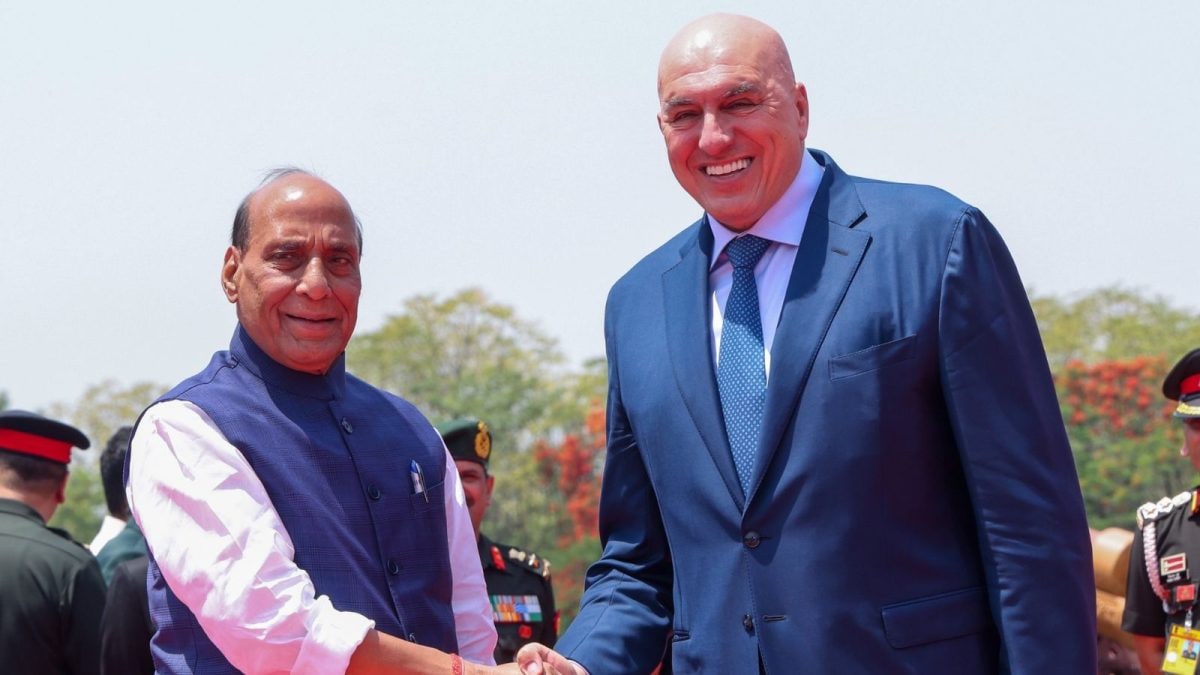
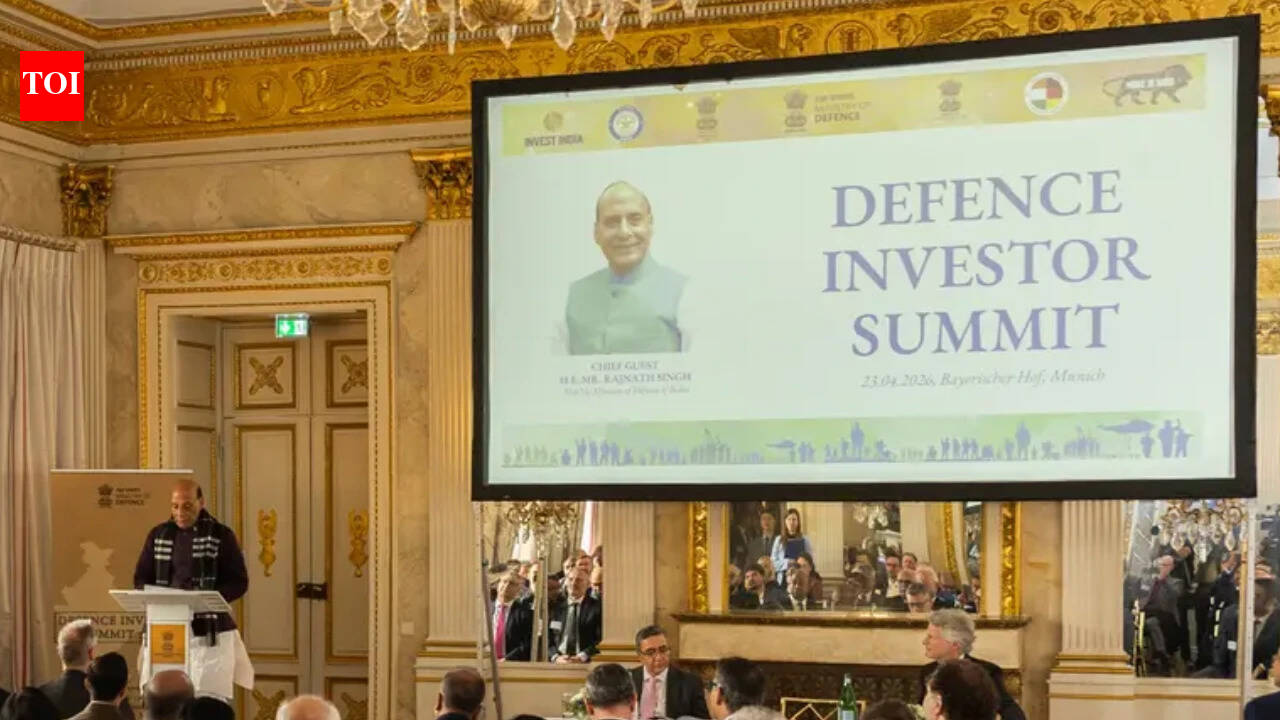
Defence Minister Rajnath Singh on Thursday said that India executed and halted Operation Sindoor on its own terms, despite being fully prepared to sustain a prolonged conflict.
Singh was speaking at a defence summit organised by news agency ANI. He also said that the Sudarshan Chakra Air Defence system is a massive project that serves as a prime example of the exemplary application of Artificial Intelligence.
“During the course of the operation, we targeted, with absolute precision, only those who had perpetrated the attack against us. We did not halt the operation because our capabilities had been exhausted or diminished. We halted it entirely on our own terms,” he said.
हमने ‘ऑपरेशन सिंदूर’ अपनी मर्ज़ी और अपनी शर्तों पर रोका। जरूरत पड़ती, तो हम लंबी लड़ाई के लिए भी पूरी तरह तैयार थे। हमारी surge capacity न केवल तब थी, बल्कि आज भी है और पहले से अधिक सुदृढ़ है। pic.twitter.com/L5wxN3Xywk
— Rajnath Singh (@rajnathsingh) April 30, 2026
He added, “We were fully prepared to sustain a prolonged conflict. We possess the requisite surge capacity and the inherent strength to rapidly scale up our capabilities in moments of crisis.”
Singh said India’s military-industrial complex has consistently demonstrated, time and again, that it stands ready to meet not only the requirements of peacetime but also the demands for rapid supply and logistics during times of war.
He said that during Operation Sindoor, India did not fall for the bluff or threats of a nuclear strike and accomplished its set objectives.
“This is the ‘New World Order’; the ‘New India’ of this new global era. This is an India which makes no distinction between terrorism and those who sponsor it,” he said.
He said that while Operation Sindoor lasted 72 hours, the preparatory work preceding it was extensive and protracted. He added that India’s surge capacity, its ability to rapidly mobilise resources and strategic stockpiles, and the proven credibility of indigenously developed weaponry have become integral components of its deterrence posture.
ऑपरेशन सिंदूर’ सशक्त deterrence का प्रत्यक्ष उदाहरण था। आज विश्व में भारत की बढ़ती प्रतिष्ठा के पीछे हमारी सैन्य शक्ति के साथ-साथ प्रभावी deterrence स्थापित करने की क्षमता का भी अहम योगदान है। pic.twitter.com/esEU7FxFZk
— Rajnath Singh (@rajnathsingh) April 30, 2026
He further said that a shift in global perception and a positive attitude towards the reliability of indigenous weapons and defence products is being observed as a result of Operation Sindoor, with numerous nations expressing keen interest in procuring weapons and defence equipment from India.
Story continues below this ad
He said that from state-of-the-art missile systems like BrahMos used during Operation Sindoor to various surveillance platforms, AI has been deployed with great effectiveness across the board, adding that it has enhanced India’s precision and strike capabilities.
He also said that countless smaller operations and processes are pre-emptively activated to neutralise threats before they materialise, and that AI is extensively utilised in all such instances.
“Sudarshan Air Defence system is a massive project that serves as a prime example of the exemplary application of AI. By leveraging AI, Machine Learning, and Big Data Science, our Defence Forces have formulated a roadmap to bolster their capabilities in response to emerging AI-based challenges,” he said, adding that this strategy will prove instrumental in making them even more adaptable and responsive in the future.
At the summit, Defence Secretary RK Singh said there is an emerging rationale for a conventional missile force in the backdrop of the West Asia conflict, citing the example of Pakistan, which is also building a conventional missile force. He said that earlier the idea was that it would mostly be used for strategic purposes, but that paradigm has now shifted and India will adjust accordingly.
ऑपरेशन सिंदूर में ब्रह्मोस से लेकर surveillance platforms तक, हर स्तर पर AI का प्रभावी उपयोग हुआ है। इससे हमारी precision और मारक क्षमता नए स्तर पर पहुँची है। pic.twitter.com/m0qpLBjXoS
— Rajnath Singh (@rajnathsingh) April 30, 2026
He said there will be no wait for the institutional aspects of raising such a force, and that the process will proceed in parallel with issuing supply orders to industry to begin scaling up missile production.
Story continues below this ad
The Defence Secretary said that Operation Sindoor, along with the West Asia and ongoing Russia-Ukraine conflicts, has highlighted lessons on the importance of “standoff weaponry, of a layered and strong air defence system, of sufficient stockpiles of ammunition and missiles, of ensuring that your radars are mobile and your artillery is also mobile.”
“All of those lessons are fairly clear and we’ve taken those lessons and accordingly calibrated our procurements, which is why, for example, on the EP side, the bulk of what we did — almost Rs 30,000 crores worth of EP contracts after Operation Sindoor — have primarily gone towards drones and counter-drone systems, loitering munitions, and certain types of radars and EW equipment as well,” he said.
He also said that a committee under the DRDO chairperson has submitted a pre-feasibility report on the Sudarshan Chakra mission.
Speaking about fast-track procurements, he said that contracts worth nearly Rs 4.5 lakh crore have been signed in the last two years.
Story continues below this ad
He also said that the procurement process for the indigenous Advanced Medium Combat Aircraft (AMCA) is underway, and the RFP is expected to be released soon to shortlisted bidders. He added that India is exploring partnerships for developing sixth-generation fighter aircraft, given the scale of investment required, and has reached out to two ongoing international three-country programmes to express willingness to collaborate.
At the summit, Chief of Integrated Defence Staff Air Marshal Ashutosh Dixit said there is a need for a balanced mix of traditional and modern weapon systems, adding that for long-term operational effectiveness, conventional aircraft should be combined with newer technologies such as drones and missiles.
He added that while drones and missiles could be low-cost solutions, their impact should be assessed over sustained operations, noting that in the long term, aircraft are often a more cost-effective option, and that commanders should have access to a full range of capabilities.
At the event, DRDO Chairman Dr Samir V Kamat said the development of the Agni VI intercontinental ballistic missile is a government decision, and that the DRDO is fully prepared to proceed once approval is granted.
Story continues below this ad
He also said that India’s LR-AShM hypersonic glide missile programme is at an advanced stage, with initial trials expected soon, adding that work is underway on both hypersonic glide and hypersonic cruise missile systems.



 English (US) ·