

 1 hour ago
4
1 hour ago
4
ARTICLE AD BOX
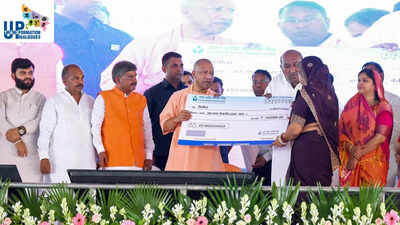
In Uttar Pradesh, in the last 9 years, the transformative journey of women and youth under Chief Minister Yogi Adityanath’s leadership has ushered in a new era of empowerment and self-reliance. Prior to 2017, the interests of youth and women were kept on the back burner and policies were framed as such that they fell on the blind spot.
As CM Yogi Adityanath took charge, it became an utmost priority of the government to ensure progress cuts across society.Women’s workforce participation has surged from around 13% in 2017 to nearly 36%, with over 1.06 crore women mobilized into Self-Help Groups, more than 18.55 lakh achieving ‘Lakhpati Didi’ status, and schemes like Mission Shakti, Lakhpati Mahila Yojana, and Pink Toilets enhancing safety, entrepreneurship, and dignity.
Simultaneously, the state has provided government jobs to over 8.5–9 lakh youths through transparent recruitment, skilled more than 25 lakh young people, and created over 1.10 crore employment opportunities through massive investments, turning them into job creators rather than mere job seekers.As Chief Minister Yogi Adityanath aptly stated, “A society cannot be strong and self-reliant by neglecting half its population.”
This vision of empowered women and dynamic youth is building a prosperous, skilled, and inclusive Uttar Pradesh.A New Lease of Life for Women and Children Under the Mukhyamantri Kanya Sumangala Yojana, over 26.81 lakh daughters have received financial support to promote girls' education and well-being. Additionally, more than 1.05 lakh children have benefited from the Mukhyamantri Bal Seva Yojana (both COVID and General categories), providing crucial assistance during vulnerable times.
Through the Mission Vatsalya scheme, the state has successfully reunited over 1 lakh children with their families, restoring hope and stability to many young lives.Around 60 lakh mothers have been empowered through the Pradhan Mantri Matru Vandana Yojana, receiving financial aid to support maternal health and nutrition. More than 2 lakh women have accessed working capital under the PM SVANidhi scheme, enabling them to sustain or grow their small businesses and street vending enterprises.Financial Inclusion and Rural EmpowermentThe BC Sakhis (Banking Correspondent Sakhis) program has proven highly effective, with 39,885 women facilitating financial transactions worth over ₹42,711 crore. These women have earned a collective commission of ₹16 crore, creating sustainable income opportunities while expanding banking services in rural areas.Under the Uttar Pradesh State Rural Livelihood Mission, more than 1.06 crore women have been mobilized into over 9.43 lakh Self-Help Groups (SHGs), along with 64,761 Village Organizations and 3,296 Cluster Level Federations.
This massive network has transformed women's economic participation across the state. The Lakhpati Mahila Yojana has identified over 35 lakh women ('Didis'), of whom more than 18.55 lakh have already achieved 'Lakhpati' status by earning an annual income of ₹1 lakh or more.
Furthermore, 64.34 lakh women-led farming families are actively engaged in agricultural livelihood enhancement activities. To strengthen economic self-reliance, 2,682 Fair Price Shops have been allotted to women's Self-Help Groups under the Public Distribution System.
Dry rations are now distributed through 60,000 women from these groups, ensuring both food security and income generation. Similarly, 15,409 Vidyut Sakhis (Electricity Sakhis) have facilitated electricity bill collections worth ₹3,207 crore, earning a commission of ₹41.3 crore for themselves.Safety, Infrastructure, and AwarenessMore than 2.39 lakh women have received support through One Stop Centres, while 1,100 Pink Toilets have been constructed across 189 urban local bodies to improve safety and convenience.
The 181 Women Helpline has assisted 8.42 lakh women so far. The state has also established the Rani Laxmibai Bal evam Mahila Samman Kosh, disbursing ₹511.20 crore as compensation to 14,559 victims of heinous crimes. Several Shramjeevi Hostels (working women's hostels) named after Punyashloka Mata Ahilyabai Holkar have been constructed in major cities including Varanasi, Lucknow, Kanpur, and others.
New Shakti Sadans are also being built under Mission Shakti in multiple districts.Through the Beti Bachao-Beti Padhao campaign, over 2.85 crore women and girls have been sensitized via 3,47,788 activities. The Mahila Udyami Credit Card scheme now provides interest-free capital to women entrepreneurs, while the Chief Minister's Mass Marriage Scheme has solemnized the marriages of over 5.20 lakh daughters with transparency and dignity through an online portal.These efforts have yielded visible results: female workforce participation has risen from approximately 13% in 2017 to around 36% today.
A Women's Economic Empowerment Index (WEE Index) has been developed to track progress across 75 districts on parameters such as entrepreneurship, education, skills, livelihood, and safety.Anganwadi and Nutrition ServicesAnganwadi centers are being upgraded into modern pre-schools, with a biometric system ensuring transparent distribution of nutritional supplements. Out of 1,90,065 operational Anganwadi centers, 266 new ones have been sanctioned and 23,697 approved as 'Saksham' centers.
Growth monitoring devices and mobile phones have been provided to all centers, and public representatives have adopted 6,591 centers.Under the Janani Suraksha Yojana, financial assistance is provided for institutional deliveries. The prevalence of anemia among pregnant women has decreased by 5.1 percentage points, while hot cooked meals reach 35.46 lakh children aged 3-6 years. The lives of 2.12 crore children, pregnant women, and lactating mothers have been positively impacted through the Supplementary Nutrition Scheme.
Significant improvements include a 6.6% reduction in stunting and 7.5% reduction in underweight children (NFHS-4 to NFHS-5), along with a 32% improvement in supplementary nutrition distribution (from 30% to 62%).Honorarium Increase for Anganwadi WorkersTo strengthen grassroots services, the state government has announced an increase in honorarium effective from April 2026 for 1,82,113 Anganwadi Workers and 1,28,811 Anganwadi Helpers.
This will further enhance the quality of maternal and child health programs across the state.Other Backward Classes WelfareBetween 2017-18 and 2025-26, marriage grants worth ₹1,295.72 crore were provided to 6,47,863 beneficiaries. Additionally, ₹154.56 crore was spent on computer training for OBC youth during the same period.Employment and Skill DevelopmentOver 9 lakh youths have secured government jobs through transparent recruitment.
Key reforms include the One Time Registration (OTR) system, abolition of interviews for many posts, and implementation of EWS and Agniveer reservations. The UP Subordinate Services Selection Commission and UP Public Service Commission have together selected over 1 lakh candidates in recent years. Investment proposals worth ₹50 lakh crore have created employment opportunities for over 1.10 crore youths, with ₹15 lakh crore already implemented on the ground, generating 60 lakh jobs.
The MSME sector has provided employment to over 3.11 crore people.Skill Development in Uttar Pradesh (as of 2025)Uttar Pradesh has built a vast network of skill development institutions. As of 2025, the state is home to 3,271 operational ITIs, which include 286 government and 2,985 private institutes. Among these, 12 ITIs are dedicated exclusively to women. In addition, 38 ITIs function under the Public-Private Partnership (PPP) model, delivering high-quality training in 39 different trades.ITI Upgradation Initiative. The state government has launched a major modernisation drive in collaboration with Tata Technologies Limited to align government ITIs with Industry 4.0 standards. In the first phase (2022), 150 government ITIs were comprehensively upgraded at a cost of nearly ₹4,886 crore. The second phase, currently underway in 2025, will upgrade another 62 government ITIs. At the same time, the government is setting up 5 Centres for Innovation, Incubation, Training, and Entrepreneurship.Industry-Driven Training and CSR EffortsSeveral districts now host advanced Skill Labs established with CSR funding. These labs offer training in emerging areas such as electronics, automobiles, manufacturing, IT, and industrial maintenance. Key locations include Noida, Agra, Aligarh, Meerut, Barabanki, Lucknow, Lakhimpur Kheri, and Kanpur. Government ITIs have forged strong ties with leading industries including Tata, Mahindra, Hero, Honda, Maruti, Samsung, Reliance, HAL, and Ashok Leyland.
Trainees gain practical exposure through live projects, apprenticeships, hands-on machinery practice, and assured placement assistance.Key Achievements Since 2017-18More than 14 lakh youths have been trained.Over 6 lakh have successfully secured employment.To ensure transparency and accountability, Aadhaar-enabled biometric attendance is now compulsory across all training centres. Under Project Praveen, skill training was provided to over 26,000 students from 315 government schools and 3,450 girls from Kasturba Gandhi Balika Vidyalayas (KGBVs).
A digital Learning Management System (LMS) portal with NCVET-certified courses allows learners to acquire skills anytime and anywhere.
The state also introduced District Skill Development Plans (DSDP) for the first time, enabling need-based and localised planning since 2021-22.Other noteworthy steps include:Training 200 students and instructors in AI, robotics, and advanced computing at IIT Mandi.Self-defence training for 10,000 female students.Free career counselling for lakhs of youths through the Wheebox platform.Employment Generation through Job FairsSince 2017-18, the state has organised 186 major job fairs, resulting in the placement of 4.32 lakh youths. In 2023-24 alone, 1,624 job fairs were held under the DDU-GKY scheme, leading to employment for 2.26 lakh candidates.Emerging Initiatives and PartnershipsThe government is rolling out futuristic technical courses in collaboration with HCL and IBM.
Formal agreements have also been signed with MNNIT and IIIT Prayagraj for advanced programmes. A special campaign has successfully brought 80 companies on board for district-level industry partnerships. A new dedicated portal and mobile app are under development to track trained candidates and support self-employment.
Specialised training programmes have been designed for groups such as Vamasarathi, Zero Poverty, Divyang (differently-abled), and Lakhpati Didi. The empanelment of new training partners for next-generation technologies is scheduled for completion by March 2026. Recognition and AwardsBroader Technical Education EcosystemSkill training is currently being imparted in 195 diploma-level institutions.
The state is also establishing Centres of Excellence in 121 government polytechnics, supported by 251 smart classrooms and 89 language labs. Planetariums are operational in Lucknow, Gorakhpur, and Rampur. Construction is progressing on the Mahant Avaidyanath Gyan-Vigyan Park in Gorakhpur and new Science Cities in Agra and Banda.
Remarkable Growth in Apprenticeships. The apprenticeship ecosystem has shown impressive expansion:2017-18: 25,900 establishments registered, 12,588 candidates engaged.2025-26: 29,855 establishments registered, 82,855 candidates undergoing apprenticeships.Additionally, 778 ICT labs and Atal Tinkering Labs in 101 schools are fully functional, fostering innovation and digital learning among students.Mukhymantri Kanya Sumangala Yojana: Empowering DaughtersUnder the Mukhyamantri Kanya Sumangala Yojana, more than 27.37 lakh daughters have received approximately ₹675 crore in financial assistance for their education and welfare since its launch in 2019.
This ambitious scheme of the Chief Minister has become a guarantee for the bright future of daughters.Under the Yogi government, the Kanya Sumangala Yojana has emerged as a symbol of transparency, as beneficiary funds are transferred through the Public Financial Management System (PFMS) and Direct Benefit Transfer (DBT).Through this scheme, daughters have received a strong foundation of financial security from birth to higher education.The scheme provides a structured financial assistance of Rs 25,000 in six phases:Rs 5,000 on the birth of a girl child.Rs 2,000 after completing full vaccination by the age of one.Rs 3,000 upon admission to Class 1.Rs 3,000 upon admission to Class 6.Rs 5,000 upon admission to Class 9.Rs 7,000 upon enrolling in a degree or diploma course after passing intermediate or high school.This assistance not only promotes the education of daughters but also significantly reduces the financial burden on families.
The increasing reach of the Kanya Sumangala Yojana in Uttar Pradesh is proof that the Yogi government’s policies place the holistic development of women and girls at the center. This scheme is a significant initiative towards the empowerment of daughters in the state.Sports and Youth EmpowermentThe state is promoting sports through initiatives like "One Division – One Sports College," the Major Dhyan Chand Sports University, and generous cash awards for medal-winning athletes.
Stadiums, sports complexes, and village playgrounds are being developed extensively. Training in emerging sectors such as AI and robotics, along with large-scale skill development programs, is preparing the youth for future opportunities.Over the last nine years, Uttar Pradesh has undergone a massive structural shift in its sports ecosystem, transitioning from a state with fractured grassroots facilities to a rising national powerhouse. This aggressive transformation earned Uttar Pradesh the prestigious "State of the Year" title at the Times of India Sports Awards (TOISA). By significantly raising its financial commitment—with recent annual sports budgetary allocations scaling to nearly ₹1,950 crore—the administration has engineered a strict, three-tier development model explicitly mapping out specific infrastructure tiers from individual villages to expansive urban complexes.At the absolute foundation of this tier system, the government has focused heavily on rural access across the state's 57,000 gram panchayats. The administration's localized roadmap aims to expand functioning community playgrounds from 30,000 to 60,000 while simultaneously distributing multi-sport kits to regional youth groups. Moving up to the block level, the state has already constructed over 150 specialized mini-stadiums to capture and develop rural talent early. At the macro district and divisional tiers, the state's physical hardware has grown immensely, now boasting:
- 77 full-scale stadiums and 68 multi-purpose sports halls.
- 39 Olympic-sized swimming pools and 36 modern fitness gyms.
- 14 synthetic hockey fields alongside dedicated indoor setups for wrestling, weightlifting, badminton, and taekwondo.
Furthermore, the state has heavily prioritized high-performance institutions and global venues. In Meerut, the flagship Major Dhyan Chand Sports University serves as a landmark ₹700 crore research and training campus centered squarely on sports science, technology, and advanced skilling.
Additionally, the state has diversified its elite training grounds by expanding its system to 5 operational sports colleges while planning localized Centres of Excellence across all divisional headquarters. On the international stage, the state is rapidly expanding its hosting capacity; joining the established cricket venues in Lucknow and Kanpur, new international cricket stadiums are being aggressively developed in Varanasi, Ayodhya, and Gorakhpur.
The state has successfully hosted elite global and national competitions, including the MotoGP Bharat race, the Khelo India University Games, the Davis Cup, and the Syed Modi International Badminton Championships.This infrastructure push is deeply integrated with the groundbreaking "One District-One Sport" (ODOS) policy, a localized talent strategy that designates a flagship sport for each of the state's 75 districts to streamline specialized coaching and equipment distribution. To ensure this athletic talent translates into long-term career security, the state's updated New Sports Policy guarantees a 2% reservation in Group C government appointments for elite medalists. Under a highly structured and completely transparent direct-recruitment pathway managed via the Khel Saathi portal, more than 534 accomplished athletes have been directly appointed to elite positions within the Uttar Pradesh Police and other state departments.This rigorous combination of career security, ₹5 lakh comprehensive health insurance covers for stadium athletes, and world-class training has yielded massive competitive dividends. Over the recent evaluation cycles, athletes from Uttar Pradesh have clinched 68 international medals across iconic global platforms, including the Olympics, Paralympics, Asian Games, and Commonwealth Games. Celebrated state icons such as cricketers Kuldeep Yadav and Deepti Sharma, hockey stars Lalit Upadhyay and Rajkumar Pal, and champion para-athletes Suhas Yathiraj and Praveen Kumar continue to headline India’s global achievements, cementing Uttar Pradesh's new reputation as a primary engine for national sporting excellence.These comprehensive efforts across multiple sectors reflect the state's commitment to building an Empowered Women – Prosperous Society and a skilled, prosperous Uttar Pradesh.AwardsUttar Pradesh has received several prestigious honours for skill development, including:Golden Trophy for Best State in Skilling by ASSOCHAM (2018-19).Multiple ELETS Certificates of Recognition (2020-21) for PPP in vocational training and innovations in skill development.SKOCH Gold Award (January 2021).Award of Appreciation by the Computer Society of India in the e-Governance category.





 English (US) ·