

 1 hour ago
4
1 hour ago
4
ARTICLE AD BOX
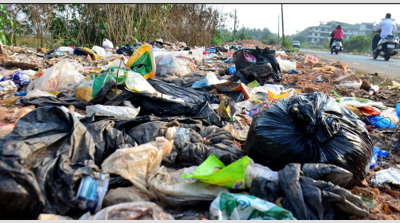
Panaji: The Corporation of the City of Panaji and Imagine Panaji Smart City Development Limited (IPSCDL) identified nearly 240 housing colonies across Panaji where 16-way segregation of waste can be introduced in a phased manner.
The initiative is currently at the planning and preparatory stage, with implementation to be initiated progressively, smart city officials said.“The entire process was done in collaboration with CCP. We want 100% of our colonies to move to 16-way segregation. Waste management is what they are focusing on in the Smart Cities 2.0 mission,” said city mayor Rohit Monserrate.Once initiated, the process will begin with joint inspections of colony premises by the implementation team to identify suitable locations for setting up segregation infrastructure.
Comprehensive training programmes will be conducted for housekeeping staff, society managers, and committee members, covering waste collection, segregation, storage, and handling of various waste fractions to ensure smooth day-to-day operations.The civic authorities want to scale up colony-level waste management infrastructure as part of the CITIIS mission.According to IPSCDL, around 35 housing colonies in the state capital are actively practising 16-way waste segregation, with the remaining 240 housing colonies across Panaji being nudged to participate in a phased manner.
“Panaji has demonstrated strong civic commitment through CCP’s existing 16-way waste segregation initiatives. Under the CITIIS programme, IPSCDL aims to build upon these efforts by scaling up colony-level infrastructure and standardising processes across a wider footprint. By working closely with housing societies, residents, and municipal systems, we seek to strengthen segregation at source, reduce the burden on downstream facilities, and promote a sustainable and replicable waste management framework for the city,” said Sandeep Jacques, managing director and chief executive officer of IPSCDL.IPSCDL officials said that the proposed model focuses on the creation of dedicated waste segregation infrastructure within housing colonies, requiring an estimated area of 30 to 50sqm, depending on waste generation.Resident welfare associations and housing societies will play a central role in fostering community ownership and compliance. Civic authorities want to focus on behavioural change at the neighbourhood level.“Residents and commercial establishments within participating colonies will be encouraged and trained to segregate waste at the source,” IPSCDL said in a note.Monserrate said that joint inspections of colonies will be conducted to ensure that waste collection and segregation is done at suitable locations.Under the proposed purchase-based collection model, once bins or jhola bags reach capacity, society staff will inform the authorised collection team, which will schedule a pick-up. Waste will be collected in a fully segregated manner, weighed on-site using digital weighing scales, and replaced with empty jhola bags. A digital receipt will be generated, and payments based on an approved rate card will be made directly to the society’s manager or committee representative.






 English (US) ·