

 1 hour ago
5
1 hour ago
5
ARTICLE AD BOX
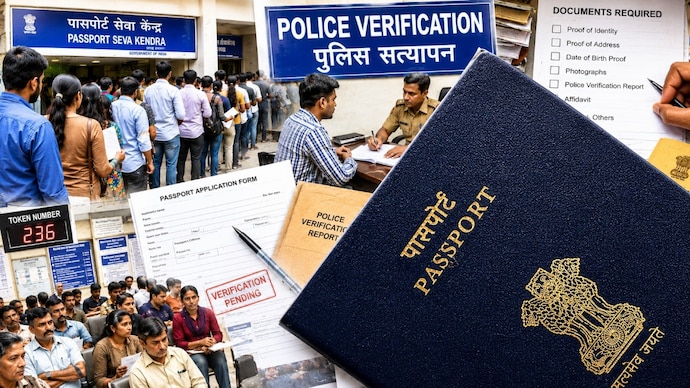
The Centre has reiterated that an Indian passport is a travel document, not conclusive proof of citizenship. It, however, should not come as a surprise. The legal position has been settled for decades. It has revived questions over which documents can legally establish citizenship.
Passport not citizenship proof

New Delhi,UPDATED: Jun 25, 2026 12:57 IST
In the past few months, few questions have been more unsettling than what constitutes Indian citizenship. It again came to the forefront on Wednesday, after the Centre clarified what has been known for long - your passport, among the most rigorously verified documents, is not proof of your citizenship. To me, it didn't come as a surprise. Neither should it to those 10% of Indians who currently possess a passport.
Over the years, several courts and the government have settled the issue: a passport is merely a travel document that helps you establish your nationality abroad. It is vastly different from citizenship. "A passport is largely an identity and travel document issued to the state's own nationals," the government's passport manual states.
WHY AREN'T PASSPORTS PROOF OF CITIZENSHIP?
It raises a pertinent question. If passports can only be issued to Indian citizens, then why isn't it proof of citizenship? The answer is more unsettling than the question, as the Passports Act, 1967, does not tackle the question conclusively.
See this. As per Section 6(2)(a) of the Passports Act, authorities are mandated to refuse to issue a passport if the applicant is not a citizen of India.
But, Section 20 of the Passports Act mentions that the government can issue a passport to a "non-citizen" if it is deemed to be in "public interest".
Moreover, possessing a passport does not mean that it is owned by you. A note on the back flap of passports mentions that it is the "property of the government" and shall be surrendered if and when the government so orders.
Thus, it clearly establishes that possessing an Indian passport is not, as per the law, conclusive proof of citizenship. It has been there in the law for decades, and has also been settled by courts. However, what the government and the courts have not settled is the citizenship conundrum.
WHAT GOVT, COURTS HAVE SAID ON PASSPORTS?
In 2013, the Bombay High Court said a birth certificate, passport or even an Aadhaar card might not be enough to prove you are an Indian citizen if you were born after July 1, 1987.
The court subsequently refused to grant relief to a man and three others who were accused of being illegal immigrants. The prosecution said the accused were Bangladeshis who entered India illegally.
The setback came even after the accused produced passports, Aadhaar cards and birth certificates to prove they were Indian citizens.
"A birth certificate may show that a person was born in India, and other documents may show that they have lived in India. But the law does not recognise that as proof of citizenship," the additional public prosecutor argued.
More recently, in the Babu Abdul Sardar vs the state of Maharashtra case, the Bombay High Court categorically said citizenship questions must be examined under the Citizenship Act, 1955, and cannot be resolved solely by reference to "identity documents" such as Aadhaar, PAN or voter ID cards.
"The Citizenship Act is the main and controlling law for deciding questions about nationality in India today," the High Court said.
Thus, the Centre, on Passport Seva Divas on June 25, just reiterated the legal position on passports and citizenship. So, what's the hullabaloo all about? Social media and the opposition have brought the elephant in the room into focus.
WHAT CONSTITUTES PROOF OF CITIZENSHIP THEN?
If even a passport does not conclusively prove Indian citizenship, what document does?
In the United States, the passport is conclusive proof of citizenship. It is as powerful as a US birth certificate. The matter in India is complex, as it does not have any kind of national citizenship card that several countries issue.
A voter ID card merely establishes that a person is enrolled as an elector and does not independently prove citizenship. A PAN card is basically required for tax filings, linking all your monetary transactions. A ration card is needed for inclusion in welfare schemes.
The Aadhaar question was recently settled by the Supreme Court during the hearing on the legality of the SIR exercise.
The Election Commission of India (ECI) underscored that Aadhaar only establishes identity, but not citizenship. It reasoned that Aadhaar can be issued to residents who are not Indian citizens as well. The Supreme Court admitted the ECI's argument, allowing Aadhaar to be treated as an identity document for the SIR exercise.
The Centre has not tackled the grey area itself. Last year, the Union Home Ministry, while responding to a question in Parliament, did not specify the categories of "valid documents" required for people to prove Indian citizenship. It just stated that citizenship is governed by the Citizenship Act, 1955.
In 2020, as well, the government declined to identify whether Aadhaar, passport, voter ID, or birth certificate could be treated as valid documents to prove citizenship.
Now, what does the Citizenship Act say? It says a person is an Indian by birth if born in India on or after January 26, 1950, but before July 1, 1987.
If one is born after July 1987, they can claim citizenship if either parent was a citizen. Those born on or after December 3, 2004, can claim citizenship by birth only if both parents are Indians, or if one parent is a citizen and the other is not an illegal immigrant at the time of birth.
WHAT IS THE SOLUTION?
But it doesn't specify any single document that establishes your citizenship. So, what is the solution?
Over the years, courts have relied on a combination of documents establishing lineage and residence, rather than a single document, to settle the issue. These include birth certificates, passports, citizenship certificates issued upon registration or naturalisation, parental records, and school certificates like the Class 10 marksheet.
Thus, the MEA on Wednesday has clarified what has been known for long. The straight answer is that India does not currently have a universal and conclusive citizenship document. This is a gap that the government will have to address sooner rather than later, as was seen during the SIR controversy.
- Ends
Published By:
Abhishek De
Published On:
Jun 25, 2026 12:57 IST





 English (US) ·