

 1 hour ago
6
1 hour ago
6
ARTICLE AD BOX
Auto and taxi drivers in Maharashtra, particularly migrants from other states, have been protesting after state Transport Minister Pratap Sarnaik announced that drivers would have to demonstrate Marathi language skills from May 1. Under the proposed verification drive, all licenced taxi and auto-rickshaw drivers in Maharashtra will be required to show an ability to read and write Marathi.
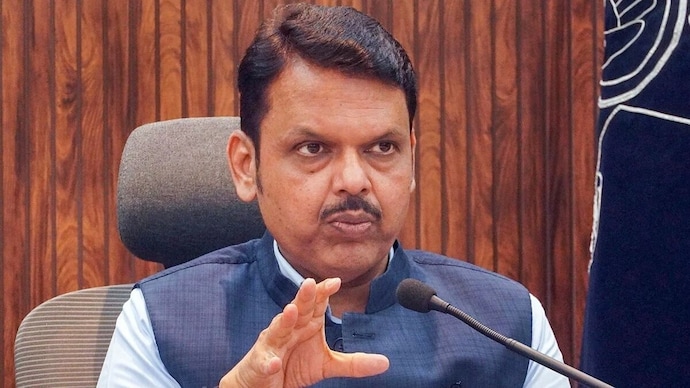
Maharashtra CM Devendra Fadnavis (Photo- ITGD)
New Delhi,UPDATED: May 1, 2026 13:28 IST
Maharashtra Chief Minister Devendra Fadnavis on Friday said residents of the state should make efforts to learn Marathi, while stressing that violence in the name of language is “unacceptable”. His remarks came amid the state government’s directive making Marathi mandatory for autorickshaw and taxi drivers, as he also described Maharashtra as a key growth engine and economic powerhouse of the country.
Fadnavis said Maharashtra had never been so narrow-minded as to say people from outside the state could not live there. “As far as language is concerned, it is necessary to have pride in one's language. There has to be a sense of pride in the Marathi language. Whoever resides in Maharashtra should try to learn Marathi. If they haven't learnt it, we will teach them,” he said. “However, violence in the name of language or controversy over it is unacceptable,” he added.
Calling it a reformist state that saw the Bhakti movement, he said Maharashtra also gave direction to the country and was the 30th-largest economy in the world. He also extended wishes on the occasion of International Labour Day.
Auto and taxi drivers in Maharashtra, particularly migrants from other states, have been protesting after state Transport Minister Pratap Sarnaik announced that drivers would have to demonstrate Marathi language skills from May 1. Under the proposed verification drive, all licenced taxi and auto-rickshaw drivers in Maharashtra will be required to show an ability to read and write Marathi at 59 regional and sub-regional transport offices across the state.
The move has reignited the debate around language politics and triggered concerns among transport workers. Driver unions have described the plan as harassment of migrant workers and warned of statewide protests if the tests are conducted and penalties imposed. The Maharashtra government, however, has said it is only enforcing a rule that has existed for years.
The question, however, is whether such a mandate is legally enforceable. The Motor Vehicles Act, 1988, is a central law that governs the eligibility criteria for obtaining a driving licence in India. The Central Motor Vehicles Rules require applicants seeking a licence to drive a transport vehicle to have at least a Class 8 pass certificate.
A transport vehicle includes public service vehicles, goods carriers, educational institution buses and private service vehicles. Public service vehicles include autos, taxis, buses, coaches and ambulances used to transport passengers for hire or reward.
While the central law lays down broad eligibility criteria, it also allows states to frame additional rules, provided they do not conflict with central provisions.
Section 28 of the Motor Vehicles Act empowers states to create rules governing the issuance of badges to transport vehicle drivers. In Maharashtra, this authority is reflected in Rule 24 of the Maharashtra Motor Vehicles Rules, which deals with badges for drivers of public service vehicles.
Under Rule 24, badges for public transport vehicle drivers, except motor cabs, can be issued only if applicants satisfy two conditions: topographical knowledge of the area of operation, and working knowledge of Marathi and one other commonly spoken language in the area. The provision allows transport authorities to deny or revoke a driver's badge if the language requirement is not met.
A legal hurdle remains, however. In 2017, the Bombay High Court, while hearing Shivpujan Kumar vs State of Maharashtra, examined petitions challenging the Marathi language requirement for auto-rickshaw and taxi permits. The court ruled that auto-rickshaws fall within the definition of “motor cabs” under Section 2(25) of the Motor Vehicles Act.
Since motor cabs are specifically exempt under Rule 24, the Marathi language requirement cannot be imposed on auto-rickshaw drivers. Fadnavis's remarks on Marathi and his warning against violence came against the backdrop of this continuing dispute over the language rule and its enforceability.
- Ends
Inputs from PTI
Published By:
Sayan Ganguly
Published On:
May 1, 2026 13:28 IST




 English (US) ·