

 1 hour ago
2
1 hour ago
2
ARTICLE AD BOX
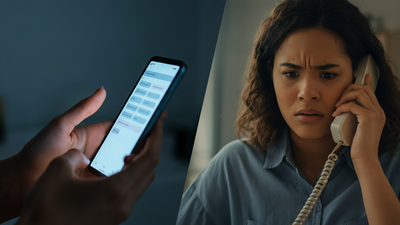
Many people now prefer texting over phone calls. This behaviour is not about being antisocial. Communication psychology reveals it is a way to manage the pressure of live conversations.
There’s a smartphone on a wooden desk, ringing with an incoming call. The name showing up on the screen is that of a dear friend – someone you genuinely want to be around. However, a lot of people will watch the screen flash without pressing the green button, then pull out their phone right afterwards and begin typing a message.This behaviour is becoming increasingly common. It consistently sparks discussion about whether or not our society is losing touch with each other, the general assumption being that texters are antisocial or trying to avoid whoever is on the other end of the line.However, communication psychology suggests the opposite is often true. The choice of typing over speaking most often is not an example of cold indifference; rather, it is a barrier that a person puts in front of himself in order not to become overwhelmed by the pressure of speaking on the phone.The weight of live communicationWhen you pick up a voice call, you are immediately thrown into a high-stakes performance. There is no buffer, no draft folder and no delete key to lean on. Each of your thoughts has to travel from the depths of your mind to the tip of your tongue in split seconds. For a great number of us, this instant demand immediately sends our anxiety levels skyrocketing.This struggle is well documented by communication researchers. A Frontiers in Psychology journal study investigating mobile communication and the effects of interactions with cell phones on mental distraction and internal anxiety states that "the concurrent demand for the processing of multiple conversational cues in a live cell phone interaction between people led to the reported level of mental preoccupation".
Without the ability to focus on multiple aspects of a conversation, people may experience a temporary mental short circuit. With enough pressure like this, people have the tendency to say things that they didn't mean, commit to plans they can't possibly uphold or get flustered trying to find the appropriate words to communicate their intended meaning.By deciding to text instead of talking, someone is choosing not to step into that mentally chaotic environment.
Typing provides a protected buffer zone in which you have time to re-read your words, think about your tone and ensure that what you are saying actually reflects what you want to say. You are allowing the thoughtful side of yourself to speak, rather than the anxious one who panics mid-sentence.Taking control of your thoughtsThe appeal of texting is found in its use of time. What was once a race of quick, anxiety-producing sentences turns into a slow-burning exchange.
This opportunity to stop, think and edit caters to an inherent psychological desire for stability during social communication.This psychological demand is deeply examined in a Cogent Business and Management study that explored the effects of online social anxiety on mobile messaging behaviours. Researchers found that individuals with social anxiety felt a greater attraction to communication platforms with a higher capacity for communication control.This ability is the ability to control when and how a message is answered. This can reduce anxiety by giving people time to respond without feeling judged for silence.

Typing offers a buffer zone for thoughtful responses. This control reduces anxiety and allows for clearer communication. Texting provides a safe space for connection, even for mental health support.
Text messaging offers people a rare chance for precision within their communication; it can facilitate delivering an insightful response regarding a complex issue rather than a chaotic stream-of-consciousness dialogue. The ability to do this is not destructive to intimacy; in many ways, it allows for a deeper and more honest connection than that facilitated over a live voice call.Finding safety in wordsThe safe and protected feeling associated with texting is so pervasive that even mental health providers and researchers use it to connect with people who may be intimidated by conventional interactions. Many people find live phone calls intimidating because they can feel exposed.A field trial conducted by Internet Interventions studied youth participation in digital mental health services, using a text-based prototype designed to deliver psychological support to the participants.
The trial suggested that users were receptive to this format, indicating that text-based support can feel less intimidating for some participants.Without the fear of a trembling voice, an uncontrolled gasp or a looming pause that will reveal their inner anxiety, individuals are able to remain connected with the outside world, all the while keeping any of their anxious physical manifestations concealed.Sending texts can be an efficient way to save energy while still communicating effectively. This can reflect a preference for taking a few extra seconds to think before responding. As long as texting is used to support honest communication, it can be a positive part of everyday life.









 English (US) ·