

 2 hours ago
5
2 hours ago
5
ARTICLE AD BOX
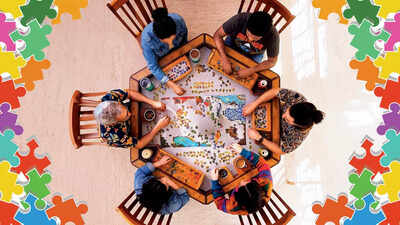
Jigsaw puzzles are the perfect weekend fix
A table, a pile of oddly shaped pieces, and a promise that they all fit together somehow – that’s all you need for a surprisingly good weekend. Jigsaw puzzles are no longer just a childhood memory, they’re a social ritual and even a competitive game.
And if you’re craving a slower, solo reset, you can always begin the quest yourself at home.Offline escape that quiets the mind“I like how solving a puzzle shuts off the noise in my head. After work, my head is usually full of random thoughts and unfinished tasks. People are exhausted from being online all the time. Even when we think we’re relaxing, we’re overstimulated. A lot of these people are actively looking for offline hobbies.
Something that feels fun but doesn’t drain you, and solving puzzles does just that,” says Delhi-based Shanya Verma.
She adds, “I’m not worried about emails or my long to-do list; I’m just looking for a specific piece.”
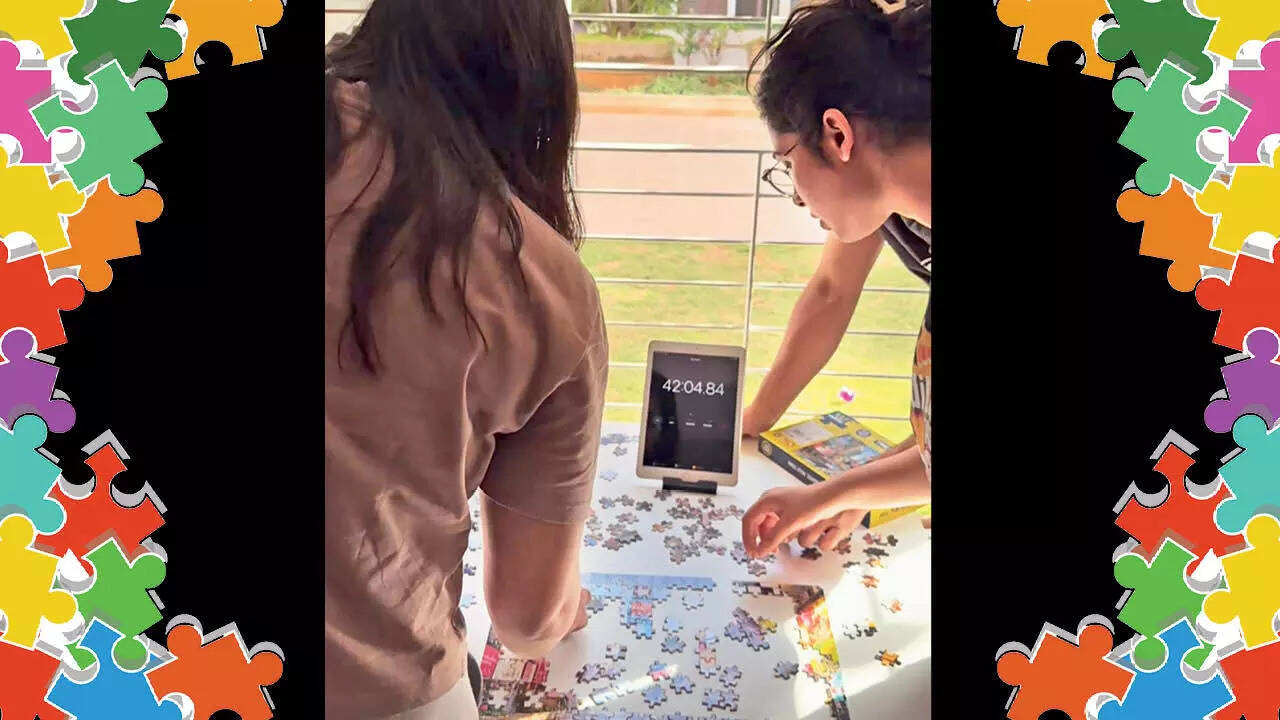
Puzzles aren’t just finishing, they’re about slowing down, focusing, and enjoying the mental workout (Pic: @thestudypie)
For Bangalore-based Zenitha Das, the hobby began during her MBA days. “I started doing puzzles as an adult when a friend got a 1000-piece Starry Nights puzzle. That’s when I realised that I really enjoyed jigsaw puzzles.”
Now, she and her husband Vikrant Nayak attend meetups and enjoy trying new brands, piece counts and materials. Talking about her first experience with puzzles, Delhi-based Iris Roy says, “It’s best to say that I was not prepared.
But fixing the last piece was incredibly satisfying. It was tedious but fun.”
Solving a puzzle feels like a reset. With friends, it’s fun in a different way. You can talk while doing it, and it’s not one of those activities where everyone is on their phone. It’s chaotic but fun
Shanya Verma, who recently hosted a puzzle meet with her friends
‘People connect over the shared love for puzzles’Speed puzzling is gaining momentum in India, where individuals and teams compete to complete identical puzzles against the clock.
Asma Tajuddin, who founded Playful Pursuits, a pan-India community of jigsaw puzzlers, says, “Speed puzzling is a relatively new competitive activity, and there’s immense satisfaction in finishing a puzzle as fast as possible.” On weekends, she carries a selection of puzzles to different venues across the city to make meetups more accessible.
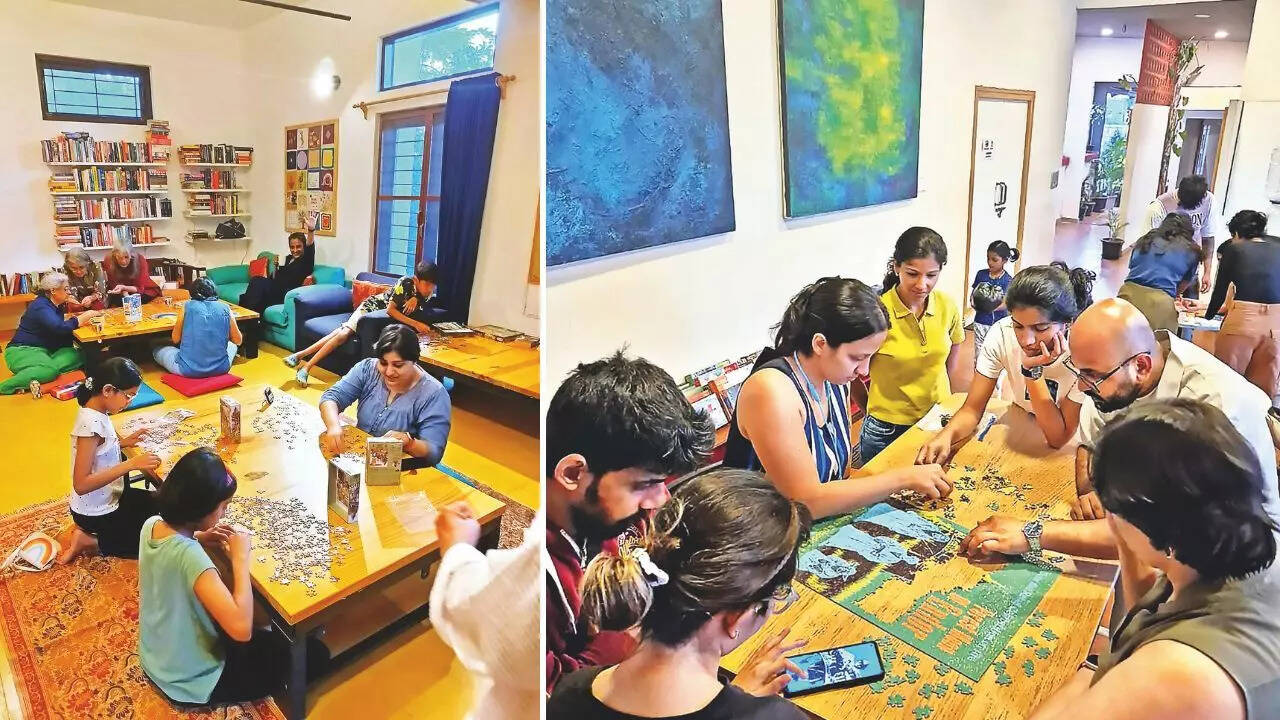
Beyond casual meets, speed puzzling events are drawing competitive spirits (Pics: @playful.pursuits)
“Speed puzzling events typically feature three categories, with participants competing solo or in pairs.
While formats may vary, the core idea remains the same – solving a puzzle against the clock,” shares Asma, adding, “In the classic speed puzzling, participants receive the same ‘mystery’ puzzle, begin simultaneously, and race to finish first. Another popular format is Puzzle Chess, usually in the individual category, where participants compete in a series of one-on-one matches across three to four rounds.
Smaller puzzles (70–250 pieces) are used here, making it more beginner-friendly.”Rishabh, a boardgaming meetup host at All Things Fun in NCR, says, “We organise timed puzzle-solving tournaments sometimes... A 150-piece puzzle is usually a good place to start as it takes less than an hour to finish and works well for beginners”
As a bonding activity, it’s perfect. We spent most of our dates at puzzle meetups, working on the same puzzle — sometimes with earphones on and our own playlists, sometimes chatting. I’d do the edges, he’d start with whatever section called out to him, and we’d finish it together
Zenitha Das, who loves solving puzzles not just at home but also at puzzle meetups
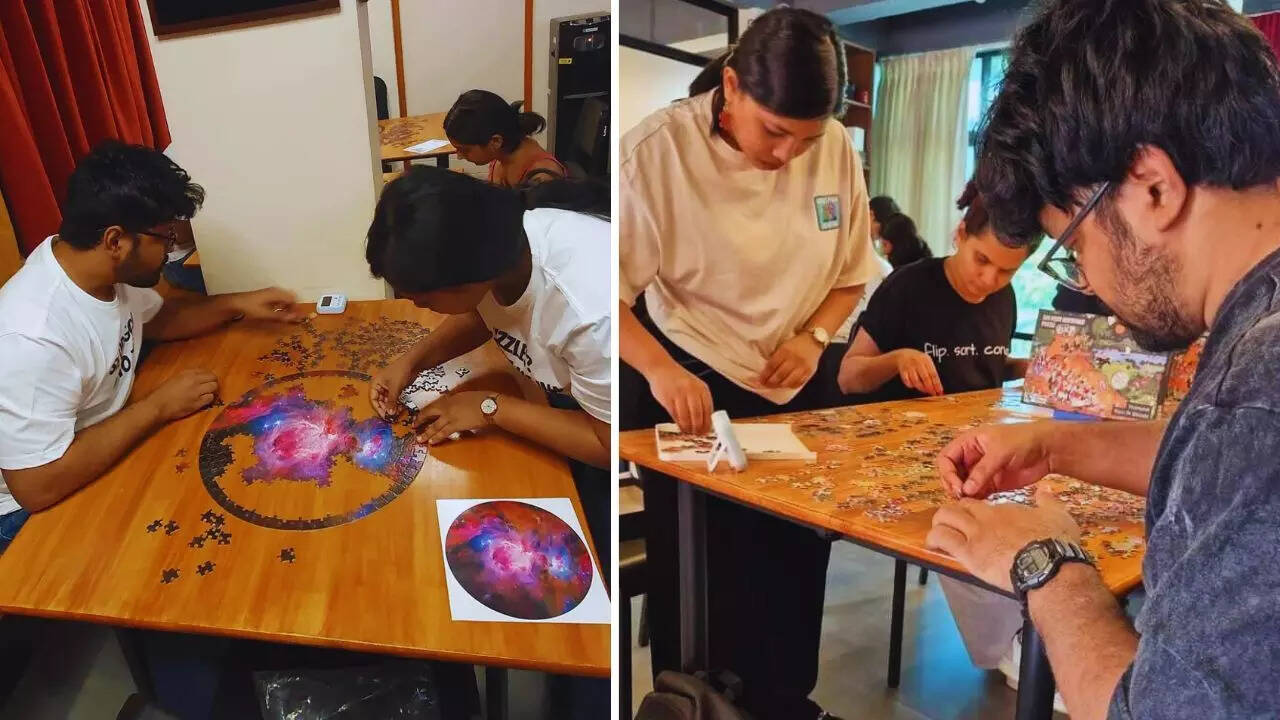
It is a great bonding activity for partners and friends (Pics: @the.couplethatpuzzles)
Want to solve a puzzle? Here are some tipsCreate a comfortable setup: Good lighting, a spacious surface, and minimal distractions improve concentration and reduce fatigueSort before you start: Organise pieces by colour, pattern, shape, or distinct details in sorting traysBuild the framework first: For jigsaw puzzles, start by identifying the corner and edge pieces to create a borderBreak it into sections: Instead of tackling the entire puzzle at once, focus on smaller sectionsChange your perspective: Rotate pieces, shift your seating position, or even view the puzzle from a different angleTake strategic breaks: If you’re stuck, step away. Returning with fresh eyes often leads to quicker breakthroughsContent creators suggest a simple hack to preserve the puzzle – gently tape it from the back once complete. You can then frame it and hang it on the wall, or slide it into a puzzle folder to build your own archive over time.







 English (US) ·