

 2 hours ago
4
2 hours ago
4
ARTICLE AD BOX
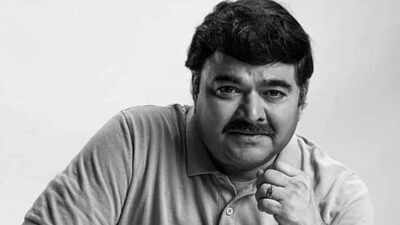
Sukh Manjhe Nakki Kay Asta? Yes, we are talking about none other than the versatile and irreplaceable Prashant Damle, the four decade career of the veteran is nothing but a reflection of his passion and dedication for Marathi theatre.
Interestingly, he is the first producer in India to introduce online bookings in Marathi theatre.His performances in 'Tour Tour' and 'Maharashtrachi Lokadhara' showcased his singing talent, with over 35 songs alongside impactful roles. Gradually rising in commercial theatre, his work in 'Moruchi Maushi' led to his first lead role in Acharya Atre’s 'Brahmachari', paving the way for the career-defining Gela 'Madhav Kunikade' in 1992.
The play earned multiple records, including Limca Book of Records entries for his record-breaking annual performances in 1995 and 1996.
With 12,775 performances across 33 plays, a world record, Damle went on to deliver several other iconic hits such as 'Chaar Diwas Premaache' and 'Eka Lagnachi Goshta', each crossing 1,000 shows. Going beyond these on-stage responsibilities, he has worked hard to build new centres for Marathi theatre in USA, Canada, UK, Israel, Japan and the Middle-East, while striving to build better infrastructure for Marathi theatre around Maharashtra.
In a quick chat with the acting 'Dhurandhar', he recalled his old days of acting, to helping his team during lockdown, AI influence on theatres and much more.From ‘Maharashtrachi Lokadhara’ till now, how would you sum up this entire journey in a short span of time?When Lokadhara started in Maharashtra, I had my doubts about whether I could really become an actor. I had not taken any concrete steps as an actor then. I had done parallel theater for about five to six years, but that was in a group.
I was only good-looking and a good singer, that was my qualification at the time. Before that, I had done two plays before Maharashtra chi Lokadhara. I played roles like a minister and in Runa Nibandh.
Those were small roles. But fundamentally, as an actor, how to stand, how to speak, how to act, I was not confident. That is what I was learning. I am still learning. The journey from Lokadhara till today has been a continuous process of learning.
It is a journey from zero to fifty or sixty. It is still a journey of learning.When we talk about experimentation, it truly is an experiment. Every day, I am experimenting. Yesterday, the audience laughed—how do we create new laughter today while retaining that essence? Sustaining a performance is crucial. What we did yesterday, we have to do today as well, especially in the performing arts. This requires immense concentration.
Even today, I feel like I am performing for the first time in front of the audience.
Not just me, but all my co-artists, we perform every show as if it is our first time. Doing this every single day is a challenge, and facing that challenge honestly is extremely important. That straightness, that sincerity, is still ongoing.You have done 12,000–13,000 plays. That’s a huge number. How do you maintain the same freshness and energy in every performance? Acting on stage is always a hobby for me. So it is always a part of the hobby, it has never become a business for me.
We do this because we love it. When we are answerable to the audience, there is a different kind of responsibility, not just for me, but for the entire team.The responsibility of the team is to deliver a sustained and fresh performance. As I said earlier, today also I am doing it for the first time. To feel that way every day is part of the challenge, and I believe that freshness comes from honesty.Theater is one space where there is no AI influence. Would you like to share your thoughts on this?Absolutely right. If I want to watch a particular artist, I still have to go to the theater.
If I want to see Virat Kohli, I have to go to the stadium. If I want to watch an athlete, I must go to the track.AI cannot replace performing arts, live art, or sports. It can be used in many other areas, but not here. That said, saying AI will not make any difference at all would be wrong. With so many channels and distractions, keeping theater alive is the responsibility of theater practitioners.From scripting to performance, everything has to be done very carefully.
Otherwise, audiences may drift away. Viewers’ preferences keep changing. So while AI may not directly affect theater, we cannot ignore it. We must work harder and go beyond our limits.Theatre has given you so much. What do you want to give back to theater?We must prepare the new generation and give them opportunities. For example, our first single-character play, Do Chhe Bhao Ne Kankaragam, the original team that worked on it is still involved in its journey.Through Akhil Bharatiya Marathi Natya Parishad, where I serve as director, we are creating platforms for new writers and directors. Writers like Purushottam Berde guide new talent, while directors such as Vijay Kenkare, Chandrakant Kulkarni, Mangesh Kadam, and Advait Dadarkar mentor upcoming directors.We must give the stage to new artists. For instance, Sankarshan Karade, after working with him in 'Tu Tithe Mi' four to five years ago, I have continued supporting him as a writer and artist.
The next generation must receive the same strength and encouragement.During the lockdown, theaters were completely shut. Did you miss theater during that time?Yes, I did miss it. Initially, for the first 15–20 days, I felt fine. But as the situation worsened, it became difficult. Another important aspect was the condition of backstage artists. They depend on daily work.I stayed in touch with them, offering mental and financial support.
I made sure no one was left alone. They work for an entire month expecting a salary at the end of it, and during lockdown, that stopped. I helped them with rations, medicines, whatever I could manage.Theater is teamwork. It is not just about actors. Without backstage artists, nothing moves forward. I supported them so that they could return to the theater once things reopened.How was it to return to the stage post-lockdown?It was marvelous. Theaters operated with the 50 percent seating rule, and audiences had to sit with gaps.
We ensured that the entire theater was thoroughly sanitized. People were extremely excited—they were tired of watching television.Before COVID-19, we used to have 50–60 new plays a year, but only three or four would do well. Now, out of 50–60 plays, eight or nine are doing well. Many people in theater today are well-educated and want to create meaningful work, which has increased audience interest.I truly hope such a break and lockdown never happen again.What about your current work?Right now, we are doing five productions. We have completed 810 performances of my latest play. We rehearsed and studied the play for almost 200 days.




 English (US) ·