

 1 hour ago
6
1 hour ago
6
ARTICLE AD BOX

Psychologists increasingly view certain forms of cleaning as more than household maintenance | Pexels
For some people, the moment guests leave is the moment cleanup begins. Glasses are gathered, cushions are straightened, dishes are washed, and the room is returned to its usual state before they sit down to relax.
From the outside, this behavior can look like a strong attachment to tidiness. Psychology suggests another possibility. Social gatherings often bring noise, activity, conversation, and a steady stream of sensory information. Once that stimulation ends, restoring order to the environment can help create a sense of calm and closure. The urge to clean may have less to do with perfection and more to do with helping the mind transition from a socially active state back to a quieter one.

Psychologists increasingly view certain forms of cleaning as more than household maintenance | Pexels
Cleaning can function as a coping responsePsychologists increasingly view certain forms of cleaning as more than household maintenance. In some situations, cleaning serves as a way of regulating emotions and reducing stress.Research published in Sage Journals found that cleaning behaviors were associated with more adaptive responses following social stress. In some experiments, even imagining cleaning appeared to reduce lingering anxiety.
These findings help explain why tidying up can feel satisfying after a gathering. The activity provides a clear task, visible progress, and an immediate result. Instead of remaining mentally attached to the social event, attention shifts toward restoring the environment.Physical order can create psychological closureWhen guests leave, traces of the gathering often remain throughout the home. Plates, cups, moved furniture, and other signs of activity serve as reminders that the event is not quite finished.Research examining cleansing-related thoughts and behaviors published in APA PsychNet suggests that cleaning frequently functions as a psychologically meaningful act rather than a purely practical one. The process can mark the transition between one state and another, helping people move from tension toward relief.This helps explain why some individuals feel compelled to clean immediately rather than waiting until the next morning.
The cleanup provides closure. Once the room is restored, the event feels complete.Clutter competes for attentionThe environment constantly influences where attention goes. Objects that appear out of place can continue drawing mental resources even when people are trying to relax.Clutter can create attentional costs and interfere with efficient cognitive processing, and a room that still contains reminders of a gathering may therefore feel mentally busier than one that has been reset.For someone who is already tired from social interaction, removing those reminders can reduce unnecessary mental demands. The room becomes easier to navigate visually, and the brain no longer needs to process as many competing signals.Restoring the home can restore a sense of controlHosting often requires adapting the home to other people’s needs. Furniture may be moved, routines may change, and attention may remain focused on guests for hours.Research on the psychological experiences of home, published in Sage Journals, suggests that people often associate home environments with needs such as competence, autonomy, and control. After visitors leave, cleaning can help restore those feelings.The activity signals that the home is returning to its usual rhythm. Objects go back where they belong, routines resume, and the space once again reflects the preferences of the people who live there.
That process can feel calming because it restores familiarity.
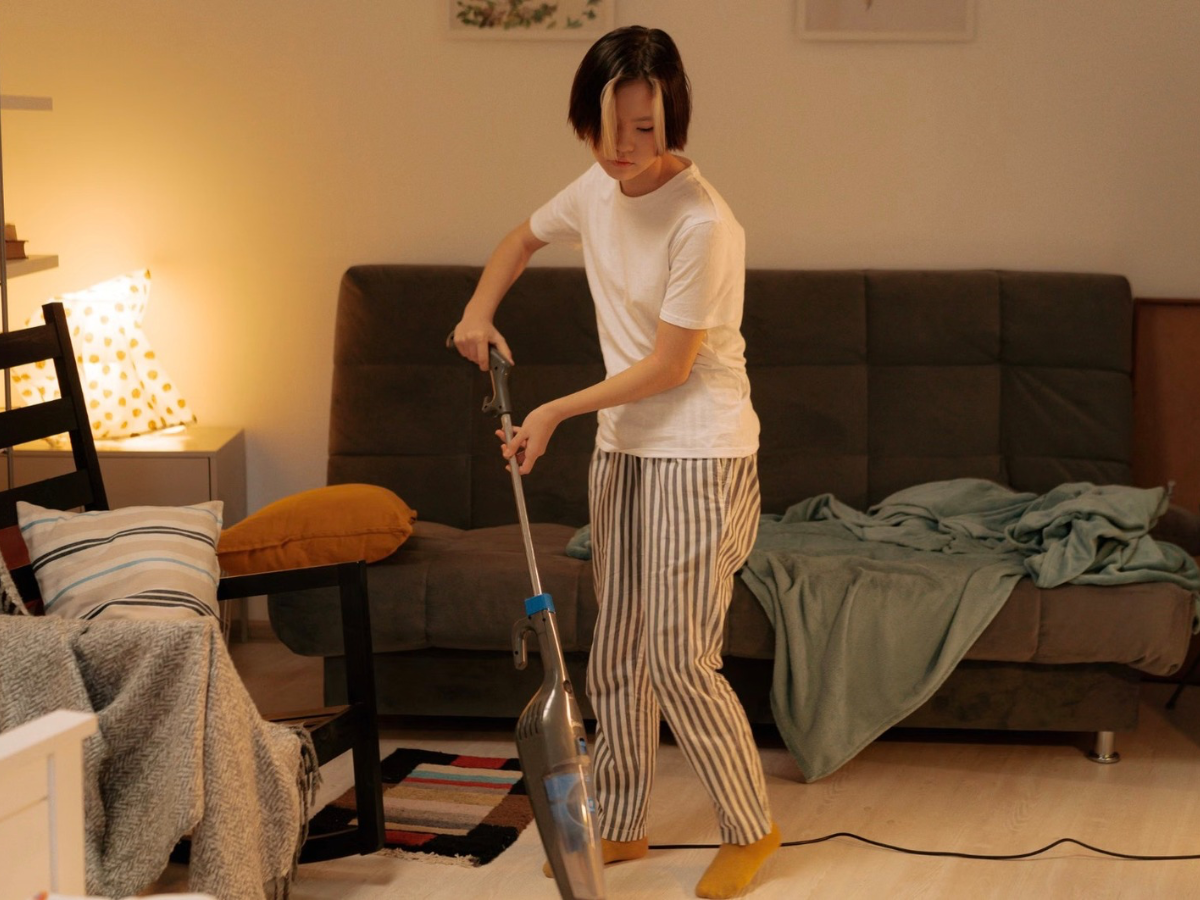
The behavior often appears after periods of stimulation, noise, and social engagement | Pexels
Why the habit is often misunderstoodPeople who clean immediately after guests leave are sometimes viewed as overly concerned with tidiness, but psychology suggests that interpretation may miss the larger picture.The behavior often appears after periods of stimulation, noise, and social engagement. Cleaning provides a structured activity that reduces visual clutter, creates closure, and restores a sense of order.
The goal is not always cleanliness itself. Often, it is the feeling that follows.People who start cleaning as soon as guests leave are not necessarily obsessed with keeping everything perfect. Research suggests they may be responding to the psychological effects of social stimulation and environmental disorder. Cleaning can reduce stress, create closure, and help restore a sense of control after a busy gathering. What looks like a preference for tidiness is often a practical way of helping the mind settle down.
For many people, putting the room back in order is simply part of returning to calm.









 English (US) ·