

 1 hour ago
6
1 hour ago
6
ARTICLE AD BOX
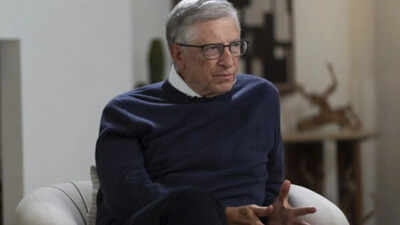
Say the word sustainable and most people picture solar panels, recycling bins, maybe an electric car humming down the street. Bill Gates is pointing somewhere else entirely. To him, a future is not sustainable if it sits on top of people who are sick, hungry and stuck with no way out.
You cannot leave half the world behind and call the result lasting.
That is the whole idea packed into this one line. Help the poorest rise, and you build something that holds. Demand that they keep suffering so the comfortable stay comfortable, and the future is cracked before it even begins.
Quote of the day by Bill Gates
"We make the future sustainable when we invest in the poor, not when we insist on their suffering."
What is the meaning of the quote by Bill Gates
Strip the sentence down and it really sets two choices side by side.One choice is to invest. Put money, time and effort into the basics that change a life: clean water, vaccines, a school, a clinic, a chance to earn a living.
Treat poverty as a problem with a solution, and treat poor people as what they are, which is millions of capable human beings who simply never got a fair start.The other choice is uglier, and people rarely say it out loud. It is the quiet assumption that some folks are just meant to go without. That their hardship is the price of someone else's comfort. Gates is flatly rejecting that. A world running on the misery of millions, he argues, is not stable, and it will not last.
So the takeaway is plain. You build the future by raising people up, not by keeping them down. Helping the poor is not only the decent thing. It is the practical thing.
Bill Gates said this on a stage at Harvard
Here is a nice detail. Gates dropped out of Harvard in 1975 to go and build Microsoft. More than thirty years later, in June 2007, he walked back onto that campus to finally collect a degree, an honorary one, and give the commencement speech. This quote comes from that day.It was not a victory lap. It was a confession. Gates told the graduates that when he had been a student there, he left knowing almost nothing about the brutal inequalities in the world. He had no idea, he admitted, that millions were dying from diseases that cost very little to prevent or cure.Then he handed them the idea that had taken over his life. Our greatest achievements as a species, he said, are not the discoveries themselves.
They are what we do with those discoveries to shrink the gap between the lucky and the forgotten. A miracle drug means nothing if it never reaches the child who needs it. And Gates did more than talk. He had already poured a fortune into his foundation, betting his second act on exactly this belief.
Two roads, two very different worlds
Picture where each choice leads, and the quote gets sharper.Go down the first road and the poor are written off. Money pools where money already is.
The sick stay sick because they cannot pay. Kids grow up without a classroom because nobody thought they were worth the investment. In the short run it looks cheaper. Over the years it builds a jagged, unstable world full of wasted talent and avoidable pain.Go down the second road and something slowly shifts. A village gets clean water and the children stop dying of preventable illness. A girl finishes school and ends up running a business that employs ten people.
Health and learning spread, and with them comes work, growth and hope. This is not a fantasy. Countries that were once desperately poor have climbed fast once real investment finally reached their people.The point Gates keeps circling back to is this. The choice was never about charity at all. It is about what kind of world you actually want to wake up in.
Why it lands even harder now than in 2007
The speech is old enough to vote, but the message feels fresher than ever.The gap between rich and poor has not gone away. While some of us argue about which phone to buy, hundreds of millions still cannot count on clean water or a doctor. And a recent global health scare reminded everyone of something Gates has said for years. A disease that starts among the neglected does not politely stay there. What hurts the poorest eventually reaches everyone.There is a second, trickier argument hiding in the quote too.
As the world scrambles to protect the planet, some voices suggest poorer countries should just slow down, stay small, burn less, for the good of us all. Gates pushes back hard on that. He says we have no right to ask the poor to stay poor to fix a mess they mostly did not make. The answer, in his view, is to invent cleaner, cheaper tools so people can climb out of poverty without wrecking the climate.
A fair world and a green world have to be built at the same time, or neither one really works.
Putting it to work in your own life
You will probably never run a charitable foundation worth billions. Does not matter. The same instinct scales right down to an ordinary week.
- See potential, not just problems. When someone is clearly struggling, the easy move is to judge them. The better move is to back them, even a little, because a bit of genuine belief can change where a person goes next.
- Choose help that keeps working after you walk away. Covering a kid's school fees or backing a local training scheme does far more good over time than a one off handout that is gone by Friday.
- Catch the moments you expect others to suffer for your convenience. It shows up in how you treat the people who serve you, how you shop, and how you talk about those with less.
- Treat fairness as something that pays you back. A neighbourhood where more people are healthy, working and educated is safer and better for you too, not only for them.
Other lines that say much the same thing
Gates was hardly the first person to land on this idea. Older sayings circle the same truth.
- "Give a man a fish and you feed him for a day, teach a man to fish and you feed him for a lifetime." Same lesson, really. Lasting help means handing someone the skill, not just the meal.
- "A rising tide lifts all boats." When life gets better across the board, the whole harbour rises, not just the fanciest yacht in it.
- And Gates put his own spin on it that Harvard day, when he said the measure of our progress is how well we use it to close the gap between people.
Different centuries, different mouths, one stubborn idea. A society is only ever as strong as the people it treats as least important.
One last thought
For a quote that mentions suffering, this one is oddly full of hope.It refuses to accept that poverty is just the way things are. It says the future is not something that happens to us. It is something we choose, decision by decision, mostly through how we treat the people with the least power to fight back.We can build it on a shrug, leaving millions behind and telling ourselves it is somebody else's job. Or we can build it on the simple, stubborn belief that every single life counts for something. Gates is betting on the second one. The funny thing is, the kinder bet also happens to be the smarter one. Lift the people at the bottom and you do not drag the world down. You give the whole thing a floor to stand on.





 English (US) ·