

 10 hours ago
3
10 hours ago
3
ARTICLE AD BOX
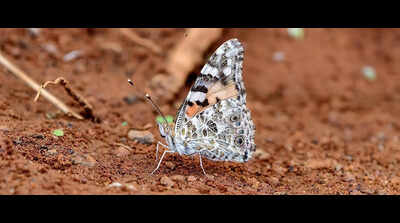
Painted lady ( Vanessa cardui) long distance migrant butterfly species spotted in Sivagangai district first time documented by naturalist Kumaresan chandrabose
Sivaganga: A rare butterfly was spotted near Sivaganga for the first time, with experts suggesting the sighting could indicate shifting migratory patterns or environmental changes.The butterfly, identified as a painted lady (Vanessa cardui), was sighted and documented by Kumaresan Chandrabose, a naturalist, at the farm house of his uncle Sathiyamoorthi, who is a native plant collector.Ramanasaran Hari from The Nature and Butterfly Society (TNBS) told TOI that it's probably moving to Sri Lanka and was recorded for the first time in Sivaganga. Usually, these species of butterflies live in highly elevated areas like Ooty and Kodaikanal, and they have the tendency to migrate once in four to five years. They can go up to Africa and the Middle East; some went to Sri Lanka, he added.E Joy Sharmila, associate professor and head of the zoology department at The American College, Madurai, said that these butterflies are rare to sight and the recent sighting might be because they got drifted by wind or could be an environmental change, as these butterflies prefer a mid-climate.She also said that the butterfly could come in search of nectar. This could be a change in migratory pattern; most of the wild-dwelling butterflies are migrating to urban areas. “We have even witnessed that a type of butterfly called ‘Birdwing’ is found abundantly in the western and eastern ghats, but in recent times we have witnessed those even on our college campus,” she added.Sharmila said that this can be because of some disturbance in the forest, which could be people moving. This could cause them to relocate. “If a single butterfly were spotted, then there is a high probability that it could have drifted by a strong wind”, she added.









 English (US) ·