

 1 week ago
4
1 week ago
4
ARTICLE AD BOX
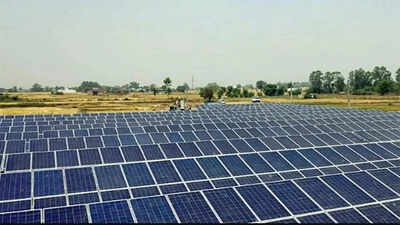
BATHINDA: India’s renewable power generation from solar, wind, hydro and bioenergy saw a record increase of 98 TWh in 2025 which turns out the 24% growth in the year, double the previous high in 2022.
The rise in generation was also twice the demand growth at 49 TWh, which was abnormally low owing to milder temperatures and slower industrial activity. As a result, India’s fossil power generation fell for only the third time since 2000, funds a new report by independent energy think tank Ember, released on Tuesday. Ember’s Global Electricity Review shows that global solar generation rose by 636 TWh in 2025, which would be sufficient to displace gas-fired electricity equivalent to all LNG exports through the Strait of Hormuz last year, estimated at 550 TWh. This shift comes amid a second fossil shock in just four years, as the US-Israel war with Iran highlights the ongoing volatility and energy security risks associated with fossil fuels, reinforcing the role of renewables in providing a secure supply of affordable electricity.According to the report, the combined effect was crucial to drive down global fossil electricity generation. While India’s fossil power generation fell 52 TWh (3.3%).
India remains the second-largest coal generator globally, behind China. “India’s power system is entering a new phase of its transition, driven by record additions in solar and wind capacity in 2025. Going forward, investments in grid infrastructure and flexibility resources will be critical. India is on the right track—auction designs are already evolving to include greater energy storage components. As these projects begin to scale, they will enable more efficient utilisation of low-cost clean power across the system,” says Duttatreya Das, Energy Analyst - Asia, Ember.India reflected the global trend of wind and solar growth in meeting rising electricity demand. The country’s wind and solar generation increased by 75 TWh, a new record, exceeding the growth in electricity demand. Globally, wind and solar growth met 99% of the rising demand. India's share of wind and solar in electricity generation (14%) still lags behind the global average (17%). Yet, wind and solar’s share increased by 3 percentage points in 2025, highlighting the growing importance of clean energy in India’s electricity system. As per the report, India recorded the world’s third-largest increase in solar generation in 2025, adding 53 TWh. Solar generation grew by 37%, above the global average of 30%, and its increase exceeded growth in both wind and hydro. The rise in solar generation was driven by a record increase in capacity of 38 GW(AC), higher than the United States (35 GW(AC)) for the first time. The growth in solar power alone was enough to meet the rise in India’s electricity demand in 2025.
Globally, solar alone met three-quarters (75%) of global demand growth.Solar also overtook hydro to become India’s largest source of clean electricity, with its share reaching 9.4% in 2025. Output from solar has doubled since 2022, from 96 TWh to 196 TWh in 2025, solidifying India’s position as the third-largest solar generator globally, with nearly double the generation of Japan in fourth place (101 TWh).“Solar power is the dominant driver of change in India’s power system,” said Aditya Lolla, Ember’s Managing Director.
“Along with battery storage, solar is opening a path to fast-scaling, round-the-clock clean power that can enhance India’s energy security and fend off global shocks.”India’s wind power generation recorded the largest ever annual increase (+22 TWh) in 2025 and more than tripled in the last ten years, from 33 TWh in 2015 to 104 TWh. Nearly a third of that increase came in 2025 alone. In 2025, India overtook the United Kingdom to become the world’s fifth-largest wind power generator.









 English (US) ·