

 2 days ago
3
2 days ago
3
ARTICLE AD BOX
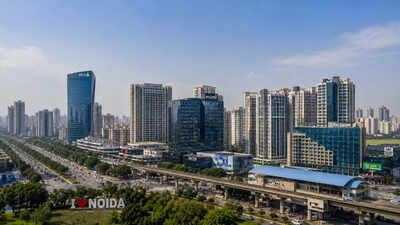
The National Capital Region (NCR) is one of India's most dynamic urban clusters, attracting a steady flow of professionals, students, entrepreneurs and migrant workers from across the country.
With Delhi serving as the national capital, and fast-growing satellite cities such as Noida, Greater Noida and Gurugram expanding rapidly, the region offers a wide range of job opportunities, educational institutions, business hubs and infrastructure projects.This steady migration has continued to drive demand for rental housing across the region. A report by Magicbricks for the January-March 2026 quarter provides insights into how demand and supply for rental homes, preferred home sizes, BHK configurations, furnishing choices and monthly rental budgets have changed across NCR's key cities.The report analyses rental trends using two measures: Quarter-on-Quarter (QoQ), which compares the latest quarter with the previous one, and Year-on-Year (YoY), which compares current trends with those seen during the same period last year.Here's a look at how the rental market has shaped up across these cities:
DELHI
Delhi has shown a steady rental demand as compared to the previous quarter registering a slight growth of 0.1%.
However, the number of rental accommodations increased by 5.6% QoQ and 6.9% YoY. Tenants preferred semi-furnished homes and well-connected locations, and the rents, both quarterly and yearly, grew 1.9% and 6.4%, respectively. According to the report, in Delhi, 2BHK homes lead 42% of the rental demand, 1BHKs at 35%, and 3BHKs at 20%. However, 3BHK homes comprised 40% of the supply while 2BHK homes took a share of 32%.Delhi reported 50% demand for segments sized 500-1000 sq ft. This was followed by a 20% demand for 1000-1500 sq ft homes. Budget-wise, more than half of the rental demand was concentrated at monthly rents of up to Rs 30 thousand. However, the supply was more oriented towards premium homes. Here, 42% of the accommodations in supply were reported to have monthly rents at Rs 50 thousand and above. This suggests a demand focused on smaller and more affordable homes, but a greater supply for premium housing.Being the national capital, Delhi attracts a huge number of professionals, students, and migrants. Key areas such as Saket, Greater Kailash 1, and Mayur Vihar Phase 1 remain in high demand because of strong metro connectivity, developed infrastructure, and proximity to major business districts.
NOIDA
Noida has shown a largely stable rental market compared to the previous quarter, demand declined marginally by 0.2%, and the yearly fall was 6.7%.
However, rental supply increased by 6.5% QoQ and approximately 7% YoY, indicating a steady increase in the number of rental homes. Rents also edged up by 0.1% QoQ and 5.6% YoY, reflecting a moderate price rise.According to the report, in Noida, 1BHK homes lead 46% of the rental demand, followed by 2BHKs at 35% and 3BHKs at 18%. However, on the supply side, 3BHK homes dominated with a 48% share, while 2BHK homes accounted for 36%.
This suggests a demand more concentrated towards small homes, while the supply, just like Delhi, remained tilted towards larger accommodations.Similar to Delhi, Noida’s rental demand is led by 500-1,000 sq ft homes at 50%. This is followed by 1,000-1,500 sq ft homes at 31%. In budget terms, demand is concentrated in the Rs 10-20 thousand segment at 51%, followed by Rs 20-30 thousand at 21%, while supply is more visible in Rs 20-30 thousand and Rs 30-40 thousand homes.
Tenants continue to prefer semi-furnished homes, which account for 45% of demand and 70% of supply.
As per the report, the market seems to be driven by affordability.Being a major satellite city of Delhi, Noida attracts professionals, families, and students because of its metro access, expressway connectivity, and expanding corporate base. Key localities such as Sector 107, Sector 75, Sector 150, and Sector 137 remain in demand due to their connectivity, planned development, and proximity to employment hubs.
Greater NOIDA
Greater Noida has seen a mild rise in demand of 0.2% QoQ, but on a yearly basis, it declined by 9.9%. Despite the declining YoY demand, supply increased strongly by 10.4% QoQ and 11% YoY. Rents, however, fell sharply by 9.7% QoQ and were nearly flat YoY at -0.4%, suggesting pricing corrections in the market in relation to the demand.In terms of BHKs, the region has reported a balance in supply and demand. 2BHK homes accounted for 40% of rental demand, followed closely by 1BHKs at 37% and 3BHKs at 21%.
Supply is more balanced, with 2BHK homes at 43% and 3BHK homes at 40%. Greater Noida’s rental demand is heavily focused on 500-1,000 sq ft homes at 52%, followed by 1,000-1,500 sq ft homes at 33%. Budget-wise, 65% of demand is concentrated in the Rs 10-20 thousand segment, with another 20% in the Rs 20-30 thousand segment. Semi-furnished homes dominate both demand and supply, accounting for 51% of demand and 68% of supply.
This suggests a value-driven market meant to appeal to working professionals.The city has emerged as an important rental hub in the NCR, supported by affordability, improving infrastructure, and connectivity to Noida and Delhi. Owing to planned development, areas such as Noida Extension, Tech Zone, Eta 2, and the Yamuna Expressway region remain attractive to the tenants. The upcoming Jewar international airport, along with the metro expansion, is expected to strengthen long-term rental prospects.
Gurugram
Gurugram has indicated a mixed rental momentum. It recorded a modest demand growth of 0.9% QoQ, which fell by 4.6% when calculated annually. The supply, however, expanded sharply by 10.4% QoQ and 16.2% YoY. Meanwhile, the rents declined slightly by 1.1% QoQ and 2.5% YoY.According to the report, Gurugram’s rental demand is led by 2BHK homes at 37%, followed by 1BHKs at 34% and 3BHKs at 25%. On the supply side, 3BHK homes dominate with 48%, while 2BHKs account for 28%.
This shows that tenant demand is concentrated in smaller and more budget-friendly units, while supply is skewed toward larger, premium homes.In Gurugram, demand is led by 500-1,000 sq ft homes at 46%, followed by 1,000-1,500 sq ft homes at 22%. Budget-wise, 42% of demand is concentrated in the Rs 10-20 thousand segment, while supply is led by Rs 50 thousand to RS one Lakh homes at 36%. Semi-furnished homes dominate demand at 51% and supply at 68%, underscoring a preference for practical, move-in-ready housing.
This indicates a clear gap between affordable rental demand and a relatively premium supply mix.Gurugram continues to remain one of the NCR’s strongest rental markets due to its corporate base, strong road network, and proximity to Delhi. Localities such as Sector 65, Sector 89, DLF Phase 2, and DLF Phase 5 stand out because of business connectivity and modern residential offerings.The report has also highlighted strong supply growth in peripheral corridors like the Southern Peripheral Road, the Dwarka Expressway, and New Gurgaon.








 English (US) ·