

 1 hour ago
5
1 hour ago
5

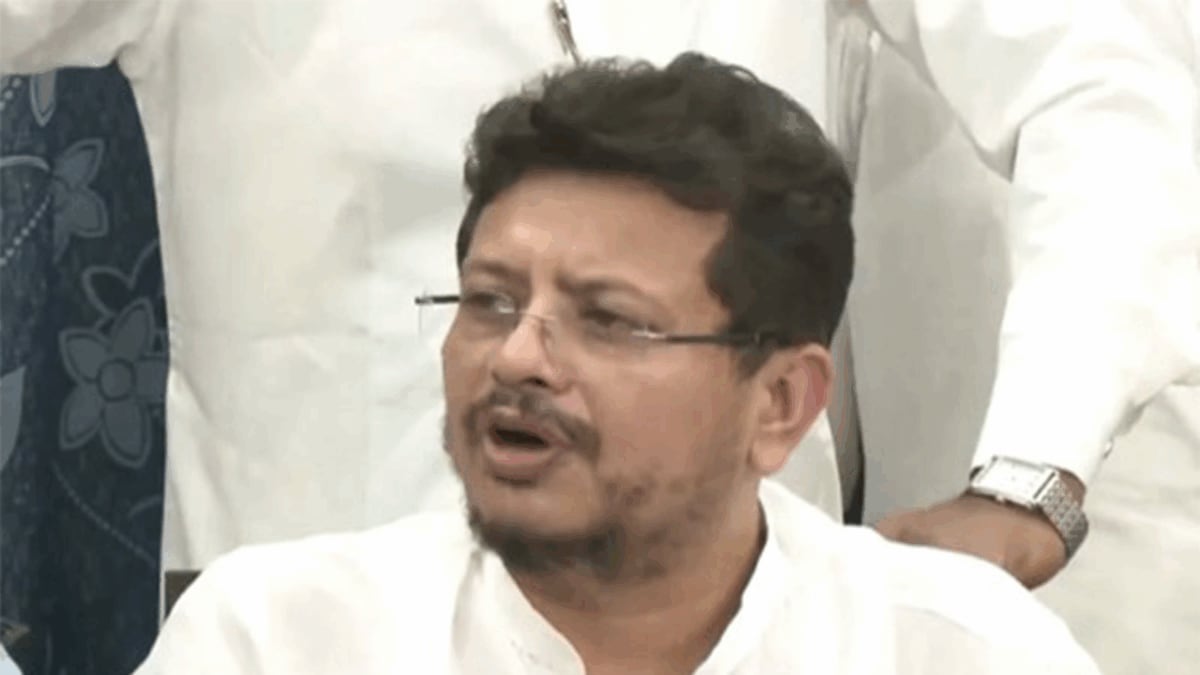
The Supreme Court on Monday (June 15, 2026) issued notice on a plea challenging the appointment of Deepak Prakash as Bihar’s Panchayati Raj Minister for a second time without being elected to either House of the State legislature.
A Bench of Chief Justice of India (CJI) Surya Kant and Justice V. Mohana sought responses from the Bihar government, the Election Commission (EC) and Mr. Prakash on a petition filed by Bihar resident Rakesh Kumar Singh. The plea challenges Mr. Prakash’s reappointment as well as his continuance in office under Article 164(4) of the Constitution.
Article 164(4) permits a person who is not a member of the State legislature to be appointed a Minister for a maximum period of six consecutive months. If the person fails to secure election to either House of the legislature within that period, he ceases to hold ministerial office. The top court has previously ruled that the six-month grace period cannot be invoked to keep reappointing a non-legislator to ministerial office without an electoral mandate.
Mr. Prakash, son of Rashtriya Lok Morcha (RLM) leader Upendra Kushwaha, was appointed Panchayati Raj Minister on November 20, 2025, in the then Nitish Kumar government despite not being a member of either the Bihar Legislative Assembly or the Bihar Legislative Council.
Following the constitution of a new Council of Ministers after Mr. Kumar stepped down and Samrat Choudhary assumed office as Chief Minister, Mr. Prakash was again sworn in as Panchayati Raj Minister on May 7, 2026, although he was still not a member of the State legislature.
The petition is likely to be listed next for hearing on July 15.
‘Colourable exercise’
The petition, filed through advocate-on-record Sanya Kaushal and drawn by advocate Sudeep Chandra, alleged a “deliberate circumvention and structural subversion” of the constitutional scheme embodied in Article 164. It argued that the six-month grace period available to a non-legislator minister cannot be repeatedly invoked each time there is a change of government.
According to the plea, Mr. Prakash was required to secure election to the legislature between November 20, 2025, when he was first sworn in as a minister, and May 20, 2026.
“...the six-month exception under Article 164(4) is non-renewable and non-revivable during the tenure of the same Legislative Assembly and cannot be reset through resignation, Cabinet reshuffles, change of Chief Minister, dissolution of a ministry, or reappointment,” the plea stated.
Mr. Singh alleged that the reappointment amounted to a “colourable exercise of constitutional power” designed to achieve indirectly what could not be achieved directly under the Constitution. According to the plea, Mr. Prakash had already utilised nearly four months and 26 days of the six-month period contemplated under Article 164(4) from the date of his original appointment, leaving little over a month before the constitutional deadline expired.
The petition has accordingly sought a writ of quo warranto calling upon Mr. Prakash to disclose the constitutional authority under which he continues to hold office. It also seeks a declaration that his reappointment is unconstitutional, void and contrary to Article 164(4) of the Constitution.




 English (US) ·