

 12 hours ago
5
12 hours ago
5
ARTICLE AD BOX
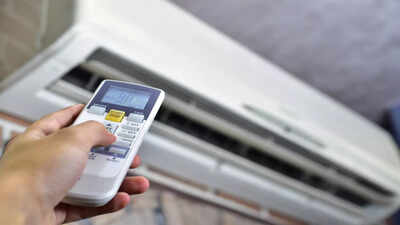
Room air conditioners. Image Credit: iStock
According to RMI, as the climate warms, researchers are pushing solid-state air-conditioning systems that cool without traditional gases or compressors, potentially reducing a major source of emissions.According to reporting in MIT Technology Review, researchers are testing “solid-state” cooling systems that could eventually replace conventional vapour-compression air conditioners if efficiency challenges are solved.Why is this revolutionary technology desired?The dominant technology in the field has been in use for over half a century, but it has limitations that are nearing their physical peak. Efficiency is improving, but still well below theoretical thermodynamic limits.Hydrofluorocarbons used in many air-conditioners can warm the Earth hundreds to thousands of times more than carbon dioxide. Even minimal leakage has a large impact on global warming, and countries that traditionally have a much lower need for air-conditioning, like the UK, will be under increasing pressure to meet the net-zero carbon emissions target while simultaneously dealing with rising cooling demands.
The science of solid-state air-conditioning: Instead of using refrigerant gases that undergo a phase change, solid-state air conditioning systems use "caloric effects".These occur when certain solid materials change temperature when subject to electric, magnetic, mechanical stress, or pressure fields. Known caloric effects include electrocaloric, magnetocaloric, elastocaloric, and barocaloric effects, which use electric fields, magnetic fields, mechanical stress, and pressure changes, respectively.According to a study published in the journal Discover Industrial Chemistry and Materials, available through Springer Nature, these changes in entropy under field stress will be the basis for new, refrigerant-less air-conditioning technologies, essentially creating heat/cold through physical forces instead of fluid mechanics.
Air Conditioner service
The challenge with solid-state technologyThese technologies have not yet displaced traditional air-conditioning units because their efficiency is still low and heat transfer to the surrounding air remains poor compared with theoretical projections.There have been predictions of coefficients of performance (COP).According to ScienceDirect, COP values as high as around 10 have been reported under laboratory conditions for some caloric systems, versus 3 to 5.5 for current units, but efficiency decreases significantly in real-world applications where heat transfer between solid material and air becomes an issue.The research has also yielded small cooling outputs, and the question of long-term durability has been raised, especially in elastocaloric systems, as some elastocaloric materials, such as shape-memory alloys, can degrade under repeated cycling.Scientists remain confident, and several arguments support that view. They address the core problems of current systems directly by eliminating refrigerant leakage, reducing reliance on compressors, and enabling quieter, lower-maintenance systems. Researchers are also working to make these materials more efficient while minimising potential toxicity.Hybrid systems are also being explored, which pair the benefits of solid-state modules with traditional heat exchangers.For the UK, the rise in temperatures and increasing demand for air-conditioning present both the risk of rising emissions and a prime opportunity for innovation with these newer systems that will help meet net-zero targets. There is also a potential benefit in dense urban areas, where reduced noise from solid-state cooling could be appealing.In conclusionWhile not yet market-ready, solid-state air-conditioning systems appear to have a promising path forward.This technology aims to remove refrigerants from air-conditioning entirely. The central challenge is closing the efficiency and output gap so the systems can compete with established, highly optimised technology.









 English (US) ·