

 1 hour ago
6
1 hour ago
6
ARTICLE AD BOX
New Bihar Chief Minister Samrat Choudhary declined a skull cap at Janata Darbar, later accepted a saffron scarf, triggering discussion over shifting political symbolism and public messaging in the state.
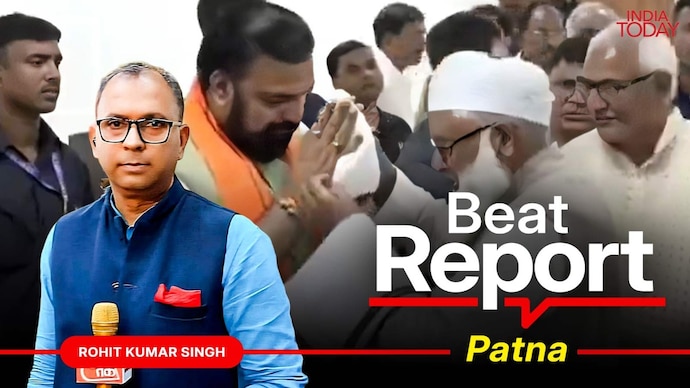
TelaThe Chief Minister gently held the man's hand and declined to wear the offered skull cap.
Patna,UPDATED: Apr 18, 2026 23:12 IST
The change of government in Bihar is beginning to reflect not just in policy direction but also in public gestures, with newly-appointed BJP Chief Minister Samrat Choudhary at the centre of a debate over shifting "symbolic politics".
The discussion was triggered during a Janata Darbar at the Chief Minister's residence on Friday. An elderly Muslim man approached Choudhary and, as a mark of respect, attempted to make him wear a traditional skull cap. The Chief Minister gently held the man's hand and declined the gesture. The exchange remained calm and courteous, but visuals from the event quickly circulated, sparking political commentary.
The moment has drawn attention because of its contrast with the political culture shaped over the past two decades. Former Chief Minister Nitish Kumar was frequently seen wearing a skull cap at public events, particularly during Iftar gatherings and interactions with minority communities. Over time, the gesture came to be viewed as a sign of outreach and inclusiveness.
Against that backdrop, Choudhary's refusal is being interpreted in multiple ways. While some see it as a matter of personal choice, others believe it could reflect a shift in political messaging or priorities. In Bihar's deeply layered social landscape, even small gestures by leaders often carry wider meaning.
The debate intensified a day later. On Saturday, Choudhary met several visitors who came to congratulate him after he assumed office. Among them was Syed Afzal Abbas.
In a marked departure from earlier conventions, Abbas presented the Chief Minister with a saffron scarf instead of a skull cap. Choudhary accepted the scarf and wore it, a moment that also drew attention for signalling a visible shift in political symbolism.
The back-to-back developments have fuelled a broader conversation in political circles. Questions are being raised over whether these gestures reflect individual comfort or point to a calibrated political strategy.
Analysts noted that symbolism plays a crucial role in public life, with leaders often using such gestures to connect with communities and shape perception. While wearing a skull cap had come to signify inclusiveness in Bihar's political imagery, opting out of it and appearing in a saffron scarf may be read as a different form of positioning.
In a socially diverse and politically sensitive state like Bihar, such signals are closely watched and quickly interpreted, explaining the speed at which the issue has gained traction.
There has been no detailed response from the Chief Minister so far. Whether these gestures evolve into a broader political pattern or remain isolated instances is likely to become clearer in the days ahead.
- Ends
Published By:
Sahil Sinha
Published On:
Apr 18, 2026 23:12 IST
Tune In


 English (US) ·