

 1 day ago
5
1 day ago
5
ARTICLE AD BOX
Every year, millions of Indian families make one of the most consequential decisions of their lives; choosing where their child will spend the next three or four years, and trusting that the institution will deliver.
A degree, yes. But also skills, exposure, and a realistic shot at a career. It is a profound act of faith. However, too many institutions have not held up their end of the bargain for far too long.The mismatch is well-documented. Employers across sectors have flagged it for years. Graduates who have cleared examinations but cannot solve a real problem, who have studied a subject without ever truly working within it. The gap is not about intelligence.
It is structural. Curricula that haven't moved with industry, faculty without applied experience, and an institutional culture that measures itself by enrolment figures rather than what happens to a student five years after graduation.
The consequences are real and they fall hardest on the students and families who invested the most.What does an institution look like when it's actually trying to close that gap? It tends not to announce itself loudly.
It earns recognition from national regulatory bodies because its infrastructure and standards genuinely meet the bar, not because it lobbied for it. Its faculty have worked outside academia. Its industry partnerships produce internships and certifications rather than signed documents that gather dust.
And its graduates get called back for second interviews. Lucknow-based Shri Ramswaroop Memorial University, established under U.P. State Government Act of 2012, recognised by the UGC, and a member of the Association of Indian Universities, fits this description with a specificity that is worth examining. The university's recent approvals from both the Pharmacy Council of India and the Bar Council of India for the 2026–27 academic session arrived not as a surprise, but as the natural result of a decade of deliberate, ground-level institutional work.Two IIT Kanpur Gold Medalists, Chancellor Er. Pankaj Agarwal and Pro-Chancellor Er. Pooja Agarwal, built this university with a particular conviction about what technical and professional education should feel like from the inside. That conviction shaped the hiring: faculty drawn from IITs, NITs, and institutions where rigour is non-negotiable. It shaped the infrastructure: laboratories that are used rather than displayed, learning environments designed around experimentation and application.
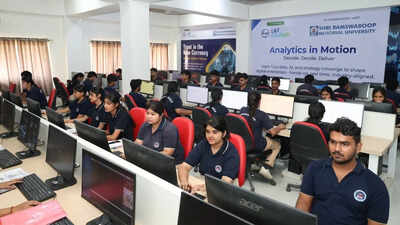
And it shaped the culture, one where the measure of a programme is not how many students passed, but how many were genuinely prepared for what came next.That preparation runs through the university's partnerships in a way that is less transactional than most. The collaboration with L&T EduTech, for instance, doesn't exist at the margins of the curriculum - it sits inside it, giving students structured exposure to Artificial Intelligence, Data Science, Cyber Security, Semiconductor Design, Electric Vehicle Engineering, and FinTech at a depth that produces real certifications and real project experience.
Partnerships with Tata Motors, IBM, IEEE, and NPTEL extend this further, creating a learning ecosystem where industry isn't a guest speaker at the end of the semester but a consistent presence throughout it.There is also a dimension to SRMU's work that is rarer still in private higher education: a formal partnership with the Department of Planning, Government of Uttar Pradesh under the Zero Poverty Abhiyan initiative.
Through this collaboration, students and faculty engage directly with community development challenges in adopted Gram Panchayats, contributing to micro-planning, skill development, entrepreneurship promotion, and employment generation at the grassroots level.
Alongside this, MoUs with FICCI FLOW, Solar Energy partners, and Socio-aid Services draw the university further into renewable energy, women's empowerment, and social entrepreneurship.
These aren't peripheral programmes. They shape how students understand the world they are being prepared to work in and the kind of professionals they become as a result, the university says.
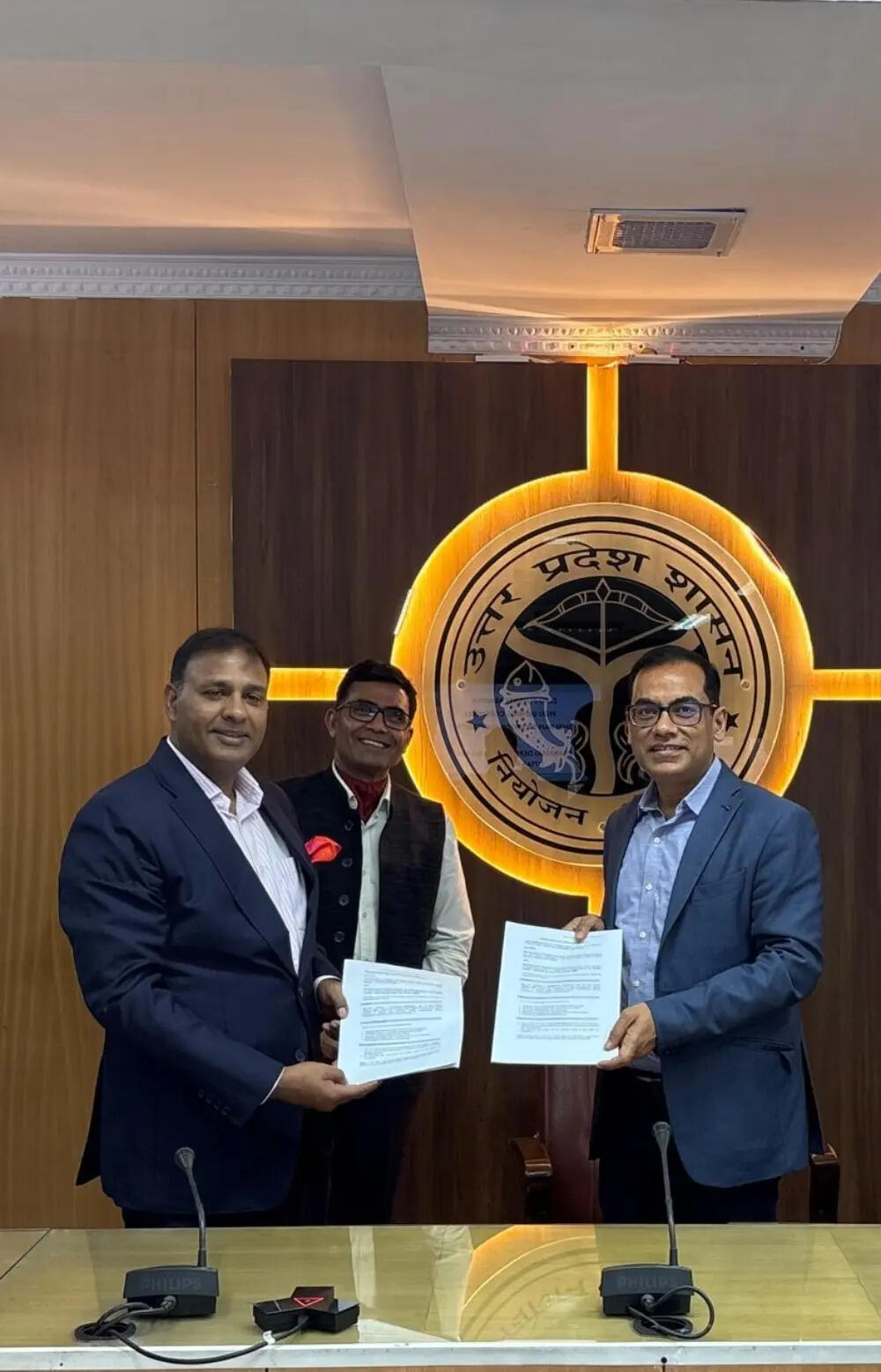
MOU signing ceremony between the university and the Government of Uttar Pradesh.
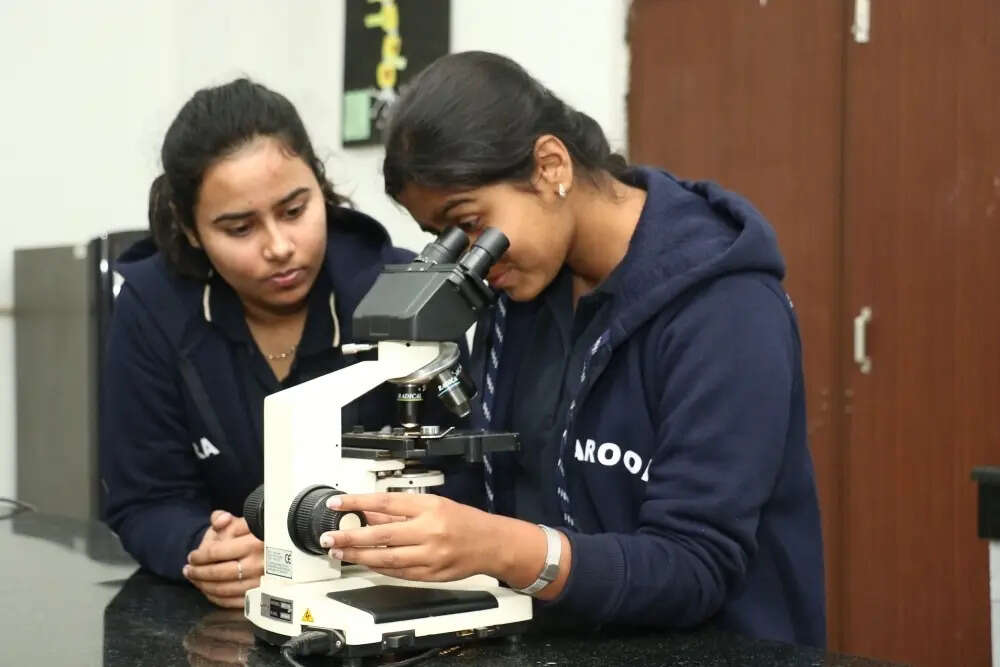
On campus, over 1,000 hours of practical learning are embedded across programmes through laboratories, workshops, and industrial visits, with more than 20 active student clubs, national hackathons, TEDx events, and technical festivals creating the texture of an institution where learning doesn't stop at the classroom door.The graduates who have come through this ecosystem have found their way into a wide range of organisations: TCS, HCL, Cognizant, SAP, Adani, JBM, Torrent Power, EPAM, Coca-Cola, Vivo, and Coforge among them. In a recent cycle, the university recorded over 1,200 job offers across disciplines, an 87% overall placement rate, and full placement in core engineering programmes. More than 225 students secured packages of Rs 5 lakh and above, with one in three receiving multiple offers.
India's higher education challenge is large enough that no single institution resolves it. But the institutions that are genuinely moving the needle share certain qualities and those qualities are visible, verifiable, and consistent over time rather than seasonal. In a landscape still searching for models that work, the ones worth paying attention to are not always the loudest. They are the ones where students leave more prepared than when they arrived, where employers return year after year, and where the gap between what was promised and what was delivered has, through patient, consistent effort, genuinely narrowed.
SRMU, in Lucknow, is one such place.Disclaimer: This article has been produced on behalf of by Shri Ramswaroop Memorial University Times Internet’s Spotlight team.






 English (US) ·