

 1 hour ago
4
1 hour ago
4
ARTICLE AD BOX
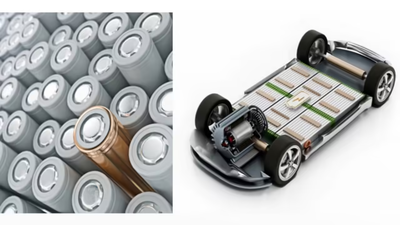
SK Battery America Inc. has laid off nearly 1,000 workers at its battery manufacturing plant in Commerce, northeast of Atlanta, as automakers revise electrification plans and uncertainty persists over consumer demand for electric vehicles.
A Worker Adjustment and Retraining Notification (WARN) filed by human resources chief Chuck Moore said Friday was the final working day for 958 employees. The affected workers will continue to receive pay through May 6.SK opened the $2.6 billion plant in January 2022 and supplied batteries for the Ford F-150 Lightning electric pickup. Ford said in December it would cancel the fully electric version of the model. The layoffs come as the U.S.
electric vehicle market slows, with the Trump administration shifting federal policy away from electrification toward less stringent emissions standards and broader support for the oil and gas sector.Representatives for the Korean company, the City of Commerce and the Jackson County commission chair did not immediately respond to requests for comment. Ford said in December it would replace the planned fully electric pickup with an extended-range version.
A company spokesperson declined to comment on supplier staffing decisions. SK and Ford had previously announced $11.4 billion in joint investments in battery plants in the United States.
The battery maker ended the partnership in December.SK has invested heavily in Jackson County in recent years as automakers expanded plans to develop and produce electric vehicles and the federal government under former President Joe Biden backed efforts to build a domestic EV supply chain.
In June 2020, the company also announced plans to invest $940 million to expand battery manufacturing in the Atlanta area. At the time, Governor Brian Kemp’s office said the expansion would create 600 jobs.SK and Hyundai are still jointly developing a $5 billion battery factory near Cartersville, northwest of Atlanta. Georgia has attracted several large EV manufacturing investments, including Rivian’s $5 billion factory and Hyundai’s $7.6 billion manufacturing complex.
Demand for electric vehicles continues to grow but has fallen short of automakers’ projections. EVs accounted for about 8% of new vehicle sales in the United States in 2025, roughly unchanged from the previous year.Automakers have reassessed multibillion-dollar electrification strategies as losses increase and demand patterns shift. Companies including Ford, General Motors and Stellantis, along with suppliers across the EV supply chain, have cancelled or revised factory projects, investments and product plans, laid off workers and shifted some focus toward hybrid and plug-in hybrid vehicles.Hybrids and more efficient gasoline vehicles have gained traction among buyers concerned about driving range and the availability of charging infrastructure. Congress under President Donald Trump has removed tax credits of up to $7,500 for purchases of new or used electric vehicles. The administration has also proposed easing fuel economy and greenhouse gas emission standards for automakers, reducing federal incentives for companies to expand cleaner vehicle fleets.






 English (US) ·