

 1 hour ago
7
1 hour ago
7
ARTICLE AD BOX
Initially, the family suspected something unusual, fearing social stigma, and performed the last rites without informing the police. However, the case took a dramatic turn after the family stumbled upon an emotional suicide note that she had penned before her death, where she mentioned how an unidentified man made her life unbearable, hinting at a long-standing case of digital arrest.
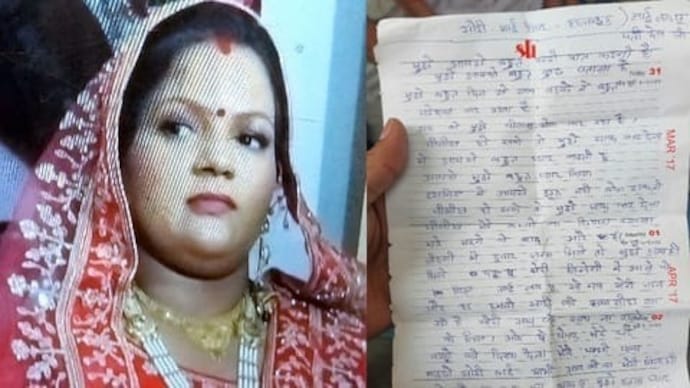
UP woman ended her life after being subjected to digital arrest
New Delhi,UPDATED: Apr 30, 2026 19:31 IST
A young mother, cornered not by voices in her head but by a voice on a phone, ended her life in Uttar Pradesh’s Bijnor - leaving behind two sleeping daughters and a chilling warning about a new kind of crime where fear is manufactured, and justice is faked.
The 28-year-old Monika, wife of Randhir, and a mother of two children, Jiya (8) and Nandani (11), was found hanging from a dupatta (long scarf) in her room while two of her daughters were sleeping. The news came to light after the children woke up the next morning and discovered the deceased’s body.
Initially, the family suspected something unusual, fearing social stigma, and performed the last rites without informing the police. However, the case took a dramatic turn after the family stumbled upon an emotional suicide note that she had penned before her death, where she mentioned how an unidentified man made her life unbearable, hinting at a long-standing case of digital arrest.
SUICIDE NOTE AND DIGITAL TRAIL
“Sorry Jiya, mummy ko marna hi padhega (Sorry Jiya, Mummy has to die).
These were the exact words that Monika used, addressing her younger daughter, Jiya, in the suicide note. Other than her daughter, she also addressed her husband in the suicide note and mentioned how she came under tremendous mental pressure.
“I want to tell you something, actually a lot. There is one person who is blackmailing me nowadays. He had been pressuring me for a long time. As a result, I am taking this extreme step. Please forgive me if possible,” Monika wrote, addressing her husband.
The family members searched her phone as soon as they found the suicide letter. The check revealed a range of WhatsApp calls, messages, and audio recordings from at least five different numbers. In some cases, callers posed as Crime Branch officials; in others, they accused her of serious offences like trafficking to intimidate her.
Following the revelation, the family members allege the scammers created the illusion that she was under digital arrest -- a tactic used to psychologically trap victims into believing they are under official investigation—while demanding money and threatening to destroy her life.
VIDEO CALL AT CREMATION RAISES ALARM
Much before the suicide note, a video call at the cremation ground at the victim’s number triggered the suspicion of the family members.
According to Monika’s nephew, Sanyog, her phone kept ringing during the cremation. When he answered one of the calls, a man appeared on video wearing what looked like a police uniform. He introduced himself as a Crime Branch officer and demanded to speak with Monika. When told she had died, the caller allegedly issued threats of legal action.
THREATS CONTINUED EVEN AFTER DEATH
Shockingly, the calls did not stop after Monika’s death. Till Wednesday, the accused allegedly continued to contact the family, insisting on speaking to her. When they refused, they threatened to have her husband Randhir, jailed and warned of harm to the entire family.
Based on a complaint filed by Randhir, police have registered a case at Kotwali City police station under FIR number 327/2026, invoking Section 108 of the Bharatiya Nyaya Sanhita.
Officials said they are examining the suicide note and mobile data to establish the extent of cyberbullying and blackmail. Efforts are underway to identify and arrest those involved.
A GROWING AND DANGEROUS PATTERN
The case highlights the rising threat of so-called “digital arrest” scams, where fraudsters impersonate law enforcement agencies to create panic and psychological distress. Experts say victims are often pushed into extreme fear, believing they are already trapped in a legal case.
Monika’s death is not just a personal tragedy—it underscores how cybercrime is evolving into a form of invisible coercion, where the weapon is not force, but fear.
- Ends
With inputs from Rittik Rajput
Published By:
Akash Chatterjee
Published On:
Apr 30, 2026 19:31 IST






 English (US) ·