

 1 hour ago
3
1 hour ago
3
ARTICLE AD BOX

In recent years, privacy and security have become paramount as nations move to safeguard their citizens' data. As the internet boomed and processing shifted to cloud computing, global access became the norm.
However, concerns regarding data collection and its exploitation for advertising started to raise eyebrows. In response, several governments introduced a new set of regulations, requiring consumer data to remain within national borders. These data sovereignty measures, combined with increased transparency, aim to restore public trust in digital solutions.Reasons for keeping data within a certain national or regional geographic boundary vary.
For example, tech companies want their employee data secured and governments want to keep sensitive data of their citizens, such as personally identifiable information (PII) within borders, and this requirement is called digital sovereignty or data sovereignty. One way organisations can satisfy digital sovereignty requirements is to store everything in a data centre within the country or region.
This ensures that the data is not accessible to outside entities.
The second way is to use a sovereign cloud that is designed to offer all the advantages of cloud computing but also meeting all the sovereignty requirements.In this article, we are explaining:
- What is Sovereign Cloud
- Benefits of Cloud Sovereignty
- Big Tech Adoption: The Names You Need to Know
What is a Sovereign Cloud?
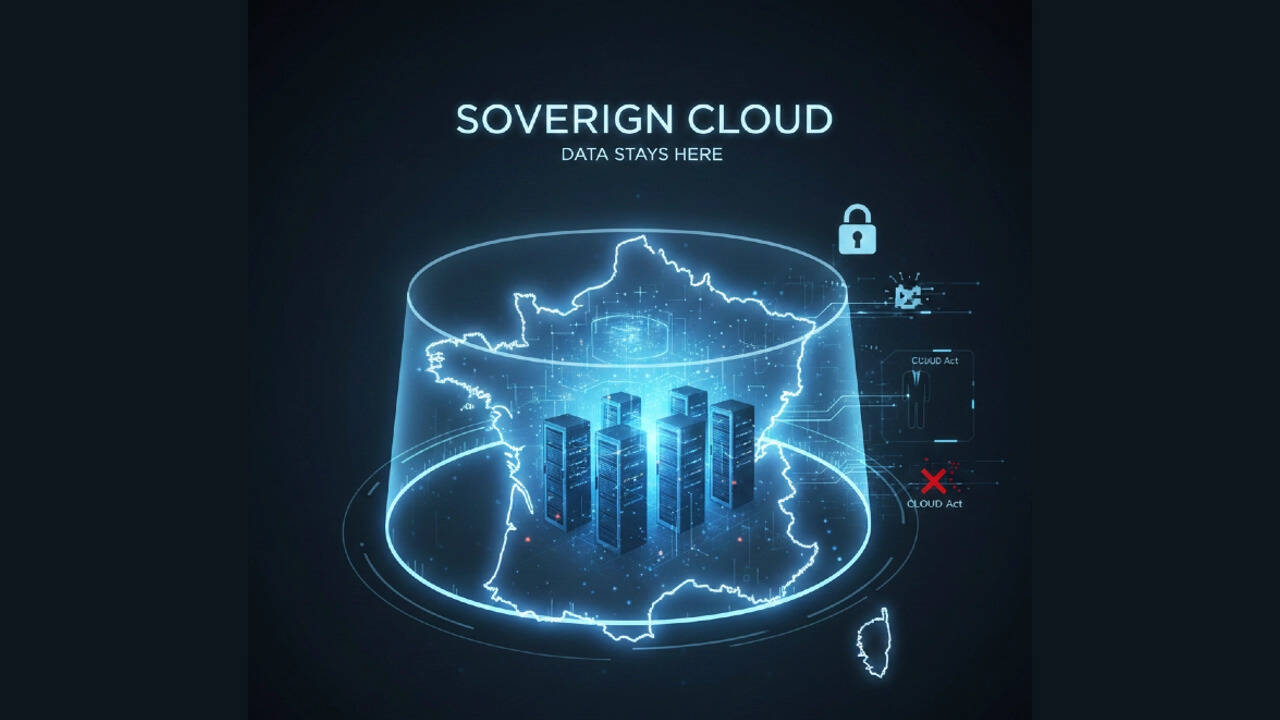
A sovereign cloud is nothing but a cloud environment that enables an organisation or country meet its digital sovereignty requirements like data residency, access control and operational independence while delivering the benefits of the cloud model.
It is more than just a data centre in a specific region; it is a specialised infrastructure that offers all data, metadata and administrative operations under the jurisdiction of a specific nation or region.An easy way to understand it is that a sovereign cloud may be housed at a facility owned by a cloud computing provider but can only be accessed by a particular organisation’s user and non-cloud IT systems over the internet or via specialised communications links that are not connected to the internet.
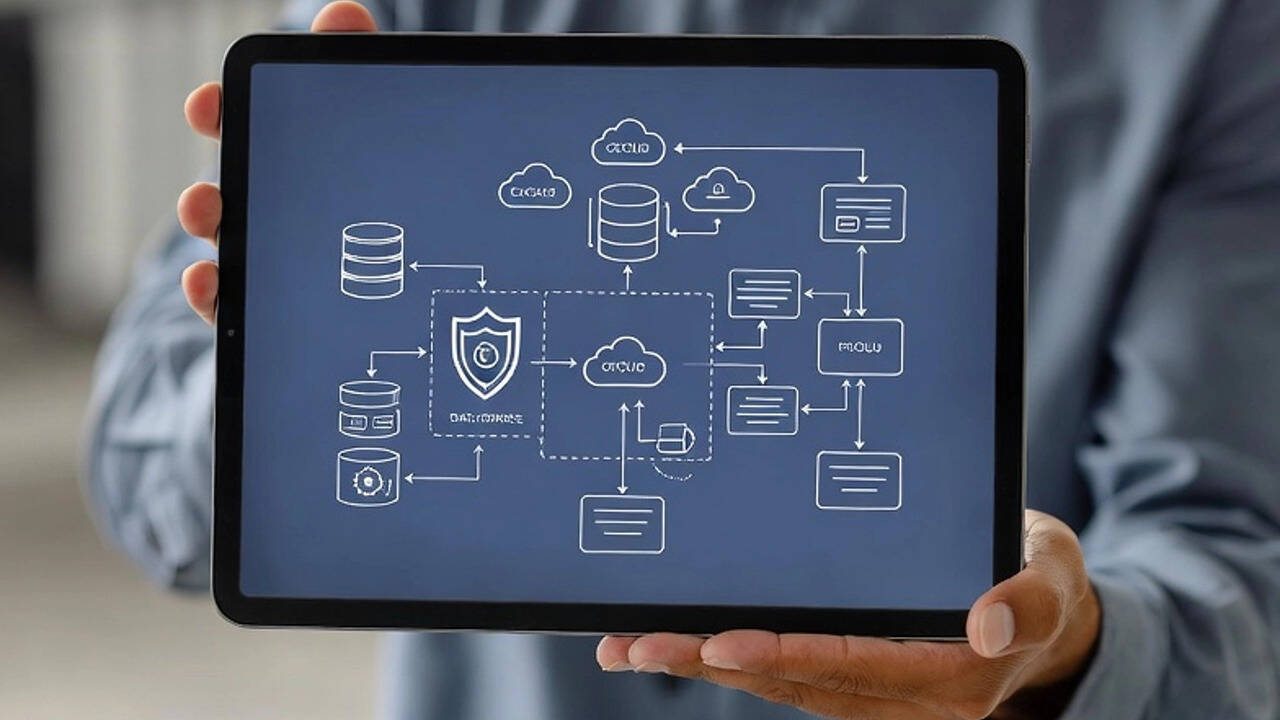
It can be explained in easier way: A US-based company ABC can provide a Sovereign Cloud facility in India though a trusted partner like XYZ on behalf of ABC, in accordance with the rules of that particular country for specific type of data. For example, Thales and Google Cloud have a strategic partnership in France to offer a secure, sovereign cloud for sensitive military data which remains in France.Sovereign Cloud can also be configured as a separate “cloudlike” installation within a large organization’s own data centre.
In this way, ABC will have an installation that acts like a cloud environment in its own data centre, is maintained by the cloud service provider but it will not be connected physically with the outside world.
The key principles of digital sovereignty
Digital sovereignty depends on four pillars:
- Data storage: Where exactly is the data
- Data privacy: Who can access it
- Security and privacy: How is the data kept safe from hackers or outages
- Legal controls: What legal protections do companies have against foreign laws
In many cases, sovereignty compliance requirements go beyond simply “storing a database”, and requires more capabilities. These include:
- Access restrictions which means there are limits on who can access the data and to what level. To use the cloud, individuals are often required to have specific citizenship or security clearances.
- The second important capability is control over where the cloud is located (data residency), often meaning it must stay in a specific country.
- The third, and may be the most important for some organisations is strict compliance. Companies are often required to meet technical and legal specifications by local governments or specific industries (like healthcare or defense).
- There may be a requirement where providers ensure that the people maintaining the cloud are residents or citizens of that country. For example, a country ABC who has data centre in XYZ may require that the data can only be accessed by a citizen of XYZ country and not someone who is on work visa.
- One of the fundamental requirements is having separate regions and secure systems that are completely cut off from the public internet, enabling privacy and security.
- Along with physical arrangements, data encryption is another high-regarded condition for digital sovereignty. This sometimes require allowing the customer to “bring their own keys” so that even the cloud provider cannot see the data.
What are the benefits of Cloud Sovereignty
- Establishing a sovereign cloud pays off in several ways. For example, sovereign cloud are compliance-friendly which means you avoid massive fines by following local laws (like GDPR in Europe).
- Another advantage is getting the required technical expertise. Organisations can get high-end cloud technology without having to build it themselves from scratch which not only saves time but also money.
- Third is operational control where you know who has the “keys” to the digital kingdom and who can access it.
- Moreover it also has supply chain sufficiency advantages. For example, a cloud computing provider is able to procure hardware (chips, servers) more easily than a single company can. That’s less of a headache and waiting times.
- Finally, geopolitical resilience. The world is witnessing trade wars and conflicts, and having your data in a sovereign cloud protects you if a foreign government tries to “turn off” your access. So you have control on your digital kingdom even if the odds are against you.
What are the challenges of Cloud Sovereignty
Just like a coin has two sides, despite these multiple perks, there are major hurdles to overcome when it comes to Cloud Sovereignty.
- The first is complexity of rules. In a digital-first world, regulations are changed quickly, hence finding a provider that stays up-to-date becomes hard.
- Finding the right protection level is another drawback. What type of services do you want, what should be the level of encryption, on-premise or connected through special communication? These questions may confuse customers.
- Disaster recovery. What happens if the data centre is destroyed in an earthquake. You need backup. And if you require your data to stay in your country, you have to have another data centre in the same country itself which means a larger local footprint.
- Delay in feature rollout can be another problem. For example, some paying customers get features earlier than the free ones. Similarly, as AI makes inroads, companies may first roll out new AI features or tools to the “Global” cloud first and take months or years to reach the “Sovereign” cloud.
- Finally, getting the legal paperwork and certifications for a sovereign cloud is a time-consuming and expensive process.
EU Sovereign Cloud: A special case
The European Union (EU) is an example of the most advanced region for sovereign cloud. The region consists of many nations and each nation has their own rules, in addition to the region-wise rules. This means that a proper EU-compliant sovereign cloud must satisfy two set of regulations: the first is EU-wide rules like GDPR and, the second is national rules like France's SecNumCloud or Germany's BSI requirements.The main driver for these requirement is the US CLOUD Act. Under this law, US law enforcement is allowed to demand data from US companies even if that data is stored in Europe.
For example, a US-based ABC company has a data centre in XYZ country. US CLOUD Act allows America to ask data from ABC company’s data centre even if its built within XYZ borders. This creates a legal “clash” for European companies.
How is it different from other sovereign clouds
In case of single countries like India, US, Australia, and more, cloud service providers have to follow just one set of rules that have been set. However, the EU model is different with one umbrella rule and separate rules of each country in the region which allows them to focus on Strategic Autonomy.
Projects like Gaia-X have been developed to create a federated ecosystem. Gaia-X is a set of rules that lets many different European providers work together, ensuring that Europe isn't dependent on a single foreign tech giant.
Adoption by Big Tech, including Google, Microsoft, Amazon, Oracle and more
By 2026, the world's biggest tech companies have shifted from resisting sovereignty to embracing it as a massive business opportunity. Big Tech players like Amazon Web Services, Microsoft Cloud, Google Cloud, Oracle and VMware are some of the biggest names in this industry.1. Amazon Web Services (AWS)In January 2026, AWS officially launched its European Sovereign Cloud (ESC) – a completely separate partition from its global cloud. It is physically and logically isolated, meaning no data moves to the US. Amazon's cloud computing division said that it would expand its “sovereign cloud” across the EU as the countries seek to safeguard their citizens' data. The first is open in Brandenburg in Germany and the company plans to expand its physical “footprint” into Belgium, the Netherlands and Portugal.
According to AWS, the expansion would “provide organisations with further options to deploy workloads in the cloud with the highest level of sovereignty and operational independence”.2. MicrosoftMicrosoft has taken a “partnership” approach by creating the Microsoft Cloud for Sovereignty in 2025. They have partnered with Thales in France to create a company called Bleu, and in Germany, they worked with Delos Cloud.
These independent companies use Microsoft's technology but are owned and operated by local entities. Microsoft also expanded local data processing for its Copilot AI to 15 different countries, including India and Switzerland.3. Google CloudGoogle has followed a similar path to Microsoft, focusing on “Trusted Cloud” partnerships. As mentioned above, in France, Google is working with Thales to keep defence data secure, and in Germany, they work with T-Systems (a division of Deutsche Telekom).
Google offers high-speed AI and cloud tools while the local partner holds the encryption keys and manages the data centers.4. OracleOracle, a leader in “distributed cloud”, operates two major EU Sovereign Cloud regions in Frankfurt and Madrid as of 2026. “Designed for data residency and security, the Oracle EU Sovereign Cloud architecture shares no infrastructure with Oracle’s commercial regions and has no backbone network connection to Oracle’s other cloud regions.
Customer access to Oracle EU Sovereign Cloud is managed separately from access to Oracle Cloud’s commercial regions,” Oracle said on its website.5. VMware (Broadcom)VMware runs a Sovereign Cloud Initiative with a network of over 50 local partners worldwide. Instead of building their own data centers everywhere, they provide the software (like VMware Cloud Foundation) to local providers in Northern Europe and in India, allowing local providers to offer “Sovereign” status using world-class software.ConclusionIn 2026, the question for organisations and governments appears to have changed from, “Do we need a sovereign cloud” to “How quickly and what type of sovereignty is best for them”. Whether it is for high-stakes government defense or protecting the privacy of a hospital's patients, sovereign cloud is bridging the gap between the the necessity to have everywhere access power provided by cloud computing and the need of absolute control on data.









 English (US) ·