

 1 hour ago
3
1 hour ago
3
ARTICLE AD BOX
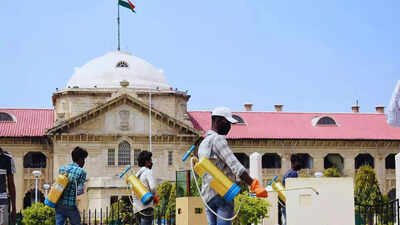
The Allahabad high court has set aside a decision by the Uttar Pradesh administration to limit the number of people offering prayers at a mosque in Sambhal district.
PRAYAGRAJ: The Allahabad high court rejected a decision by the Uttar Pradesh administration to limit the number of people offering prayers at a mosque in Sambhal district, saying authorities cannot restrict worship citing possible law and order concerns, according to LiveLaw. A bench of Justice Atul Sreedharan and Justice Siddharth Nandan made the observation while hearing a petition related to prayers during the month of Ramzan. The writ petition was filed by Munazir Khan, who alleged that authorities were preventing him from conducting prayers at a site in Sambhal where he claims a mosque exists. According to the petition, local officials had allowed only 20 people to offer namaz at the premises on Gata No.
291, even though a larger number of worshippers were expected to gather during Ramzan. The state government defended the restriction, telling the court that the limit had been imposed due to perceived law and order concerns.
However, the bench rejected the justification and said maintaining order was the responsibility of the administration. “If the local authorities i.e. Superintendent of Police and Collector feels that the law and order situation could arise because of which they want to limit the number of worshipers within the premises, they should either resign from their post or seek transfer out side Sambhal if they feel they are not competent enough to enforce the rule of law,” the court said as quoted by LiveLaw.
The bench added that the state must ensure that all communities are able to practise their faith peacefully. “It is duty of the State to ensure that every community is able to offer worship peacefully in the designated place of worship and if it is a private property as already been held by the Court earlier, to perform worship without any permission from the State,” the court said as quoted by LiveLaw.








 English (US) ·