

 45 minutes ago
6
45 minutes ago
6
ARTICLE AD BOX
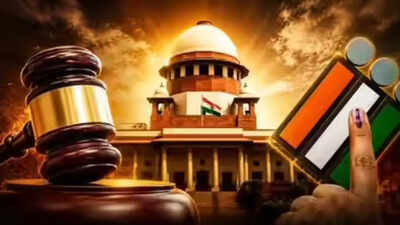
The Supreme Court’s SIR verdict the future of elections
Before a single vote is cast, before campaign speeches dominate television screens and before political fortunes rise or collapse, democracy depends upon something far more foundational, which is the voter list.This simple but powerful constitutional truth lies at the heart of the Supreme Court’s recent verdict upholding the Election Commission of India’s Special Intensive Revision (SIR) of electoral rolls. In doing so, the Court has delivered a judgment that extends beyond administrative law and enters the larger constitutional conversation concerning electoral integrity, institutional autonomy and the future of democratic legitimacy in India.The litigation surrounding the SIR exercise represented one of the most consequential electoral disputes in recent years. At its core lay an uncomfortable but unavoidable constitutional question, “Can the Election Commission undertake large-scale verification of electoral rolls in order to preserve electoral purity, or does such an exercise risk transforming the Commission into a parallel citizenship tribunal?”The Supreme Court answered this question with constitutional restraint and institutional confidence.
A Bench comprising Chief Justice Surya Kant and Justice Joymalya Bagchi upheld the legality of the Special Intensive Revision while simultaneously imposing clear constitutional limitations upon the consequences of such verification. The judgment neither grants unrestricted power to the Election Commission nor disables it from undertaking corrective action. Instead, it attempts to locate a careful constitutional middle path.This balance matters enormously. India’s electoral democracy rests not merely upon periodic elections but upon public faith in the integrity of those elections. The Constitution does not treat free and fair elections as ceremonial exercises confined to polling booths. Democracy begins earlier, with credible voter rolls.That proposition formed the conceptual foundation of the judgment. The challenge arose after the Election Commission initiated the Special Intensive Revision in Bihar through its June 2025 notification, an exercise that gradually expanded across several States while continuing in others.
Petitioners, including civil society groups, political actors and electoral reform advocates, questioned both the legality and implications of the exercise.
To them, the SIR resembled an NRC-like verification mechanism that shifted the burden upon ordinary citizens to repeatedly prove their citizenship.The Election Commission, however, presented a dramatically different narrative. According to the Commission, the SIR was neither political nor exclusionary.
It was an overdue constitutional exercise necessitated by decades of demographic movement, migration, urbanisation and accumulated inaccuracies within electoral rolls. More than four decades had elapsed since the last intensive revision. Additions and deletions had multiplied over time.
Electoral records, the Commission argued, required systematic cleansing to ensure that only eligible citizens remained enrolled.The Court substantially accepted this institutional justification.This aspect of the ruling is perhaps its most constitutionally significant feature. For years, electoral roll revision has often been perceived as a routine administrative task carried out mechanically by election authorities. The Supreme Court rejected this limited understanding. Instead, it elevated electoral roll accuracy to the status of what it described as the “foundational integrity” of democracy.This language deserves careful attention. The Court’s formulation effectively reframes electoral rolls as constitutional infrastructure. Elections are not merely about voting machines, polling agents or campaign regulation. The legitimacy of the electoral process depends fundamentally upon who appears on the rolls.If the voter list is compromised, democracy itself becomes vulnerable. This reasoning explains why the Court invoked Article 324 of the Constitution alongside Section 21(3) of the Representation of the People Act, 1950.
Article 324 has historically occupied a unique position within India’s constitutional architecture. It vests the Election Commission with superintendence, direction and control over elections.
Yet the precise scope of this power has frequently generated debate.Is Article 324 merely supervisory, confined to managing elections once rolls are prepared? Or does it confer broader authority enabling the Commission to preserve electoral integrity itself?The Supreme Court’s verdict answers decisively in favour of the latter understanding.
The Bench recognised that when the statute itself authorises “special revision” at any time, courts cannot invalidate such exercises merely because they depart from ordinary procedures governing routine electoral revisions.This interpretation considerably strengthens the constitutional stature of the Election Commission of India. The ruling clarifies that the Commission is not an ornamental institution activated only during polling season.
Rather, it possesses substantive constitutional authority to undertake preventive and corrective measures necessary for safeguarding elections.For supporters of stronger electoral regulation, this represents a major institutional affirmation. But the controversy surrounding the SIR did not arise merely because of administrative revision. It arose because of citizenship. This is where the constitutional debate became politically sensitive.
Petitioners argued that the Special Intensive Revision effectively converted the Election Commission into a de facto citizenship adjudicatory authority.
Their concern rested upon a serious constitutional premise. Citizenship determination ordinarily falls within the framework of the Citizenship Act and competent executive authorities. Electoral officers, they argued, are not citizenship tribunals.This anxiety was amplified by inevitable comparisons with the National Register of Citizens. In contemporary India, any verification exercise involving documentary scrutiny and citizenship concerns carries profound political and emotional implications. Critics feared that existing voters might suddenly be forced to prove citizenship afresh, thereby creating a presumption of exclusion rather than inclusion.They relied upon earlier jurisprudence, particularly the Lal Babu Hussein (1995) decision, to argue that inclusion in electoral rolls already carries a presumption favouring citizenship.The Supreme Court approached this issue with notable caution. Rather than dismissing these concerns, the Court distinguished between electoral verification and citizenship adjudication. That distinction forms the constitutional centrepiece of the verdict.
The Court recognised that Section 16 of the Representation of the People Act disqualifies non-citizens from electoral registration. Consequently, the Election Commission necessarily possesses authority to examine questions bearing upon citizenship while revising rolls.But, and this limitation is critical, the Commission’s conclusions remain confined strictly to electoral purposes. Deletion from electoral rolls does not amount to a final declaration that an individual is not an Indian citizen.
This clarification carries enormous constitutional significance. Had the Court authorised conclusive citizenship determinations through electoral machinery, India would effectively have witnessed the emergence of a parallel citizenship regime operating outside the statutory safeguards of the Citizenship Act.The Bench consciously avoided such an outcome. Where genuine doubts persist, the matter must travel to competent authorities under the Citizenship Act for adjudication according to law.
The Election Commission may verify electoral eligibility, but it cannot extinguish citizenship itself. This judicial distinction reflects constitutional prudence. The Court strengthened electoral administration while simultaneously preventing institutional overreach.Equally noteworthy is the Court’s treatment of the presumption of citizenship attached to existing voters. Petitioners argued that demanding documentary proof from already registered voters effectively reversed this presumption.
The Bench declined to accept such absolutism. According to the judgment, the presumption survives but it remains rebuttable. Seeking documents does not automatically negate citizenship or render inclusion meaningless.
Verification remains permissible so long as procedural fairness accompanies it.This again reveals the Court’s preference for constitutional moderation over ideological absolutes. Neither unconditional deference nor complete distrust prevailed.
Instead, the judgment insists that verification and fairness coexist.Procedure consequently became central to the Court’s analysis.Opponents of the SIR argued that documentation requirements disproportionately burden vulnerable populations - migrant workers, rural communities and economically weaker citizens - who may not possess formal records.These concerns are neither theoretical nor insignificant.
India’s administrative realities often expose marginalised populations to exclusionary risks arising not from bad faith but from bureaucratic complexity. Yet the Court concluded that the SIR framework satisfied constitutional proportionality. The exercise pursued a legitimate constitutional objective i.e. maintaining accurate electoral rolls, and the measures adopted were neither arbitrary nor excessive.Importantly, the Court also recorded the existence of procedural safeguards, including notice and hearing before deletion of names. Aadhaar’s inclusion among acceptable documents further strengthened the framework’s accessibility. The doctrine of proportionality, increasingly influential in constitutional adjudication, performs crucial work here. It prevents State action from becoming excessive while recognising that constitutional governance occasionally requires intrusive but justified regulation.The SIR survived because the Court viewed its burdens as proportionate to its democratic objective. Yet legality does not automatically settle legitimacy. And here lies the larger constitutional message embedded within the ruling. The Supreme Court has essentially reaffirmed two principles simultaneously. First, electoral integrity is indispensable to democracy. Accurate voter rolls are not peripheral administrative concerns but constitutional necessities.
Second, institutional power, even when exercised for legitimate goals, must remain confined within constitutional boundaries. This dual affirmation may ultimately define the future of elections in India.For supporters of the verdict, the ruling vindicates the principle of electoral purity and strengthens public confidence in the Election Commission’s autonomy. For critics, however, concerns regarding exclusion, documentation burdens and implementation risks are unlikely to disappear.
Indeed, the most difficult constitutional questions may now shift from courtroom doctrine to administrative practice.The future of the SIR will depend less upon judicial reasoning and more upon how sensitively the process unfolds on the ground. Will officials exercise verification powers with fairness and restraint? Will procedural safeguards genuinely protect vulnerable citizens? Will electoral revision strengthen trust or deepen suspicion?These questions remain open. But one conclusion is unmistakable. The Supreme Court’s SIR verdict has reinforced a constitutional truth too often forgotten in electoral politics that democracy does not begin on voting day. It begins with the voter list. And by recognising electoral rolls as the constitutional foundation upon which democratic legitimacy rests, the Court has shaped not merely the present controversy but potentially the future architecture of elections in India.






 English (US) ·