

 1 hour ago
5
1 hour ago
5
ARTICLE AD BOX
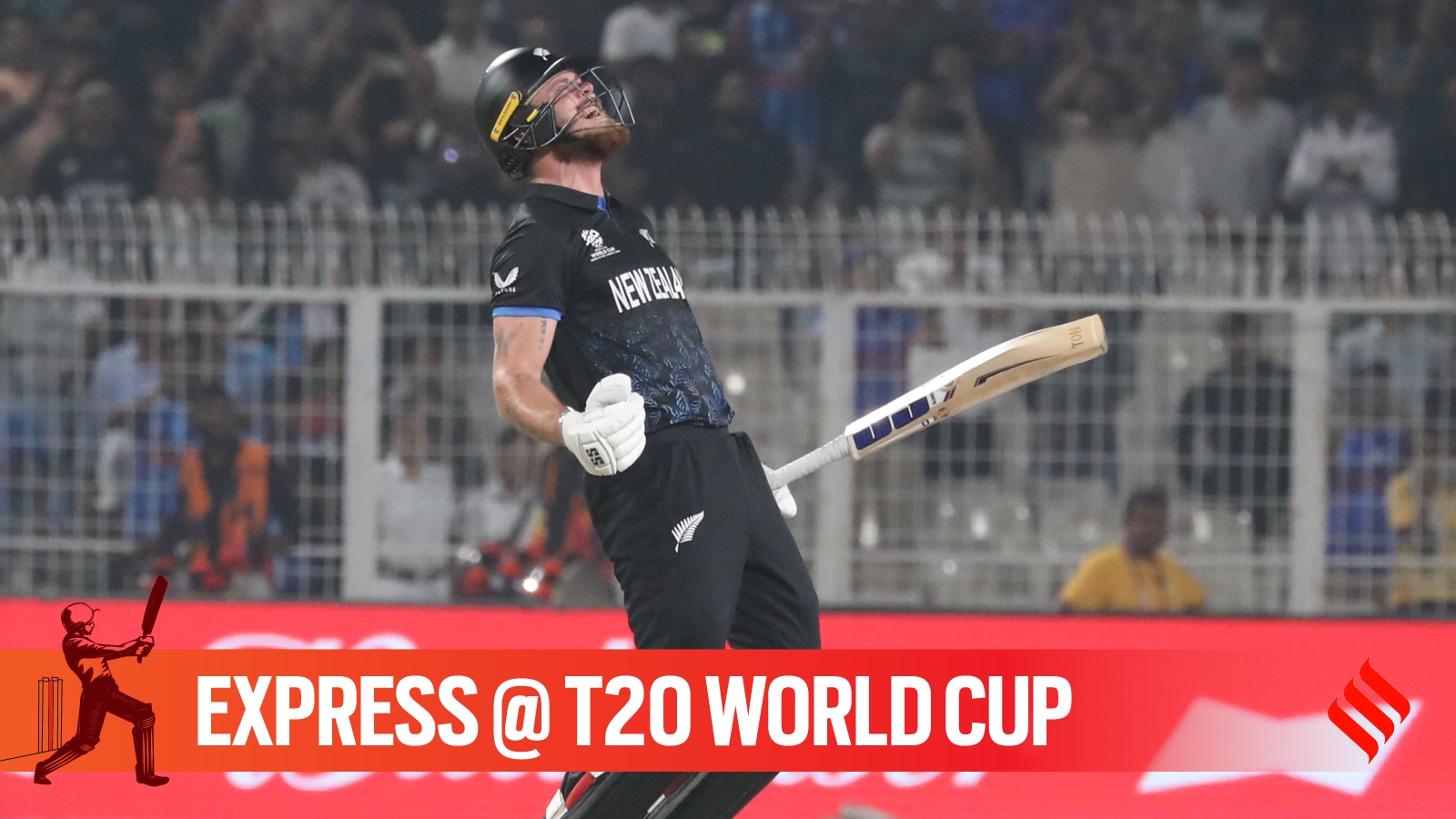
Bludgeoning Marco Jansen over mid-off for a four, Finn Allen stood still, as though in a trance, watching the ball crash into the advertisement screen. It was the 33rd ball he had faced and he had completed the fastest century in the tournament’s history. The historic moment took time to sink in.
Those last four runs sped his team to the ICC T20 World Cup final with a crushing nine-wicket victory over South Africa, the pre-game favourites. With 43 balls to spare! South Africa’s total of 169 looked not only inadequate but scant.
Allen blew like a gust of storm from the Bay of Bengal. Of the 33 balls he faced, eight flew over the fence, often landing in the upper tiers of the vast stadium. The 10 fours were as fearsome, in an unabashed exhibition of power-hitting. He pulled, scooped, drove and cut South Africa to not only misery but hopelessness. Seldom has a side, undefeated till the semifinal, looked so bereft of belief and imagination. South Africa were merely unlucky that they ran into Allen in rampage mode. It was such a blur of strokes that even Allen took time to gather his thoughts with the microphone in hand.
As spectacular as Allen’s solo act was, it was a victory that debunked the stereotype of New Zealand as genial cricketers who apologetically defeat teams and progress to the summit clash. It emphasised that they are intimidating contenders multidimensional with several strings in their bow, and capable of killing their opponents in different ways, their armoury well stocked.
The spinners set it up, the seamers played the dutiful support act, the openers nailed it with a 117-run partnership, and Allen sealed it with a whirlwind hundred.
AS IT HAPPENED | SOUTH AFRICA VS NEW ZEALAND T20 WORLD CUP 2026 1ST SEMIFINAL HIGHLIGHTS
Both teams could brood on the Powerplay. It was perfect for New Zealand, they sped to 37 without loss in the first three overs and hurtled to 84 by the end of six. South Africa managed only 48 in this phase.
Story continues below this ad
It was not about the runs either; South Africa barely looked emphatic whereas New Zealand were assertive right from the first over.
The Proteas quivered after Cole McConchie’s double strike in the second over. The departures of Quinton de Kock and Ryan Rickleton put them in a brain-freeze.
In contrast, Allen and Tim Seifert bristled out with purpose. Fortune aided them, edges evaded the fielders or fell short. Bizarrely, none of South Africa’s fielders ventured for Seifert’s top-edged pull off Kagiso Rabada. The infuriated seamer kicked the turf in anger. The next ball, Allen’s edge whizzed through the slip cordon. South Africa saw a sense of foreboding in the inky Eden skies. New Zealand, probably, sensed it and tore into them, dismembering them like a pair of seasoned butchers.
Taking no prisoners
The openers ransacked 19 runs from the third over, the stupefied Marco Jansen getting the same treatment he had meted out to New Zealand’s bowlers a bit earlier. Their plan, Allen would say, “wanted to put them on the back foot early”. “We wanted to hit straight and enjoyed it together,” he told the host broadcasters.
Story continues below this ad
Allen and Seifert are an identical pair. Both are well-muscled with broad shoulders and oak-like forearms. Both impart rude force into their strokes, largely flat and fierce shots down the ground. They can be savage but sophisticated too.
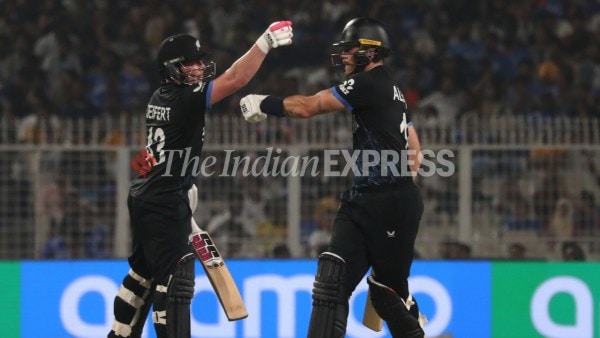 Finn Allen and Tim Seifert are an identical pair. Both are well-muscled with broad shoulders and oak-like forearms. (Express photo by Partha Paul)
Allen sledge-hammered Jansen’s first ball down the ground. Three balls later, Seifert scooped the beanpole seamer beyond the fence to the rapturous crowd, their loyalties firmly lying with the Kiwis. Seifert then showed his classical side with a lofted straight-driven four.
The South Africans froze. It’s another chapter in their long book of heartbreaks. It was here that their ODI World Cup dreams lay tattered three years ago. The City of Joy is a reminder of their white-ball grief.
The momentum New Zealand’s openers infused was so heady that all paths to the final in Ahmedabad, after looking invulnerable until the semifinal, seemed blocked for the Proteas. With hefty blows, one after another, they slammed the door shut on Aiden Markram’s men.
Story continues below this ad
One bad day, they would curse. That’s the tragedy of South Africa. Markram, a practical captain, was amused when a reporter queried him before the semifinal about the “law of averages” catching up. He laughed it off, and said there is no such thing. “It’s about how you play,” he said.
It was, in the end, how they played. South Africa were nervous and cagey, not quite full-throttle. Like a band that forgot their chartbusters. New Zealand discovered energy and belief.
The group stage was a scrape; the Super Eights a stagger. Yet, in the semifinal, they looked intimidating, astute with the ball and ruthless with the bat. Allen and Seifert, good friends who go back a long way, hurriedly snatched the game away from South Africa.
Their returns from the fourth to the sixth overs read —11, 14 and 22. There was no life left in the match any more. Even though Seifert departed, bowled by Rabada, New Zealand had already put on 117 runs. This was arguably New Zealand’s most dominating performance in the tournament’s history, a statement of intent, a sinister sign for their opponents in the final.






 English (US) ·