

 1 hour ago
4
1 hour ago
4
ARTICLE AD BOX
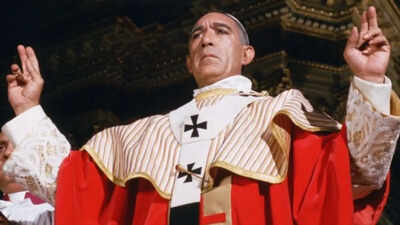
A still from The Shoes of the Fisherman.
What was once a series of whispered disagreements behind heavy Vatican doors has spilled into news cycles as a high-stakes diplomatic showdown. As tensions over the Iran war rose, Pope Leo XIV in March said that he hoped US President Donald Trump was doing his best to de-escalate bombing and violence in the region.
Later, he called out the POTUS for his threat to Iran and said, "This is a matter of international law, but there is also a moral question for the good of humanity."In return, Trump called the Pope's stance "weak" and said he is not a "big fan of Pope Leo" -- "He is a very liberal person and a man that doesn't believe in stopping crime." In his subsequent statement to the media, the Pope pushed back and reiterated his intention to continue speaking "loudly against war."
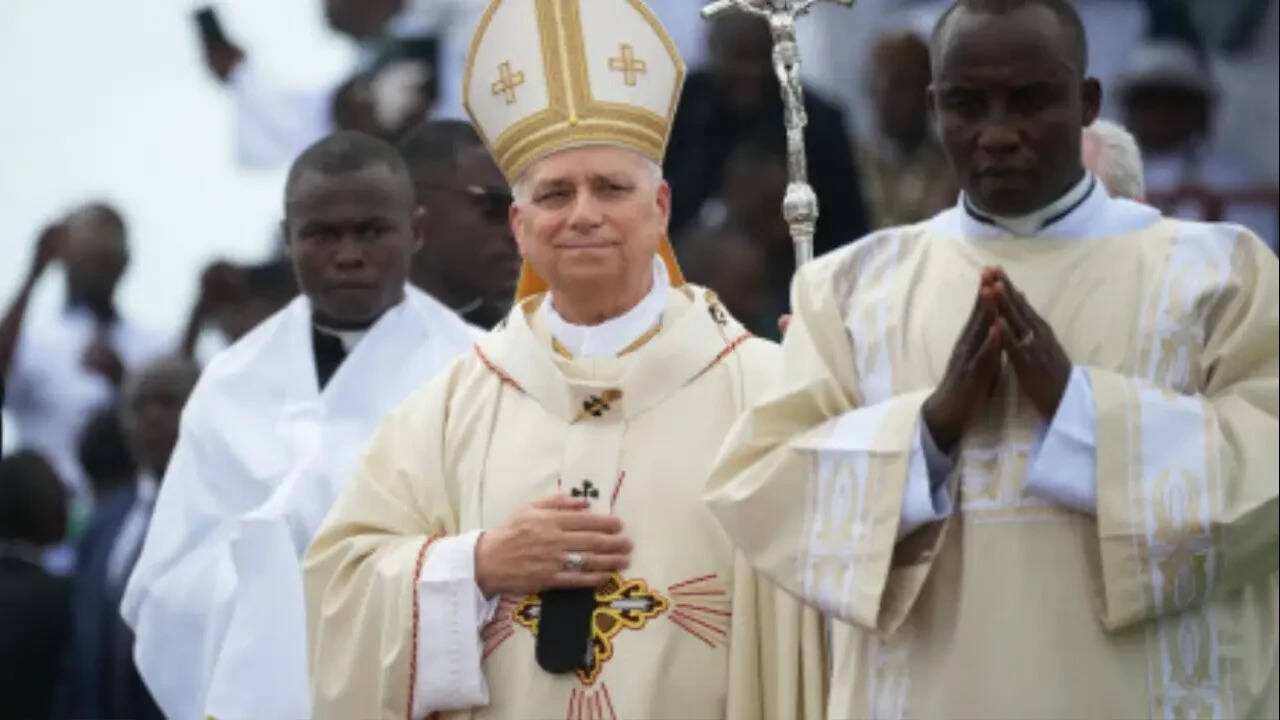
Pope Leo XIV has called out Donald Trump's threat against Iran. This is the first time that a Church head has spoken directly against the State.
Reports also suggest that someone from the Trump administration invoked the Avignon Papacy -- a period when the Pope was said to be influenced by the French crown -- during a meeting with a Vatican ambassador in April, which seemingly implied that the papacy should fall in line with the current US policy.The standoff between these two authorities is not new. This strain has been reflected in cinema consistently. In Becket (1964), the Archbishop of Canterbury directly confronts the English crown, while in the more recent Two Popes (2019), we see Pope Francis's life as Cardinal Jorge Bergoglio during Argentina’s military dictatorship, where he is depicted as both cautious and fearful in his attempts to protect the Church against a repressive political system.
The papacy under pressureThese films illustrate the Church negotiating with power, caught between the moral demands of the papacy and its limitations due to political realities.Amen (2002)
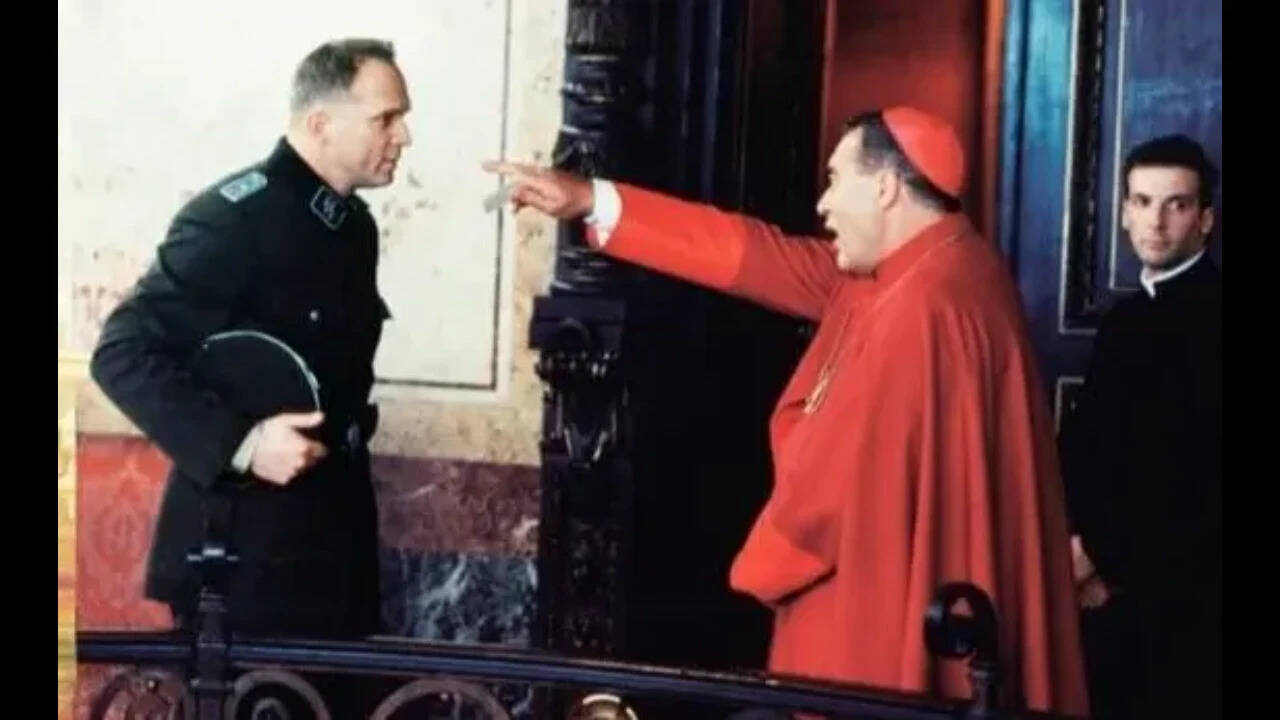
A still from the movie Amen.
Directed and co-written by Costa-Gavras, the 2002 historical release explores the diplomatic relationship between the Vatican and Nazi Germany during World War II. Amen examines the long-held debates around Pope Pius XII's response to the war, and how despite knowing of the Holocaust, the Church head refused to publicly condemn the killings, reflecting the papacy's hesitation in directly entering a debate with a political system.The Two Popes (2019)
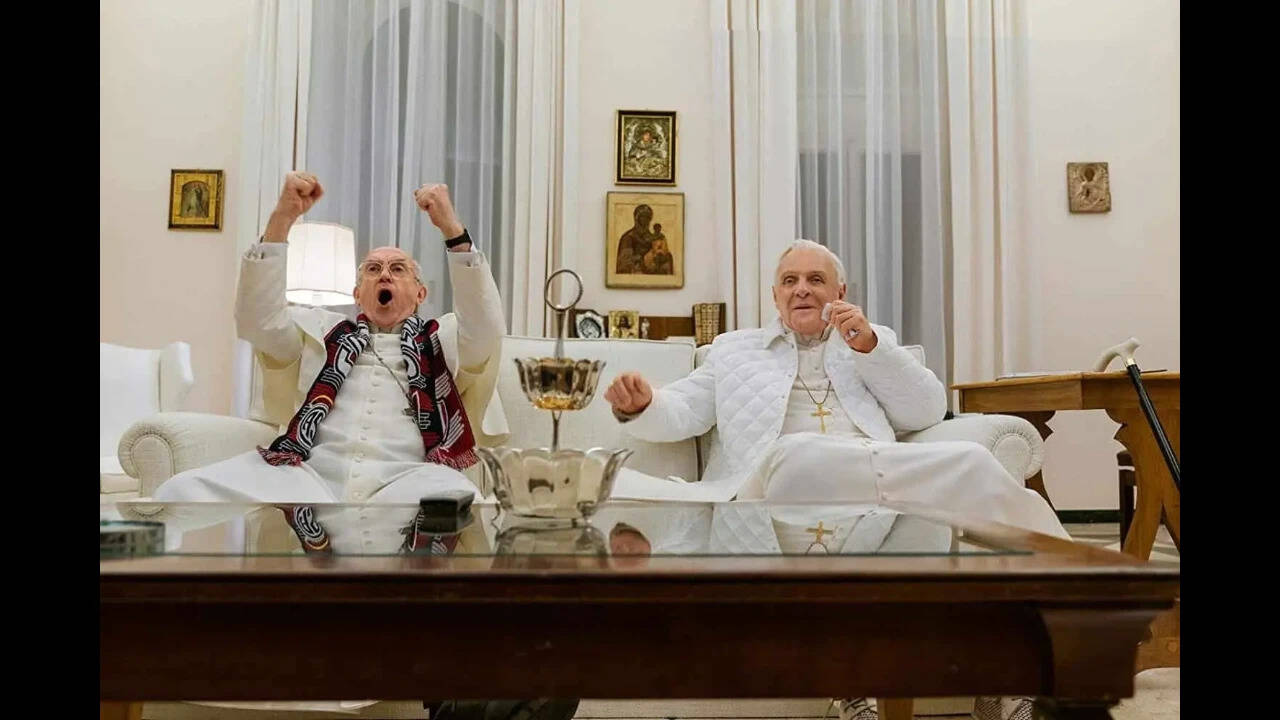
Jonathan Pryce and Anthony Hopkins in a still from The Two Popes.
The biographical drama starring Jonathan Pryce and Anthony Hopkins revolves around imagined conversations between Pope Benedict XVI and Cardinal Jorge Bergoglio before the latter became Pope Francis. The film doesn't represent a direct conflict between the power and the state, instead we see Jorge Bergoglio's silence and guilt during the Argentinian state terror in the 1970s as he hesitated to take a strong stand against the government.The Shoes of the Fisherman (1968)Set against the backdrop of the Cold War, the film imagines a newly elected Pope trying to make sense of a global upheaval owing to the tensions between China and the Soviet Union. Grappling with the famine in China, the Pope attempts to sell the Church's property in order to relieve the country of the crisis.The Church as a conscience keeperIn many films, the Church is represented as a moral balance, an institution that has the ability to question those in power.
However, how it exercises that power is handled differently -- through silence, rebellion or hesitation.Becket (1964)The Peter Glenville directorial follows a complicated friendship between Thomas Becket -- who later becomes the Archbishop of Canterbury -- and King Henry II of England. In one of the film's most pivotal moments, Becket argues about whether the clergy should be judged by the Church or the state court. The film ends on a solemn note, with Becket's martyrdom. The movie asks, who has the final say -- the King or God?
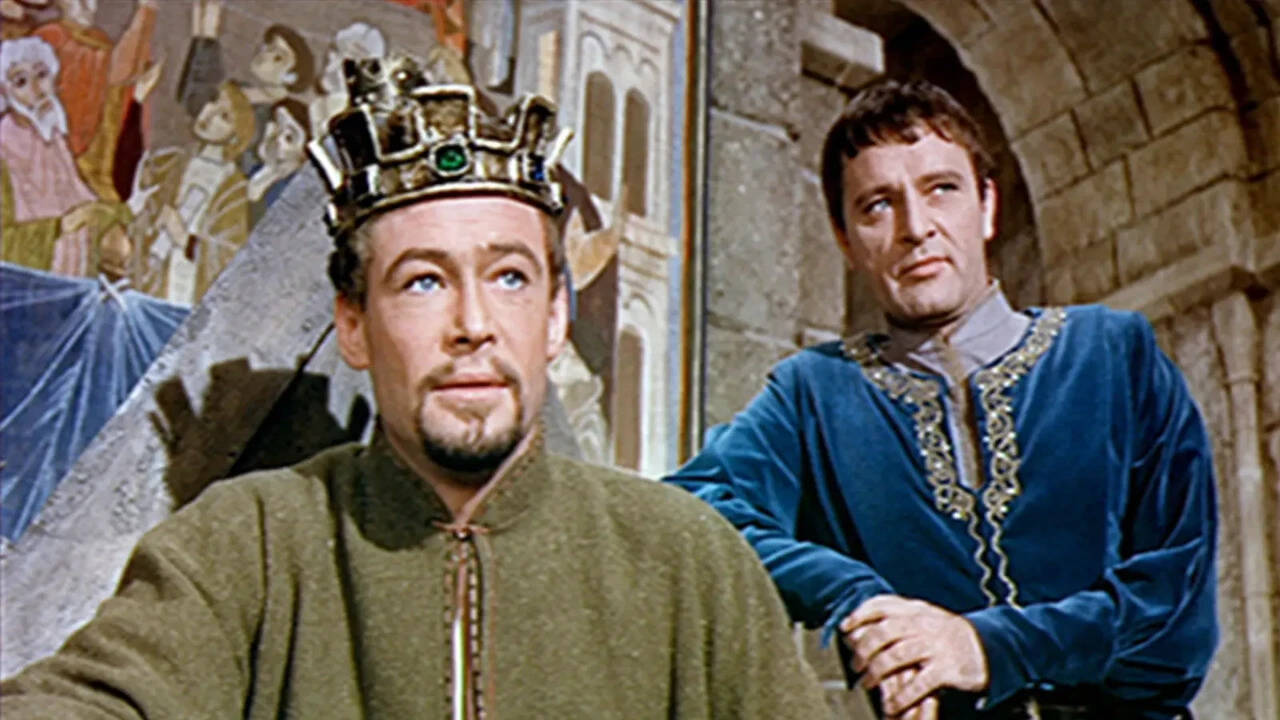
A still from the movie Becket.
A Man for All Seasons (1966)In A Man for All Seasons, the tension between the Church and the state is made explicit when Lord Chancellor of England, Thomas More, refuses to sign an oath of supremacy which would depict King Henry VIII as Supreme Head of the Church of England.
Moore's refusal under mounting pressure from the system shows his allegiance to the Church. A stand which ultimately culminates in his execution.The papacy's depiction in cinema is not of a fixed religious authority, but is seen as a way to explore the role of authority itself. In turns appearing as the conscience keeper who questions the state, as an operator who navigates the tricky terrain of spirituality and political power, and finally as an increasingly visible public figure whose statements are reviewed and analysed.
The moral authority, which was once deemed absolute, has become open to not just discussion, but criticism.This is why the contemporary disagreement between the US President and Pope Leo XIV resonates the way they do. They are not merely differences of opinions, but reminders that both moral and political power do not function in isolation, but are always in dialogue.Trump vs Pope Leo XIV: A brief timelineMarch 31, 2026: Pope Leo XIV says he has made an appeal to Trump to de-escalate the war in Iran, urging him to find a "way to decrease the amount of violence and bombing."April 7, 2026: Pope Leo calls out Trump's threat to Iran and says it is "unacceptable", adding that the war should end.April 8, 2026: After a ceasefire, the Pope hails the truce as a "sign of genuine hope," adding that "only by returning to negotiations can the war be brought to an end."April 12, 2026: Trump says he is not a fan of the Pope as he "doesn't believe in stopping crime".April 13, 2026: Pope Leo says he doesn't think his role is that of a politician, but that he will continue to raise his voice against war -- "Too many innocent people are being killed, and I think someone has to stand up and say that there is a better way to do this."April 13, 2026: After backlash against his criticism of the Pope, Trump claims he would not apologise to him as he made incorrect statements, reiterating that the Pope is "weak on crime."April 16, 2026: During his visit to Africa, the Pope slams "tyrants" who spend "billions on war," presumably a veiled criticism of the Trump administration.-- Anvita Singh




 English (US) ·