

 3 hours ago
4
3 hours ago
4
ARTICLE AD BOX
Something is shifting in the way affluent Indian travellers move through the world. The queues at the Louvre, the gridlocked streets of Manhattan, the Instagram-worn skylines of cities that have been photographed into abstraction, they are losing their pull. In their place, a quieter aspiration is taking hold: the desire to go somewhere that feels genuinely undiscovered, somewhere where nature still holds the upper hand, and where the experience itself is the destination.This is precisely why Louisiana deserves your full attention.Not the Louisiana of Mardi Gras and Bourbon Street, though those pleasures have their own vivid merit, but the Louisiana that exists beyond the city lights, in the Spanish moss-draped bayous, the ancient cypress forests, and the long, sun-soaked roads that curl alongside the Mississippi River.
A Louisiana that is, astonishingly, still largely off the radar for Indian travellers, even as it quietly positions itself as one of America's most compelling outdoor destinations.
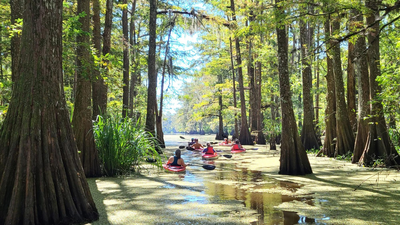
Into the Bayou: The Private Swamp SafariThe Atchafalaya Basin is the largest river swamp in the United States, a 1.4 million-acre expanse of cypress and tupelo trees rising from dark, still water, and it is unlike anywhere else on earth. To enter it in the early morning, aboard a flat-bottomed boat with a naturalist guide who has spent decades learning its rhythms, is to understand immediately why the word wild carries so much weight here.The alligators are the first thing you register. They surface without ceremony, a prehistoric head appearing at the waterline, regarding you with an ancient, unhurried calm. American egrets and great blue herons stand at the edge of fallen logs, still as brushstrokes. Overhead, the filtered light moves through a canopy so dense it feels like being inside a cathedral built by the earth itself.What makes this experience premium, in the truest sense, is not a price point but a quality of encounter.
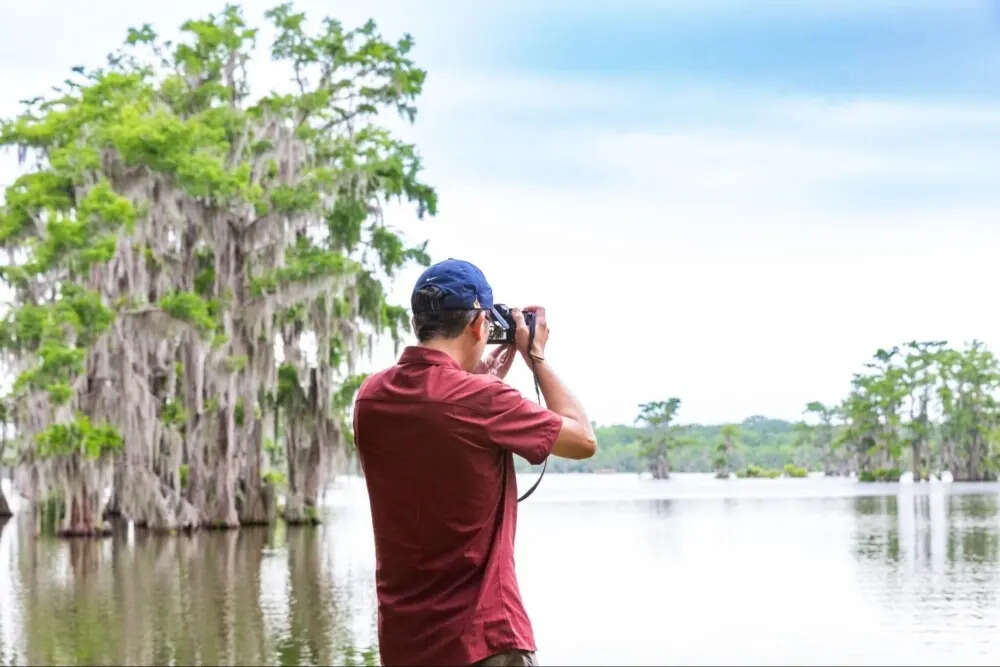
Private guided swamp safaris, offered through expert local naturalists operating out of Breaux Bridge, the charming small town that serves as the gateway to the Atchafalaya, grant you access to channels and backwaters that group tours never reach. Your guide narrates not just what you see but what you hear: the guttural call of a barred owl, the prehistoric drum of a pileated woodpecker, the near-silence of a roseate spoonbill landing on a distant branch.For the birdwatcher, Louisiana is not a side note, it is a primary destination. Lake Martin, a protected rookery near Breaux Bridge, hosts one of the largest wading bird colonies in North America. Between February and June, tens of thousands of birds, great egrets, snowy egrets, anhingas, and the improbably pink roseate spoonbill, nest in the cypresses above the waterline. You walk a trail that skirts the lake's edge, the air thick with the sound of wings, the trees so heavy with nesting birds they seem to be flowering in white and pink and black.This is solitude with spectacle. Wilderness with wonder. The distinction matters.The Great River RoadIf the bayou offers immersion, the Great River Road offers perspective. Stretching along both banks of the Mississippi, this storied route connects antebellum plantation estates, small Creole towns, and river overlooks that have barely changed since the steamboat era. Driving it over two unhurried days is to pass through layers of American history as if turning the pages of a very beautiful, very complicated book.The landscape is unmistakably cinematic. Live oak trees form cathedral tunnels over the road. The Mississippi moves south with immense, quiet authority. Several of the plantation estates along this route have been transformed into heritage hotels of genuine quality, Oak Alley, with its legendary quarter-mile of ancient oaks, and the grand among them, where period grandeur meets modern comfort. To stay in one is to inhabit history rather than simply observe it: to drink coffee on a veranda as the river light shifts from silver to gold.

The Cajun threadTo understand Louisiana's outdoors, you must understand its people. The Cajuns are descendants of French-speaking Acadians who settled the bayou country centuries ago. They created one of the most distinctive folk cultures in the Americas, and their presence is deeply intertwined with the landscape they have shaped.Breaux Bridge, the cultural heart of Cajun Louisiana, rewards a slow morning.
At Café des Amis, the legendary zydeco brunch turns the dining room into a dance floor by nine in the morning, fiddles and accordions filling the air while plates of crawfish étouffée arrive from the kitchen. This is the particular genius of Louisiana as a travel destination: the cultural richness is not separate from the outdoor experience, it is woven through it.
A swamp safari ends with a cold local beer on a porch, watching the evening light turn the water copper.
Southern hospitality here is not a performance. It is simply the way people understand time, as something to be given, not conserved.For the discerning Indian traveller who has exhausted the standard American itinerary, Louisiana offers something genuinely rare: a destination that is simultaneously cinematic and undiscovered, rooted in culture, and anchored in a natural world of astonishing richness.The journey takes shape with surprising ease. Fly into New Orleans and use the city as your starting point.
Drive west along the River Road, pausing at the plantation estates. Continue into Cajun Country, using Breaux Bridge as a base for swamp safaris and lakeside birding. Loop south along the Creole Nature Trail, a 180-mile driving route through Gulf Coast marshes that hosts over 400 bird species, before returning to New Orleans for a final evening of jazz and beignets.Seven days. No crowds, no queues, no compromises. Just the slow, deliberate pleasure of moving through a landscape that earns your full attention, a wilderness with a soul, a grandeur that reveals itself not in famous monuments, but in the quality of light on still water, and in the moment when an alligator surfaces beside your boat and you understand, for the first time, that the wild world is still very much here.Begin at ExploreLouisiana.com and find the version of this state that was always waiting for you.Disclaimer: This article has been published on behalf of the Louisiana Office of Tourism by Times Internet’s Spotlight team.









 English (US) ·