

 34 minutes ago
1
34 minutes ago
1
ARTICLE AD BOX
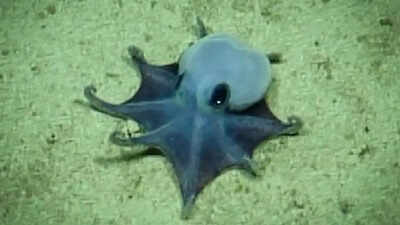
A small octopus living deep beneath the eastern Pacific has gone unnoticed for years in underwater footage and specimen collections. It carried the same bright blue colouring seen in other deep-sea octopuses around the Galapagos region, so it was folded into existing classifications without much attention.
That changed after closer examination of body structure, skin texture, and genetic material began to reveal subtle but consistent differences.The animal has now been identified as a separate species from the waters surrounding the Galapagos Islands. Its discovery adds another layer to the growing picture of how little is still understood about life in deep Pacific ecosystems, particularly around volcanic seamounts and hydrothermal environments where exploration remains limited.
The finding also reflects how many marine species are not uncovered through dramatic first sightings, but through years of rechecking earlier assumptions against new evidence.
Deep Pacific Ocean reveals tiny golf-ball-sized octopus species
The octopus belongs to the genus Muusoctopus, a group known for living in cold deep-water habitats. Scientists examined several specimens collected from the Galápagos Marine Reserve and nearby underwater volcanic regions before concluding the animal represented a distinct species rather than a local variation of one already described.
According to the report published in Zootaxa, the newly identified species was named Muusoctopus chebrosus. The species name comes from a Greek-derived term linked to blue colouring, reflecting the octopus’s appearance. The octopus was found at depths reaching well beyond ordinary diving range, in parts of the Pacific shaped by volcanic activity and tectonic movement. These environments remain difficult to study because of darkness, pressure and the cost of deep-sea exploration equipment.
Scientists use DNA and anatomy to identify tiny Pacific Ocean octopus species
At first glance, the animal resembled other pale blue octopuses already documented around the eastern Pacific. The differences appeared in finer details. Researchers compared arm proportions, sucker arrangement, skin features and internal anatomy across multiple specimens before separating them from closely related species.As per a report published in Zootaxa, genetic sequencing also helped support the distinction.
Small variations in DNA patterns matched the physical differences scientists had already observed, strengthening the argument that the octopus represented its own species rather than an isolated population.Deep-sea octopuses often create problems for classification because many species look broadly similar in photographs. Colours can also shift depending on light exposure and preservation methods once specimens are brought to the surface.
That leaves marine taxonomists relying heavily on measurements and microscopic anatomical features.
Galapagos deep Pacific waters continue revealing species unknown to science
The Galapagos Islands are usually associated with surface wildlife, giant tortoises, marine iguanas and seabirds, though the waters surrounding the archipelago contain ecosystems that remain only partially mapped. As per the paper published in ScienceDaily titled, “Adorable tiny blue octopus found nearly 6,000 feet beneath the Galápagos”, remote-operated vehicles exploring volcanic ridges and seamounts have steadily expanded records of unusual marine life during the last decade.Some of these discoveries involve species entirely unknown to science. Others involve animals already seen before but incorrectly grouped because the distinctions were too subtle to be recognised earlier. The deep Pacific around the islands supports a mixture of hydrothermal vents, lava formations and nutrient-rich currents. Those conditions can isolate marine populations over long periods, allowing separate species to evolve even when they appear visually alike.
Tiny golf-ball-sized octopus discovery highlights unexplored Pacific Ocean biodiversity
The identification of Muusoctopus chebrosus contributes to a wider effort to document biodiversity in deep-ocean environments before industrial activity expands further into those regions. Scientists studying the Pacific seabed have increasingly warned that many ecosystems are being examined properly only after interest in deep-sea mining and extraction has already begun growing.As per the study published in ScienceDaily, Cataloguing species remains one of the most basic parts of marine biology, though large sections of the deep ocean still lack detailed records. In some cases, researchers are revisiting archived specimens collected years ago and finding that they belong to species never formally recognised at the time. The new Galapagos octopus reflects that pattern. It was not suddenly discovered in a dramatic moment.
Instead, it emerged gradually through comparison, reclassification and closer attention to details that once seemed insignificant.









 English (US) ·