

ARTICLE AD BOX
Rajasthan has 35 GW solar capacity, yet up to 80% generation is being curtailed due to weak transmission infrastructure and poor planning — a hard lesson for India’s green transition.

By Rusen Kumar
India’s renewable energy journey has reached a paradoxical crossroads. While the country celebrates record-breaking additions to solar capacity, the reality on the ground tells a story of wasted potential, financial losses, and systemic failures in planning. In May, electricity prices on the Indian Energy Exchange fell to zero on multiple occasions—not due to abundance that everyone could use, but because of a massive surplus that the grid could neither absorb nor evacuate effectively. This “green bottleneck” is most visible in Rajasthan, which has emerged as both India’s greatest solar success story and its most glaring example of infrastructural neglect.
Rajasthan stands as a land of immense scale and untapped potential, being India’s largest state by area at 342,239 square kilometres — larger than many countries — and home to an estimated 83–84 million people, making it the 7th most populous state. Despite its vast expanse and relatively low population density, the state has emerged as the 7th largest economy in India with a Gross State Domestic Product (GSDP) of Rs. 18.75 lakh crore in 2025-26, growing at a robust 10.24% at current prices. Its per capita income has crossed the Rs. 2 lakh mark, reaching Rs. 2,02,349, reflecting steady economic progress driven by mining, tourism, agriculture, and increasingly, renewable energy. With strong GST collections of around Rs. 46,000–54,000 crore in FY 2025-26, Rajasthan possesses the natural resources, land availability, and policy ambition to become a national leader. Yet, this giant desert state continues to grapple with infrastructure bottlenecks — most visibly in its solar sector — where its 35 GW capacity, accounting for 27% of India’s total solar power, is being tragically underutilised due to inadequate transmission and storage systems.

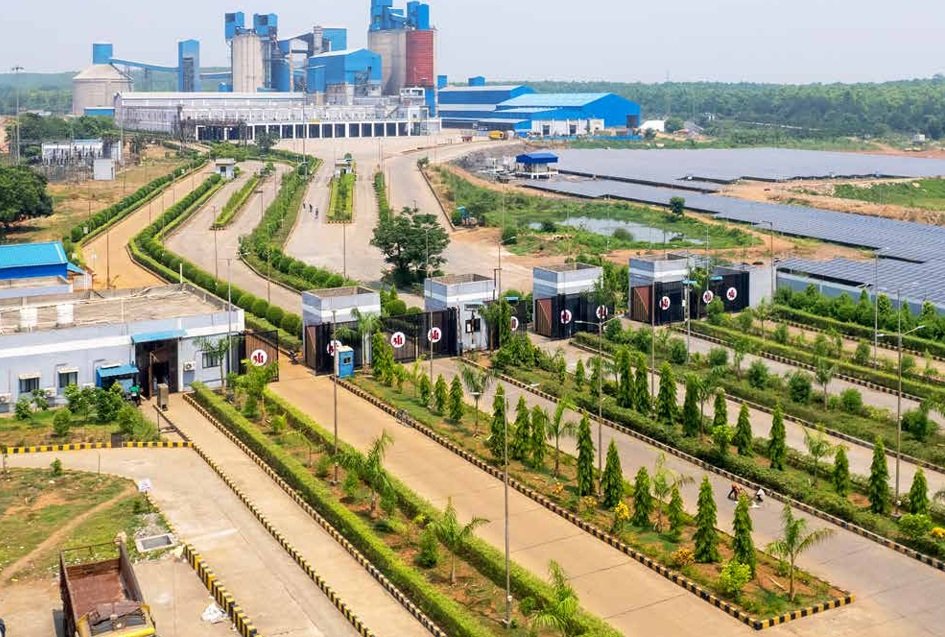
The state’s vast desert regions, abundant sunshine, and cheap land have made it a magnet for massive solar parks in areas like Bhadla, Jaisalmer, and Phalodi. Projects such as the Adani Group’s 30 GW renewable park at Khavda in neighbouring Kutch (Gujarat) and Reliance Industries’ ambitious developments highlight the explosive growth in the sector. Yet, this stellar success has become a victim of poor coordination.
Since the summer of 2025, solar and wind projects in Rajasthan have faced severe curtailment, with some forced to shut down completely during peak daylight hours. Reports indicate that up to 80% of solar generation has been curtailed for extended periods due to low local demand and inadequate transmission infrastructure. Industry estimates place financial losses at around Rs. 250 crore so far. More than 4 GW of renewable capacity lacks proper evacuation capability, and the gap continues to widen.
The core problem lies in a fragmented approach that treated generation, transmission, storage, and demand management as separate silos rather than an integrated ecosystem. Solar parks were approved and built at breakneck speed, but critical transmission lines lagged behind. Delays in key projects—the 765 kV Khetri-Narela double circuit line, the 765 kV Bhadla II-Sikar I line, and the 400 kV Narela-Maharani Bagh line—have exhausted transmission margins. Even after the Khetri-Narela line was commissioned in December, curtailments reportedly intensified due to technical constraints such as voltage oscillations, low short-circuit ratios, and corridor overloading.
Coal-based power stations offer limited flexibility. While they can reduce generation to some extent, complete shutdowns are costly and technically challenging. As renewable capacity has surged, balancing the grid has become increasingly difficult. Without large-scale battery storage or pumped hydro systems, daytime solar surplus cannot be shifted to evening peak demand hours. Consumers in distant industrial and urban centres remain underserved while clean energy is wasted.
Leading social sector leader and thinker Sitaram Gupta, Bharatpur in Rajasthan has highlighted these challenges in a letter to the Rajasthan Chief Minister. He notes that while Gujarat is already reaping significant benefits from solar energy, Rajasthan—with even greater potential—remains unable to fully capitalise on its resources. Gupta warns that India’s solar sector is facing a serious “green bottleneck.” Rapid growth in generation capacity has not been matched by expansion in transmission networks, grid infrastructure, or energy storage systems. This imbalance, he argues, could become a major obstacle to national development, industrial growth, and the green economy.
Gupta has called for a comprehensive energy vision and immediate policy reforms. His key recommendations include:
- Establishing a dedicated high-level monitoring mechanism for solar energy and grid expansion.
- Fast-tracking critical transmission projects such as the 765 kV Bhadla–Bikaner Dual Circuit Line, the 765 kV Phalodi–Nimrana–Niranjana Line, and the 400 kV Great Indian Bustard (GIB) Line.
- Setting up pumped hydro storage systems and developing smart grid and battery-based storage infrastructure.
- Creating incentives for industries and agricultural consumers to shift demand to midday solar peak hours through time-of-day pricing and demand-response programmes.
Experts echo these views. Swaminathan S. Anklesaria Aiyar, in his recent analysis in Economic Times, emphasises that the crisis is not a failure of renewable technology itself but of planning, coordination, and infrastructure. He stresses the need for stronger “must-run” protections for renewable projects, compensation mechanisms for curtailment, and recognising transmission delays as a “change in law” event in power purchase agreements. Synchronising renewable approvals with evacuation capacity is essential to prevent further stranded assets and investor disillusionment.
The solutions require multi-pronged action. First, transmission infrastructure must be prioritised with minimal delays in land acquisition and clearances. Second, large-scale storage—both battery and pumped hydro—must be scaled up aggressively. Third, demand-side management needs innovation. Industries should be encouraged to operate during solar hours, and agricultural pump sets could be shifted to daytime use. Fourth, regulatory reforms must ensure project viability and restore investor confidence.
Rajasthan has the potential to become India’s “Green Energy Powerhouse.” Its desert landscape offers unmatched solar resources. If harnessed efficiently, the state can significantly strengthen national energy security, support industrial expansion, reduce carbon emissions, and create employment in green sectors. Harnessing Rajasthan’s vast solar potential is critical for India’s long-term energy security, as it can significantly reduce the country’s dependence on imported coal and fossil fuels, insulate the economy from global price volatility, and provide a reliable, clean power backbone for sustained industrial growth and national development in an era of rising energy demand. However, this requires political will, inter-state coordination, and a shift from siloed thinking to holistic ecosystem planning.
India’s solar story is still unfolding. The country has made remarkable progress in expanding renewable capacity, aligning with global climate goals. Yet the Rajasthan experience serves as a cautionary tale. Without urgent course correction in transmission, storage, and demand management, stellar success risks turning into a costly embarrassment. The coming months will test whether policymakers can convert Rajasthan’s immense solar potential into real, reliable, and equitable energy for the nation.
Copyright@India CSR®
About the Author
Rusen Kumar is the founder and managing editor of India CSR – The CSR Chronicle of India. He writes on CSR, Sustainability and Environmental affairs. He brings an understanding of governance, leadership development, social development, human development, and strategic focus by serving for-profit and not-for-profit boards and as an advisor to chief executive officers and executive management members. His leadership accomplishments in social enterprise, planning, and governance range from viable achievements in knowledge forum initiatives to advancement of corporate social responsibility issues in India.

ADVERTISEMENT

ADVERTISEMENT

ADVERTISEMENT









 English (US) ·