

 1 week ago
11
1 week ago
11
ARTICLE AD BOX
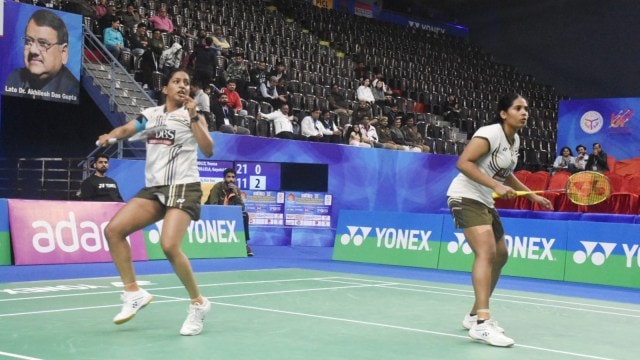 Indian Women's Doubles pair Treesa Jolly and Gayatri Gopichand
in action at the Syed Modi International Super 300. (PHOTO: Amit Verma/UPBA)
Indian Women's Doubles pair Treesa Jolly and Gayatri Gopichand
in action at the Syed Modi International Super 300. (PHOTO: Amit Verma/UPBA)
One of the consistent traits of the Treesa Jolly-Gayatri Gopichand combine on the international Tour, had been their ability to bounce back from early stutters, and not allowing opponents, save the Top 3 pairings, to run away with leads. The quality to tug at the pace, control the rally and shrug off mistakes to move on to next point, came in handy on Sunday Finals Day at the Syed Modi International Super 300.
Playing Japanese Kaho Osawa and Mai Tanabe, the Indians fell back 17-21 in the opening set but rebounded calmly to claim the next two 21-13, 21-15. The Indians attempted to keep a 4-point buffer, after they’d dropped the first set. And while the Japanese made the decider a 2-pointer at 12-14 hauling back the derailed initiative from 9-14 down, Treesa-Gayatri coolly pulled away once more, to wrap up a controlled win in 74 minutes defending their title from last year, and crucially ranking points.
The key at that juncture of 12-14 when the Japanese had significantly increased their pace and were defending stoutly, and threatened to flip the lead, was Treesa taking the tiniest of breathes after breaking her racquet strings to regroup.
Treesa-Gayatri had been waltzing till then, leading by a good 5 points in the third set. The mid-set revival had been pretty clinical too, with Treesa displaying agility by planting herself in a squat and controlling overheads with round the head parallel racquet swats and leaning back for a forehand arc on body parries. Gayatri would charge the net for the explosive tap down, and the Indians achieved parity quite comfortably to push a decider. But after riding that momentum, the Japanese were beginning to draw out errors from Treesa’s back court drops into the net. The break to change racquet proved decisive.
But what eventually led the Indians through those finishing stages of the third set, were quick snappy putdowns to rallies that took them from 15-12 to 19-13. The Indians tend to control pace of rallies by playing push drops on the backhand with a diagonal stance. It helps them keep the shuttle airborne for a long time as they suck out pace from returns while giving the shuttle elevation. Gayatri has always been good at it. But Treesa has increasingly shown skills to don the playmakers role at the net.
Known for her smashes kills, it’s been a sobering realisation that most of the hits will get retrieved. It’s why the lobs to the back and the drops and half smashes have nuanced her scythes, and injected patience into her game. Patience with aggression however, is a heady cocktail and Treesa’s stint at mixed doubles has given her the confidence that she can trip up opponents with more than her full blooded smashes.
The Japanese, proficient in defense, however found the repeated drops to the forecourt after the Indians pinned them back with well constructed patterns, rather tough, and lost points in a clump.
Story continues below this ad
What had bothered the Indians returning from a break owing to Gayatri’s injury, was doubts over whether they would strike seamless coordination in pressure situations. It was the tentativeness from a less helpful drifty side that had seen the Indians lose the opening set. Ironically, the winning point for the Indians had their racquets clashing, but the clang synchronised in both going for the same smash that happily landed on the Japanese court.









 English (US) ·