

 54 minutes ago
3
54 minutes ago
3
ARTICLE AD BOX
Last Updated:May 25, 2026, 07:31 IST
Donald Trump urged several Middle Eastern leaders to back the emerging US-Iran deal and pushed countries outside the Abraham Accords to normalise ties with Israel.


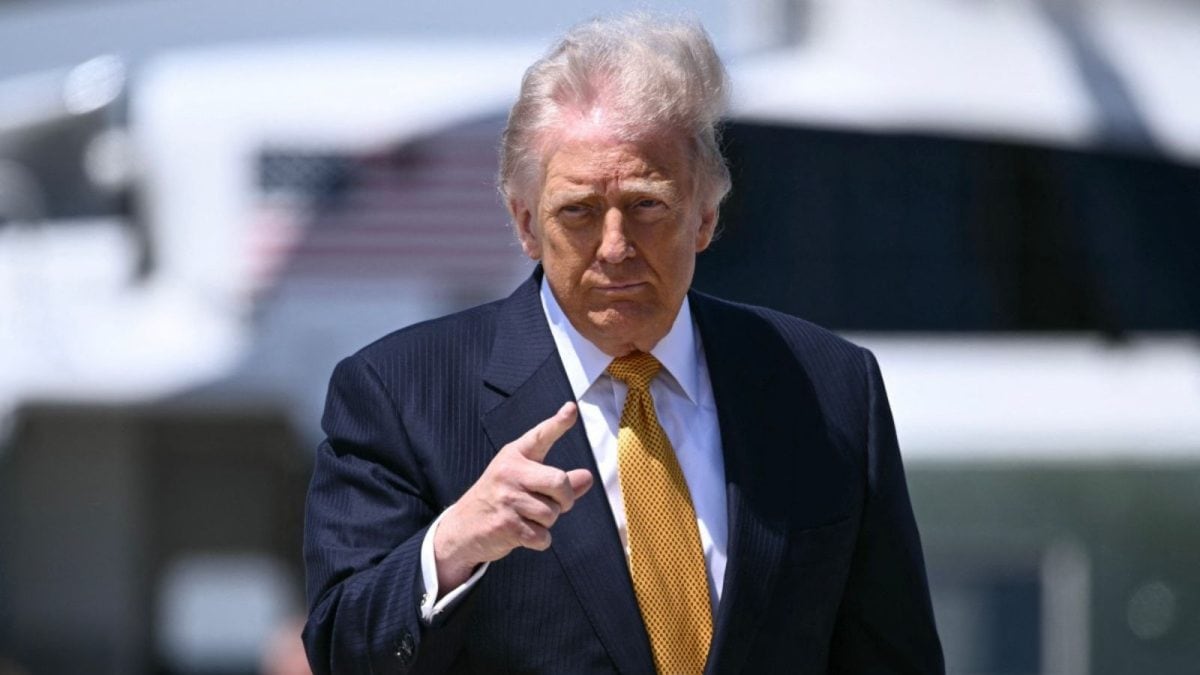
A file photo of Donald Trump (AFP)
US President Donald Trump has urged several Middle Eastern leaders to support a diplomatic push tied to the emerging US-Iran agreement, according to an Axios report, as negotiations aimed at ending the Iran war and reopening the Strait of Hormuz continue to gain momentum.
The report mentioned that Trump held a phone call on Saturday with the leaders of Saudi Arabia, the United Arab Emirates, Qatar, Pakistan, Turkey, Egypt, Jordan and Bahrain to discuss the developing agreement with Iran.
Leaders, including UAE President Mohammed bin Zayed, backed the effort despite the UAE previously taking a more hawkish position on the Iran conflict.
“They all said, ‘We are with you on this deal. And if it doesn’t work, we will be with you too,’" a US official was quoted as saying.
The Associated Press separately reported that the United States and Iran are close to reaching a deal that could end the war, reopen the Strait of Hormuz and see Tehran give up its stockpile of highly enriched uranium.
AP, citing regional officials, said negotiations were moving ahead even though Trump publicly cautioned representatives “not to rush into a deal."
TRUMP RAISES ABRAHAM ACCORDS DURING CALL
According to Axios, Trump told the regional leaders that once the war with Iran ends, he expects countries that are not part of the Abraham Accords or do not have peace agreements with Israel to normalise relations with the Jewish state.
The report said leaders from Saudi Arabia, Qatar and Pakistan, countries that do not maintain formal diplomatic ties with Israel, were surprised by the request.
One US official, quoted by Axios, said there was “silence on the line" before Trump joked and asked whether the leaders were still on the call.
Trump informed the leaders that his envoys, Jared Kushner and Steve Witkoff, would follow up on the normalisation issue in the coming weeks.
The report also said Trump floated the possibility of Iran itself one day joining the Abraham Accords, a highly unlikely prospect given Tehran’s longstanding refusal to recognise Israel and its hostile position toward the Israeli state.
THE EMERGING US-IRAN UNDERSTANDING
The Associated Press reported that the emerging agreement would include Tehran giving up its stockpile of highly enriched uranium.
Two regional officials cited by AP said the issue would be addressed during a proposed 60-day negotiation period.
According to AP, some uranium could be diluted while the remaining stockpile may be transferred to a third country, with Russia offering to take custody of the material.
A US official told AP there would be no sanctions relief if Iran failed to surrender the uranium stockpile.
The report noted that Iran currently possesses 440.9 kilograms of uranium enriched up to 60 per cent purity, citing figures from the International Atomic Energy Agency.
That level is considered a short technical step away from weapons-grade enrichment.
Iranian President Masoud Pezeshkian said Tehran was prepared “to assure the world that we are not after a nuclear weapon." Iran has consistently maintained that its nuclear programme is peaceful.
STRAIT OF HORMUZ CENTRAL TO NEGOTIATIONS
The proposed agreement would also gradually reopen the Strait of Hormuz in parallel with the United States ending its blockade of Iranian ports.
The closure of the Strait following the US and Israeli bombardment of Iran on February 28 triggered a global energy crisis, causing sharp increases in oil and gas prices.
AP quoted experts as saying that they believe it could take weeks or months for shipping routes and prices to stabilise even after the waterway reopens.
The report further stated that the US may permit Iran to resume oil sales through sanctions waivers as part of the agreement, while sanctions relief and the release of frozen Iranian funds would be discussed during the 60-day implementation period.
SAUDI POSITION REMAINS COMPLEX
Axios reported that Trump had earlier asked Saudi Crown Prince Mohammed bin Salman to join the Abraham Accords during an Oval Office meeting last November, but the Saudi leader resisted the proposal, and the exchange reportedly became tense.
According to the report, the Iran war and Saudi Arabia’s tensions with the UAE have pushed Riyadh toward a more sceptical position regarding Israel’s current far-right government.
Saudi officials continue to insist that Israel commit to an “irreversible and time-bound" pathway toward a Palestinian state before normalisation can move ahead.
Axios added that Israeli and US officials do not expect Riyadh to make any move on normalisation before Israel’s planned September elections and before clarity emerges on the composition of the next Israeli government.
Meanwhile, AP reported that Israeli Prime Minister Benjamin Netanyahu said he and Trump agreed that any final agreement with Iran “must eliminate the nuclear danger," while also preserving Israel’s right to defend itself against threats, including from Lebanon-based Hezbollah.
Handpicked stories, in your inbox
A newsletter with the best of our journalism
News world Trump Urges Middle East Leaders To Back Abraham Accords On Emerging US-Iran Deal
Disclaimer: Comments reflect users’ views, not News18’s. Please keep discussions respectful and constructive. Abusive, defamatory, or illegal comments will be removed. News18 may disable any comment at its discretion. By posting, you agree to our Terms of Use and Privacy Policy.
Read More





 English (US) ·