

 1 hour ago
6
1 hour ago
6
ARTICLE AD BOX
American forces torpedoed Iranian warship IRIS Dena in the Indian Ocean, near Sri Lanka. It was returning from Visakhapatnam after a multilateral naval exercise. The sinking of an Iranian ship in India's strategic waters is significant for New Delhi. This is our initial analysis of the situation.
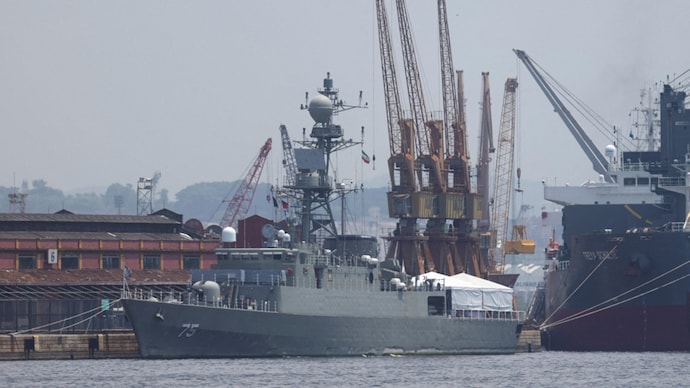
The Iranian military ship, IRIS Dena, which sank after an American torpedo attack had recently participated in a naval exercise in India. (Image: Reuters)
New Delhi,UPDATED: Mar 4, 2026 20:10 IST
The US-Israeli war on Iran has triggered turbulence in the Indian Ocean, waters that are strategic for India. An American submarine torpedoed and sank the Iranian frigate IRIS Dena in the Indian Ocean off the southern coast of Sri Lanka. This was the first sinking of an enemy ship by torpedo by the US since World War II. The incident occurred as the frigate, a small warship, was returning from joint naval exercises in India. This comes even as Pakistan signalled that it could get drawn into the Iran conflict due to the defence pact with Saudi Arabia. These developments raise questions about stability in the Indian subcontinent and the wider South Asian waters.
The IRIS Dena, a frigate-class warship, participated in the Milan International Fleet Review in the Bay of Bengal from February 18 to 25, where it was welcomed by the Indian Navy. It was returning from Visakhapatnam, Andhra Pradesh.
Reports suggest that 80 aboard the IRIS Dena might have been killed in the American attack. The Sri Lankan Navy has rescued approximately 30 sailors from the IRIS Dena so far, with the survivors being brought to Karapitiya Hospital in the southern port city of Galle for medical attention.
Operations continue in hopes of finding more people, with air force support aiding the search. The response aligns with Sri Lanka's duties under the United Nations Convention on the Law of the Sea (UNCLOS), which mandates that states provide assistance to vessels in distress at sea, regardless of nationality.
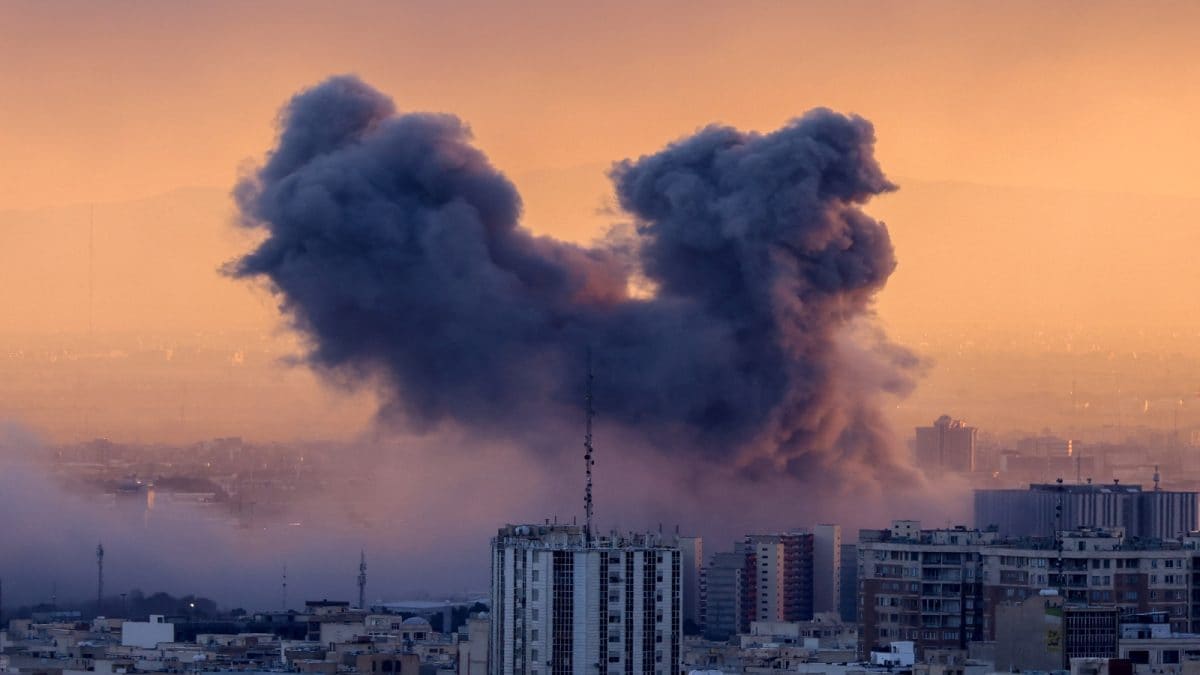
It is the closest Indians have felt the Iran war close to home. Israel and the US launched airstrikes on Iran on February 28, taking out its top-tier leadership, including Iranian Supreme Leader Ayatollah Khamenei. Iran has been firing drones and missiles since then at countries that hosted American bases and even those that didn't, turning the entire Middle East into a conflict zone.
INDICATIONS OF HEAVY PRESENCE OF US NAVY IN INDIAN OCEAN
This strike on IRIS Dena, carried out by a US submarine, indicates the heavy presence of American naval assets in the Indian Ocean, an area where the US Navy operates more submarines than in many other regions. The attack involved a torpedo.
Torpedo attacks break a warship's keel – which explains why rescuers found no vessel upon arrival.
The primary US naval formation responsible for much of the western and central Indian Ocean, including the Persian Gulf, Arabian Sea, Red Sea, and parts of the broader Indian Ocean, is the Fifth Fleet, which is headquartered in Bahrain.
The Fifth Fleet typically operates 15 to 35 major warships at any given time, including elements of a Carrier Strike Group (CSG) when deployed, surface combatants like destroyers and cruisers, logistics ships, and often 1-2 nuclear-powered attack submarines (SSNs).
The US Navy has long emphasised undersea superiority, with Virginia-class and Los Angeles-class SSNs frequently rotating through the Indian Ocean region for missions such as intelligence gathering, deterrence, and strike capabilities.
The strike could mean that the United States Indo-Pacific Command (PACOM) is now involved in the Iran war.
HOW STRIKE ON IRIS DENA BY US IS SIGNIFICANT FOR INDIA
Debates are already on over how this impacts India, as it unfolded in New Delhi's sphere of influence – right in India's backyard.
Geopolitics and international relations analyst Zorawar Daulet Singh said in a post on X, "Iranian missiles have pushed the US navy close to Indian waters. This is precisely one of the scenarios for which the US signed the LEMOA (logistics agreement) with India. But the repercussions for India to be even an inadvertent war party in an aggressive & unprovoked intervention by the US would be dangerous. This is the time for the Indian government to act independently and intelligently to safeguard Indian interests."
The Logistics Exchange Memorandum of Agreement, inked in 2016, allows the US and India to access each other's military facilities for refuelling, repairs, and supplies. It was designed to enhance interoperability during joint operations or crises, such as countering threats in the Indo-Pacific. In this case, the proximity of US submarines to Indian waters could suggest reliance on such pacts for rapid deployment and sustainment.
The sinking of IRIS Dena by the US in the Indian Ocean somehow brings India into the discussions on the conflict. India ties with Iran were civilisational. Energy security and the Chabahar port were part of the relationship.
Congress leader Pawan Khera, in a post on X, said, "Today, an Iranian naval vessel - returning from the Milan 2026 International Fleet Review, where it had been invited by India - was sunk by a U.S. submarine at the edge of Indian waters near Sri Lanka. Does India have no influence left in its own neighbourhood? Or has that space also been quietly ceded to Washington and Tel Aviv?"
According to a Reuters report, the confirmation of the American role in the sinking of the Iranian warship by US Secretary of War Pete Hegseth came amid ongoing investigations, with Sri Lankan forces prioritising humanitarian aid.
SRI LANKAN NAVY RESCUED IRANIAN SAILORS
Sri Lankan Foreign Minister Vijitha Herath told parliament that around 180 people were aboard the ship when it sent out a distress signal. The Sri Lankan Navy launched a rescue operation, recovering bodies from the sea and spotting an oil slick at the site, but no trace of the vessel itself, reported news agency Reuters.
Commander Buddhika Sampath, a navy spokesman, said the incident happened outside Sri Lankan waters, yet Colombo remained committed to assisting under international obligations. No other ships or aircraft were observed in the area, he added, emphasising that the focus was on saving lives before investigating the cause.
The Sri Lankan Navy followed the UNCLOS code, which was adopted in 1982 to promote maritime safety and requires coastal nations to coordinate rescue efforts in their search and rescue regions.
SINKING OF IRAN SHIP COMES AMID PAKISTAN'S SIGNALLING
The sinking of the Iranian warship in the Indian Ocean came even as reports emerged of Pakistan signalling that it could get involved in the Iran conflict due to the defence pact with Saudi Arabia.
Pakistani foreign minister Ishaq Dar said he warned his Iranian counterpart against raining missiles or drones on Saudi Arabia, according to a report in The Financial Times.
Though Pakistan is just paying lip service, Dar's remarks, along with the IRIS Dena's sinking, point to a grave situation where the fire from the Middle East could spread eastwards.
This is our initial analysis of the situation. We will update the copy when more confirmation and inputs come in.
- Ends
Published By:
Anand Singh
Published On:
Mar 4, 2026 20:10 IST





 English (US) ·