

 1 week ago
8
1 week ago
8
ARTICLE AD BOX
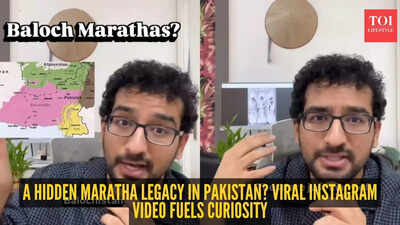
A viral video highlights a community in Balochistan claiming Maratha ancestry, tracing their roots to soldiers captured after the Third Battle of Panipat in 1761. The community reportedly maintains traditions like Haldi ceremonies and uses the word 'Aai' for mother, sparking online discussions about cultural survival and historical connections.
What if someone told you that a community in Balochistan believes its roots go back to the Marathas of India? Sounds surprising, almost unbelievable. Yet that’s the story currently doing the rounds online after a content creator shared a video on Instagram, and people haven’t stopped talking about it.In the video, the creator explains how he randomly came across an organisation called Maratha Kaumi Etihad while researching communities in Balochistan. The name alone made him pause. Marathas? In Balochistan? That curiosity pushed him to look deeper, and what began as casual research slowly turned into a fascinating historical trail.
According to him, the story links back to the Third Battle of Panipat in 1761.
After the Marathas were defeated by Afghan ruler Ahmad Shah Abdali, several Maratha soldiers were reportedly taken captive. Over time, some of these prisoners were moved to regions that are now part of Balochistan, where they settled and became part of local society.Years turned into generations. Political borders changed. Faiths changed too. But the video suggests that culture has a strange way of staying alive, even when everything else shifts.
The creator points out traditions that still feel unmistakably familiar to Maharashtrian culture. Haldi ceremonies during weddings. Entering a new home with a rice ritual. And the word Aai used for mother - a small detail, but one that instantly resonated with many viewers. These customs, he says, continue among families who believe they descend from Maratha ancestors.The clip quickly went viral. And soon, the comments section became its own little history forum mixed with humour and personal memories.Some users said this wasn’t entirely shocking. One person mentioned that Maharashtrian families have long existed in Karachi as well, sharing a story about relatives whose ancestors later moved to Thane during Partition. Another commenter gently corrected the pronunciation debate online: it’s Aai, not Aay.Then came an unexpected cultural throwback. A user claimed that the 1944 Marathi film Ramshastri once ran to packed audiences in Balochistan’s princely state of Kalat - proof that cultural connections between regions were once far more fluid than we imagine today.Others spoke about modern ties. One comment suggested that during the Maratha reservation protests in India, people identifying as Bugti Marathas in Pakistan showed support online, proudly adding “Maratha” to their names and expressing a desire to stay connected to their roots.And because no viral moment is complete without internet humour, one comment stole the show: “We got Baloch Marathis before GTA 6.” It perfectly captured the mix of disbelief and amusement people felt while reading about the discovery.Of course, historians may question parts of the story. Documentation from centuries ago isn’t always clear, and migration histories rarely follow neat timelines. But the conversation has sparked curiosity about how communities travel through time — carrying pieces of identity with them.Sometimes history doesn’t disappear. It survives quietly in rituals, words, and everyday habits passed down without much explanation. And sometimes, all it takes is one unexpected video for people to notice those forgotten connections again.






 English (US) ·