

 1 hour ago
6
1 hour ago
6
ARTICLE AD BOX

Anxiety, loneliness, desire and everything else that Anne Frank has common with Gen Z and Alpha
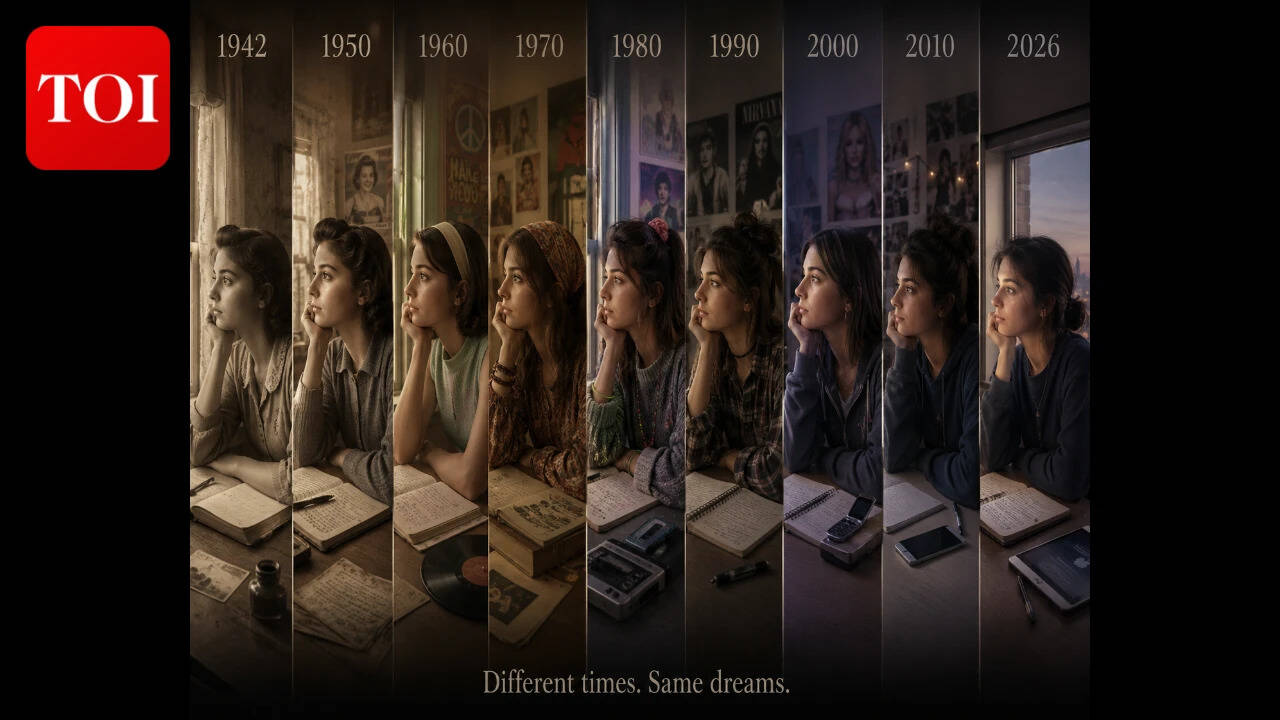
The world was at war in 1942. The world is at war in 2026. The world was fighting fascism in the 1940s. The world is fighting fascism in 2026. Teenagers were falling in love in the 1940s.
Teenagers are falling in love now. The gamut of emotions that hits any adolescent at the tricky and tender age of 13 was hitting Anne Frank, in Amsterdam, in the midst of World War II. Anxiety-ridden 13-year-olds are struggling to vocabularize what they feel right about now. The more things change, the more they remain the same.Here’s an example. This happened 84 years ago, on June 14, 1942. Two days after her 13th birthday, Anne Frank made her first substantial entry in a red-and-white checkered autograph book she had received as a gift.
She wrote about her cat Moortje, her classmates, and the presents she had received, including sweets, games, books, and a camera obscura. It was the kind of diary entry millions of teenagers have written across generations: ordinary, curious, and filled with the details that seem important only to a young person living through them.What Anne could not have known at that time was that within weeks her family would go into hiding in a concealed annex in Amsterdam to escape Nazi persecution. And that an ordinary teenager, that she was at the time, writing about school and birthday gifts would soon become one of history’s most famous chroniclers of war, fear, and survival. As much about ordinary teenage anxieties. But there’s nothing ordinary about teenage anxiety, is it?Anne Frank’s diary is compelling even in 2026, and will continue to be for generations to come.
There are some things that are eternal. Like the emotional upheaval of our teen years. It’s felt with equal intensity all over the world, and cuts across any socio-economic strata. Today. The Diary of a Young Girl (also known as The Diary of Anne Frank) is not simply known for its historical significance. It is the startling familiarity of her emotional world that grips every generation; because it feels like Anne was our friend, and like she wrote this diary yesterday.
The contents of her diary encapsulates the burst of emotions that every teenager still struggles with. Because that’s how it’s meant to be.Anne worried about friendships, argued with her parents, developed crushes, struggled with loneliness, and questioned her own identity. Something we all did in our teenage years. Things that teenagers are still feeling at this moment. Anne’s diary is our reminder that while historical circumstances may change dramatically, the emotional landscape of adolescence remains remarkably constant.
There’s some sort of solace in that thought.
We all read books because we desperately want to feel someone before us has felt exactly as we do. For a century, The Diary of a Young Girl has soothed souls all over the world because it’s a study of resilience. A testament to the therapeutic power of writing, and a reminder that the struggles of growing up connect generations separated by decades, cultures, and circumstances.

What Anne Frank could not have known during her first diary entry was that within weeks her family would go into hiding to escape Nazi persecution.
“Paper has more patience than people”
One of Anne Frank’s most famous observations remains one of the most insightful descriptions of journaling ever written: “Because paper has more patience than people.” Deceptively simple, but the line captures a truth that modern psychology has confirmed. Adolescence is a period of intense emotional change. Teenagers experience shifting identities, social pressures, romantic confusion, and growing self-awareness, often all at once.
While they may desperately want to be understood, they frequently find that adults offer advice when they want empathy, while peers may not always have the emotional capacity to listen.A diary offers something different. A diary doesn’t judge. A diary doesn’t interrupt. It does not become impatient, distracted, or even critical. The blank page simply receives whatever is placed upon it. The blank page, in our uber digital age may make us anxious, but Anne tells us that it’s the most freeing agent for teenagers.Modern neuroscience explains why this matters. When people experience anxiety, emotional centres in the brain become highly active, making thoughts feel overwhelming and difficult to manage. Penning it down helps organise these emotions into language. Feelings that exist as vague fears or emotional storms are transformed into narratives with structure and meaning. Psychologists often describe this process as “naming and taming” emotions.
To put it simply, once emotions are named and articulated, they become easier to understand and regulate; making a teenager understand herself better.

The blank page, in our uber digital age may make us anxious, but Anne tells us that a diary is the most freeing agent for teenagers.
Kitty was the first teen therapist
For today’s teenagers, this may be more important than ever. Young people are growing up in a digital culture that rewards performance far more than authenticity. Social media platforms encourage the presentation of polished identities rather than messy realities.
Vulnerability becomes risky because everything can be shared, judged, and commented upon.Anne solved this problem by creating “Kitty,” the imaginary friend to whom she addressed her diary. Through Kitty, she built a private space where she could express thoughts she felt unable to share elsewhere. In many ways, her diary became a precursor to modern conversations about mental health, emotional processing, and the need for safe spaces where young people can be completely honest.Although Anne lived through one of the darkest periods in modern history, much of her diary concerns subjects that would be familiar to teenagers today. She wrote about friendships, crushes, romantic feelings, family tensions, and her desire to be understood. These concerns might seem trivial when placed beside the horrors of the Holocaust, but they reveal something important about human development. Even in extraordinary circumstances, adolescence remains adolescence.Like countless teenagers before and after her, Anne experienced the exhilaration and confusion of first love. Her growing relationship with Peter van Pels offered companionship, comfort, and emotional intimacy during a period of profound isolation. Her descriptions of affection, longing, and uncertainty feel strikingly contemporary because they reflect developmental experiences that transcend time and place.She also documented her frequent conflicts with her mother, Edith Frank. These tensions were not simply products of life in confinement. They reflected the universal adolescent struggle for independence and self-definition. Anne wanted to be recognised as an individual with her own opinions and judgments. Her famous declaration that people can tell you to keep quiet but cannot stop you from having your own opinion reflects a developmental milestone that psychologists call cognitive autonomy these days: the emergence of an independent inner voice.
For Gen Z and Gen Alpha, brought up in a completely digital world, autonomy is a familiar word too. The digital world may have made discovering our true selves difficult – but the urge to discover our true selves is an evolutionary need in human beings. Our ability to discover our own selves as constantly changing and evolving human beings is what keeps us sane.
Psychologists studying adolescent resilience have argued that Anne’s focus on ordinary teenage concerns may actually have helped protect her mental wellbeing.
For Anne too, this was not rebellion for rebellion’s sake. Every generation of teenagers has navigated this process.
Push against parental authority, questioning established assumptions, and experimenting with new identities. Through this friction, we have all gradually constructed a sense of self.The restored and uncensored portions of Anne’s diary further reveal the complexity of her development. They contain reflections on sexuality, bodily changes, romantic attraction, and personal aspirations. These passages, added later in her diary, make her more recognisably human.
They show a teenager wrestling with curiosity, desire, morality, and self-understanding in ways that remain entirely familiar.Psychologists studying adolescent resilience have argued that Anne’s focus on ordinary teenage concerns may actually have helped protect her mental wellbeing. By continuing to think about friendships, family dynamics, and personal growth, she preserved a sense of normality amid extraordinary danger.
Her ability to remain engaged with the everyday business of becoming a young adult served as a buffer against the trauma surrounding her.The parallels between Anne’s experience and modern adolescence become particularly visible when we examine the effects of isolation. During the COVID-19 pandemic, millions of young people experienced prolonged confinement, disrupted schooling, and reduced face-to-face contact with friends.
Studies found significant impacts on social and emotional development, including increased loneliness, anxiety, and difficulties in maintaining interpersonal connections.Many teenagers turned inward during this period, spending long hours reflecting on their identities and emotional lives. In some respects, this mirrors Anne’s intense self-examination within the walls of the Secret Annex.But at the same time, it is important not to draw false equivalencies.
Pandemic lockdowns were public health measures designed to protect lives, and young people retained access to technology, entertainment, and communication tools. Anne and her family lived under the constant threat of discovery, arrest, and death. Their confinement was enforced by a genocidal regime rather than a temporary public health emergency.
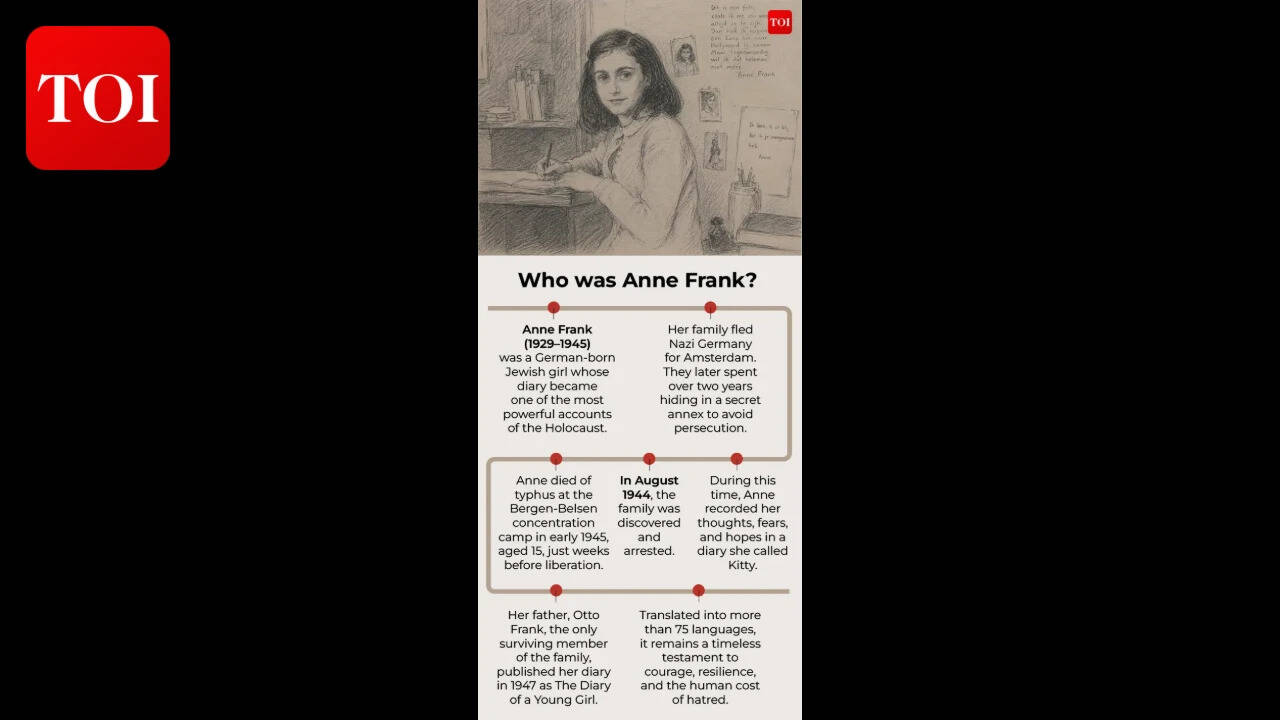
Who was Anne Frank?
Nature always heals
Recognising these differences does not diminish contemporary anxiety though.
Instead, it highlights both the unique horror of Anne’s circumstances and the extraordinary resilience she demonstrated.One of the most moving aspects of Anne’s diary is the comfort she found in nature despite being largely cut off from it. Looking through an attic window at the sky and a chestnut tree, she discovered moments of peace and perspective. Her famous reflection that the best remedy for fear, loneliness, and unhappiness is to go outside and be alone with nature continues to resonate because it anticipates insights now supported by psychological research.
Therapies that incorporate nature, mindfulness, and outdoor experiences recognise that the natural world offers stability in times of emotional turbulence. When personal lives feel chaotic, nature reminds us that larger cycles continue uninterrupted.For Anne, the tree outside her window became proof that beauty still existed. For modern teenagers facing anxiety, uncertainty, and social pressures, that lesson remains profoundly relevant.The diary also reveals another timeless truth about adolescence: parents rarely know the full extent of their children’s inner lives. After the war, when Otto Frank read Anne’s diary, he was astonished by the depth of her thoughts and the complexity of her emotional world. He realised that the daughter he thought he knew contained dimensions that had remained hidden from him.His conclusion was both simple and profound: most parents do not really know their children.
Young people will always create private inner worlds where they process experiences, test ideas, and develop identities independent of parental oversight. Even in loving families, much of this process remains invisible. That’s the way teenagers evolve. There’s nothing wrong or right about it.Anne’s diary provided a rare window into that hidden space. It revealed a teenager constantly analysing herself, questioning her behaviour, and striving to become a better person.

During his imprisonment on Robben Island, Nelson Mandela found inspiration in Anne’s writing.
A legacy that transcends history
The impact of Anne Frank’s diary extends far beyond the story of one young girl. During his imprisonment on Robben Island, Nelson Mandela found inspiration in Anne’s writing. Her words circulated among political prisoners, offering hope and helping them preserve their sense of dignity under oppression. Mandela recognised in Anne a profound faith in human worth that transcended circumstances.Similarly, Eleanor Roosevelt viewed the diary as a powerful warning against intolerance and authoritarianism.
She believed Anne’s voice could awaken the human conscience and strengthen commitments to human rights.Writers such as Philip Roth and Francine Prose have also emphasised Anne’s literary gifts. Their admiration reflects an important fact that is sometimes overlooked. Anne was not simply recording events. After hearing a radio appeal encouraging Dutch citizens to document wartime experiences, she carefully revised and edited her diary with publication in mind.
She saw herself as a writer and consciously worked to improve her craft.This ambition adds another layer to her story. Anne Frank was not merely a witness to history. She was an artist shaping her experiences into literature. More than 80 years after those first entries, her diary continues to resonate because it captures something universal about adolescence – fears, hopes, insecurities, dreams, and contradictions.Nineteen forty two or 2026. Teenagers still struggle to be understood. They still seek connection, autonomy, identity, and meaning. They still need spaces where they can express themselves honestly. Anne Frank’s enduring achievement lies in transforming those private struggles into a story that belongs to all of us.









 English (US) ·