

 1 hour ago
4
1 hour ago
4
ARTICLE AD BOX
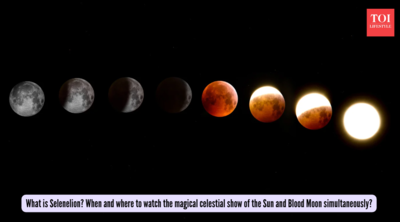
A rare 'Blood Moon' lunar eclipse on March 3, 2026, will offer a spectacular 'selenelion' for early risers in the eastern US and Canada. This optical illusion allows viewers to see both the Sun and the eclipsed Moon simultaneously due to atmospheric refraction. The event promises stunning red hues and is visible in India during the evening peak.
The sky is treating us to a celestial spectacle today where the Moon will appear as a glowing red orb known as the ‘Blood Moon,’ due to the special alignment of the Sun, Earth and the Moon in the night sky.But, apart from that what makes this event even more special is that some parts of the world will witness the Sun and the eclipsed Moon simultaneously, an event known as the selenelion.
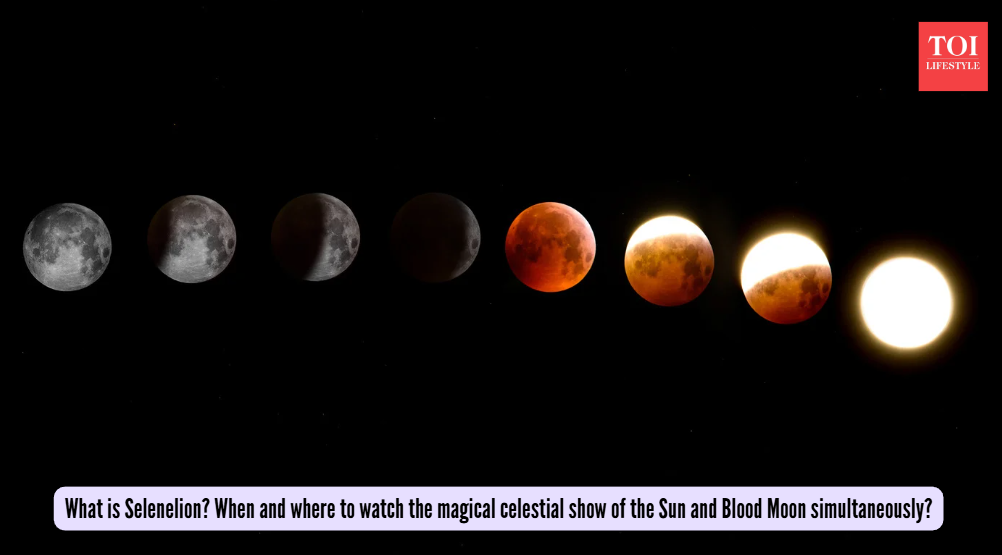
What is Selenelion? When and where to watch the magical celestial show of the Sun and Blood Moon simultaneously?
What Is a Selenelion?
A selenelion is that rare moment during a total lunar eclipse when you spot both the Sun and the eclipsed Moon above the horizon at once, sitting on opposite sides of the sky. A Selenelion occurs when the Sun and the eclipsed Moon can be seen at the same time.
Normally, this setup breaks basic geometry rules since the Earth slots perfectly between the Sun and Moon in a straight line, meaning one should vanish as the other appears.Yet, today, on March 3, 2026, this "impossible" view is happening for early risers in the eastern US and Canada, lasting one to three minutes around sunrise. Viewers there might catch the rising Sun in the east and the Blood Moon setting in the west due to this special optical quirk.
Why does a selenelion happen?
Our planet's atmosphere works like a giant lens, bending light rays from space. This refraction lifts the Sun and Moon's images higher than their true spots, keeping them visible even when they've dipped below the horizon line. For a brief span of time—about two to nine minutes during sunrise or sunset—both celestial bodies remain in view due to this effect.This is actually an illusion, no actual rule-breaking happens.
Space.com says that atmospheric refraction makes objects appear higher, turning what should be hidden into a lingering glow.During totality, the Moon dips deep into Earth's shadow, glowing red because our air scatters blue light but lets red rays through, bouncing them off the lunar surface.
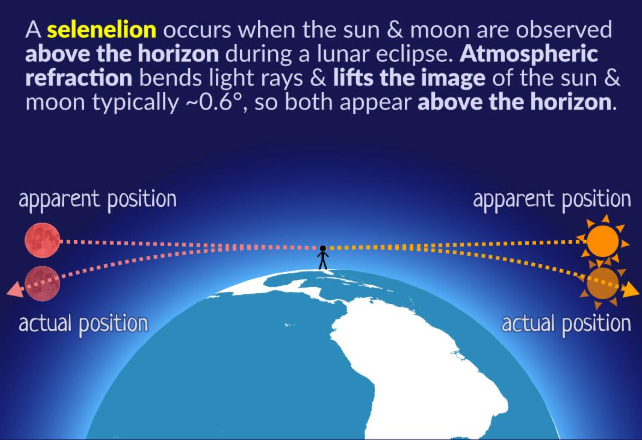
Selenelion (Photo: Flatearth.ws)
Why is this 2026 annular Lunar Eclipse special
This event is special because totality aligns well with dawn or dusk for millions. In India, the maximum eclipse hits at 5:04 PM IST, painting the Moon in dark red or orange hues.
Where will the selenelion be visible?
Eastern North America offers the best chance to witness the selenelion. The penumbral phase begins around 4:50 a.m. EST, with totality lasting from 6:04 to 7:02 a.m. EST and peaking at 6:33 a.m. According to EclipseWise, the eclipse will reach its peak at 11:34 UT, which is approximately 5:04 p.m. IST, as the Moon appears in the constellation Leo. Unlike solar eclipses, no eye protection is required for safe viewing.
The full eclipse is also visible in the western U.S., Pacific regions, Australia, and East Asia.
Viewing tips for tonight
Head to a spot with clear eastern and western horizons, avoid city lights. Binoculars amp up the coppery details on that Blood Moon. Check timeanddate.com for your local timings, as the visibility also depends on the weather. In India, catch the evening peak.








 English (US) ·