

 1 hour ago
7
1 hour ago
7
ARTICLE AD BOX
From ruling three states at a time to surviving in scattered pockets, India's Communist parties are facing an existential crisis. Exit polls suggest the Left front could lose Kerala, the only state it governs now. The question is not if the Left exists, but where it exists in India.
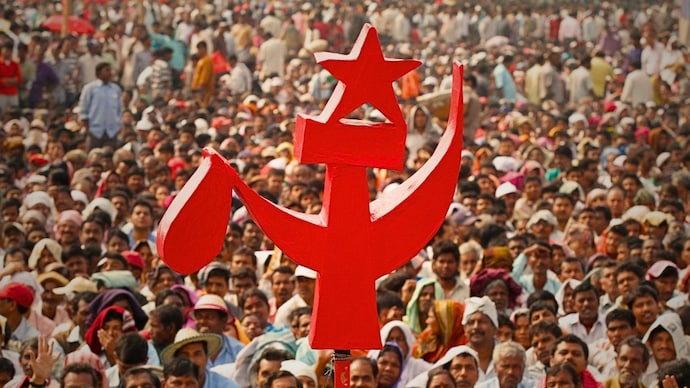
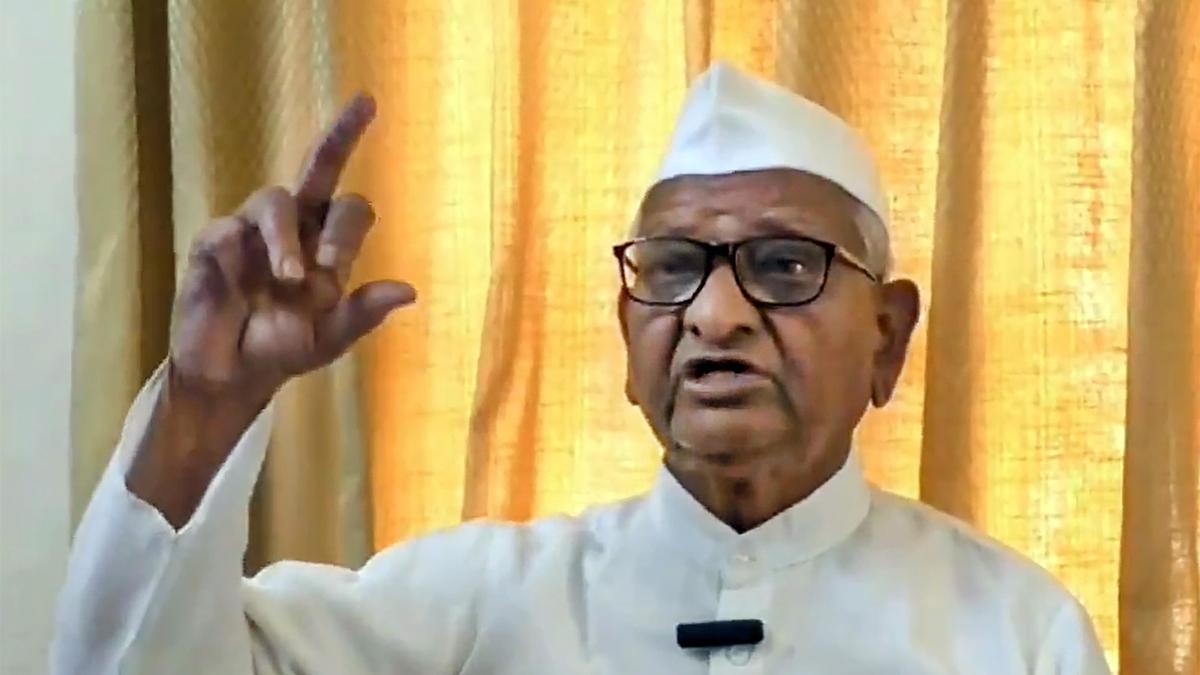
Internal disputes, splits, and ideological rigidity have weakened the Left parties in India's political landscape. (Image: Reuters)
New Delhi,UPDATED: May 1, 2026 08:27 IST
The red that painted maps of states in India for years now remains only in fragments. India's Left front, once a formidable force shaping land reforms, labour rights, and grassroots mobilisation, now finds itself confined to a few pockets of influence in the country's political landscape. The Left today remains less a ruling force and more a struggling survivor in India.
We are discussing the Left or the Communist parties because of the election in Kerala, the last state governed by the Left parties. Exit polls have predicted that the Congress-led alliance will come to power, defeating the CPI (M)-led Left Democratic Front (LDF). Exit polls come with a health warning that they often go wrong. But in the case the results on May 4 go as suggested by the exit polls, India will have no state with the Left parties in power, a first in decades.
Left Parties such as the Communist Party of India (CPI), Communist Party of India (Marxist) or CPI(M), and Communist Party of India (Marxist–Leninist) Liberation or CPI(ML) Liberation still maintain organisational relevance, but their national footprint has steadily shrunk.
The Left parties, led by the CPI(M), saw the most number of Assembly seats between 1987 and 1996. Kerala, Tripura, and West Bengal were simultaneously governed by Left parties. As far as the Lok Sabha is concerned, the Left Parties had their best showing in the 2004 election, winning over 60 seats.
Today, their strength lies less in widespread electoral success and more in isolated strongholds, alliances, and cadre-based networks.
WHY KERALA IS THE LAST BASTION OF THE COMMUNISTS
If there is one state where the Left still governs with authority, it is Kerala. The state has a long history of communist politics, dating back to 1957 when the world's first democratically elected Communist government was formed under EMS Namboodiripad. Today, the CPI(M)-led LDF, under Chief Minister Pinarayi Vijayan, continues to hold power.
The CPI(M) is seemingly losing its last bastion on May 4. Five exit polls' results show the United Democratic Front (UDF), a coalition led by the Congress in Kerala, dethroning the incumbent Chief Minister of the state, Pinarayi Vijayan, who ruled the state for the last 10 years.
In fact, Vijayan's victory in 2021 was an aberration of sorts. Kerala has had the long-running practice of voting in the LDF and UDF alternately.
Kerala's Left has sustained itself through welfare governance, strong public health and education systems, and disciplined party organisation. Even if it loses its ground in the assembly election, the CPI(M) still has chances of returning to power, going by the state's electoral history.
HOW LEFT PARTIES LOST OUT IN WEST BENGAL, TRIPURA
In West Bengal, the decline of the Left has been dramatic. A state which was once ruled by the CPI(M) for 34 years straight from 1977 to 2011 – one of the longest elected Communist governments in the world, with leaders like Jyoti Basu and Buddhadeb Bhattacharjee, who once defined governance in the state. The Left lost its political dominance with the rise of Trinamool Congress (TMC) supremo Mamata Banerjee.
Since 2011, the CPI(M) has sat on the opposition seat in the state assembly. Now, with the rise of the BJP as the principal opposition in the state – some exit polls predicting the BJP to gain a majority – the Left has almost vanished from the state's political spectrum. The election result forecast reveals that the Left parties will struggle to win even a single seat.
A similar story unfolded in Tripura. After ruling for decades, including a 25-year uninterrupted stretch by the CPI(M) under leaders like Manik Sarkar, the Left lost power in 2018. It now sits in opposition with a limited presence, attempting to rebuild its base among tribal communities and workers.
However, in both Bengal and Tripura, with a loyal support base, the Left hasn't vanished altogether. Labour and students' unions keep alive the Left gene pool.
HOW COMMUNIST PARTIES SURVIVE IN POCKETS OF BIHAR, TAMIL NADU
In Bihar, the Left survives through smaller but active formations, particularly CPI(ML) Liberation. Rooted in peasant struggles and grassroots mobilisation, the party has transitioned from insurgent origins to electoral politics. Though its legislative strength has declined in recent years, it remains visible within opposition alliances and among marginalised communities.
The CPI(ML) strength has sharply declined from 12 seats in 2020 to just two in the 243-member Assembly in 2025. The CPI(M) holds a single seat, and together they are part of the opposition Mahagathbandhan alongside the RJD and Congress.
With their vote share hovering around 2 to 3%, the Left continues to retain pockets of influence in rural areas of Bihar, particularly among Extremely Backward Classes (EBCs) and Dalit communities. Even so, its overall political weight in Bihar remains limited, reflecting a broader national pattern of shrinking electoral relevance despite sustained grassroots work.
In Tamil Nadu, Communist parties operate largely through alliances with Dravidian parties, holding a handful of seats but lacking independent influence. The CPI and the CPI(M) won four seats in the previous state assembly elections (held in 2021). This time, the DMK-led Secular Progressive Alliance (SPA) allotted five seats to the CPI and five to the CPI(M).
States like Jharkhand, Telangana, Odisha, and Maharashtra have scattered pockets of support, often limited to trade unions, farmers' groups, or specific districts rather than statewide appeal.
WHERE DOES THE LEFT, COMMUNIST OUTFITS EXIST IN INDIA?
Nationally, the Left's electoral numbers tell the story of contraction. The CPI(M)'s legislative strength is now heavily concentrated in Kerala, while CPI and CPI(ML) Liberation hold only a handful of parliamentary and assembly seats. Once central to India's political discourse, Communist parties now account for a small share of the national vote.
There are several reasons for the decline of the Left political parties. Long rules led to anti-incumbency fatigue in states like West Bengal and Tripura. Economic challenges, especially around industrialisation, eroded public support. At the same time, the rise of identity politics, regional parties, and the expansion of the BJP's footprint have squeezed the Left's traditional base. Internal splits and ideological rigidity have further weakened its adaptability. Some experts suggest that the Left couldn't woo young supporters.
Despite electoral setbacks, the Left has not disappeared completely. Its influence persists in trade unions, farmer organisations, and issue-based movements around labour rights, secularism, and welfare policies. The focus has shifted from governance to grassroots mobilisation and coalition politics. The question, then, is not whether the Left exists but where it exists. In 2026, the answer lies in Kerala's corridors of power, in scattered rural pockets of Bihar, in the remnants of Bengal and Tripura, and within networks of organised activism across the country. The story of the Left in India is no longer about dominance, but about where and how it continues to persist.
- Ends
Published By:
Avinash Kateel
Published On:
May 1, 2026 08:27 IST





 English (US) ·