

 3 hours ago
2
3 hours ago
2
ARTICLE AD BOX
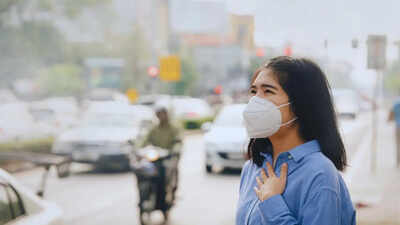
Air pollution in urban areas
One of the greatest public health problems in the world continues to be air pollution that has affected millions of people globally. Swiss air quality technology firm IQAir releases their much-anticipated global rankings every year, measuring the concentration of fine particulate matter in the air in various nations and cities.
It presents a rather somber picture of the air that we breathe.IQAir's recently released report on the global state of air quality has revealed that Pakistan has become the most polluted country in the world, measuring the concentration of PM2.5 at 67.3 micrograms per cubic meter (µg/m³). It is much higher than the annual guidelines recommended by the World Health Organization of 5 µg/m³.
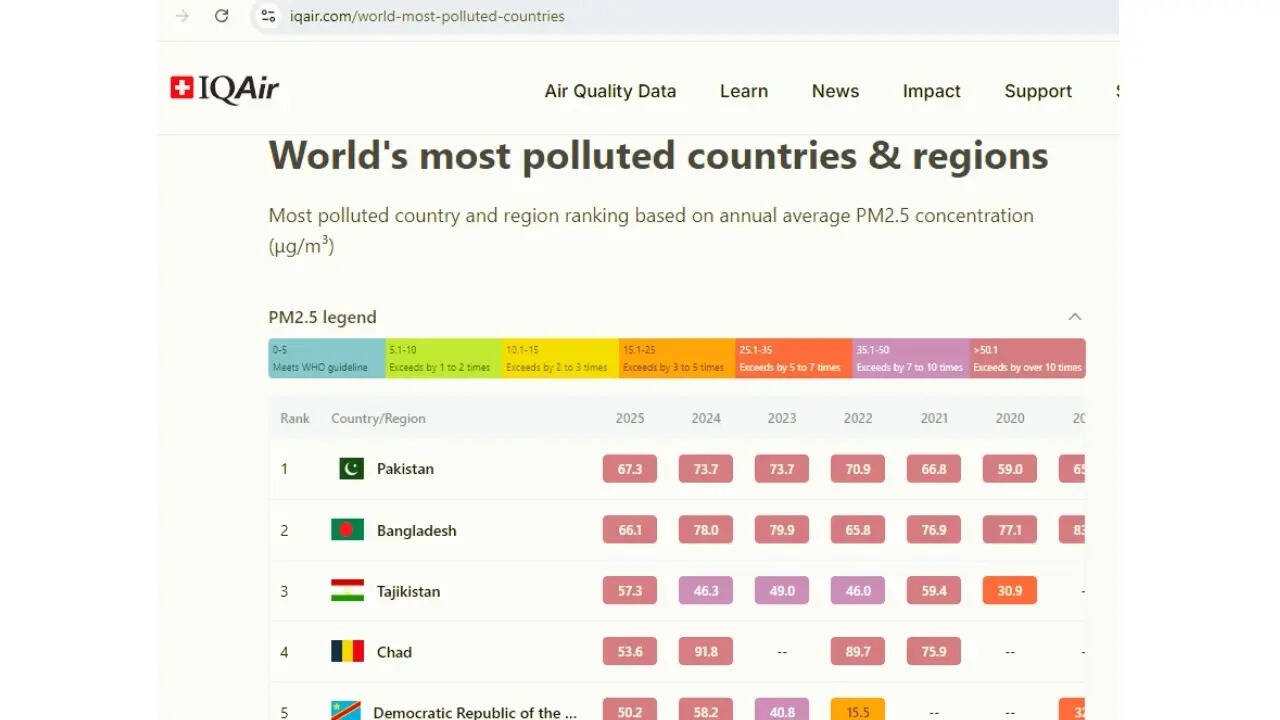
IQAir- World's most polluted countries
First on the IQAir list, Pakistan now ranks as the world's most polluted country, having PM2.5 concentrations almost 13 times higher than the World Health Organization's annual recommended safe limits.
In particular, the air pollution crisis in Pakistan becomes evident through major cities such as Lahore that regularly rank as some of the most polluted cities around the world in the winter season. Various factors including industrial emissions, traffic pollution, crop residue burning, the use of coal, and several thousand brick kilns have all contributed towards the crisis.
The smog season has shifted from being an environmental problem to a public health concern, posing problems for daily life and transport and requiring emergency actions by the government to reduce exposure.
What is PM2.5 and why is it important?
PM2.5 represents particulate matter of 2.5 micrometres or less in size. Particles this small can go into the lungs and bloodstream causing harm. Because of its serious health implications, PM2.5 has become the global benchmark used to assess air quality.
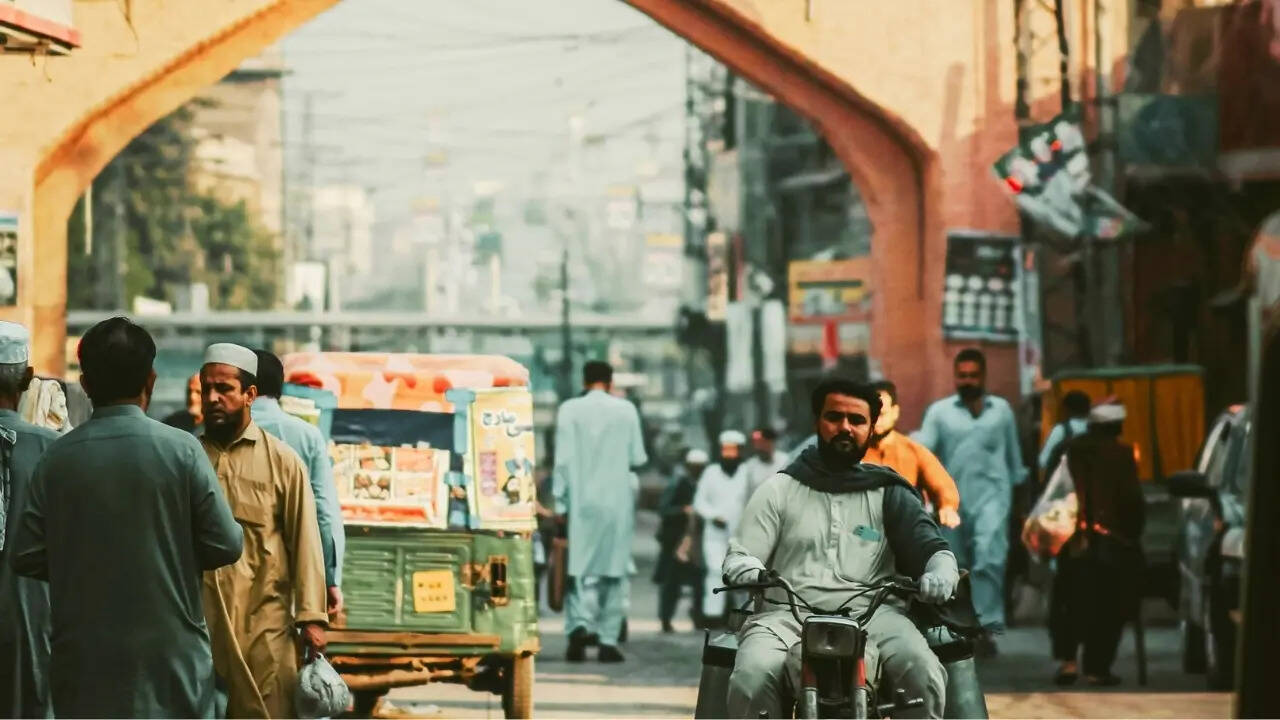
A city in Pakistan
The world's most polluted countries
Based on IQAir's rankings for annual average PM2.5 concentrations, the five most polluted countries in the world are:
- Pakistan – 67.3 µg/m³
- Bangladesh – 66.1 µg/m³
- Tajikistan – 46.3 µg/m³
- Chad – 45.4 µg/m³
- Democratic Republic of the Congo – 40.8 µg/m³
In case you happened to think about India as you read the above information, you would be right since it is the 6th most polluted country with an average annual concentration of PM2.5 particles at 38.2 µg/m³.
It seems that South Asian countries still continue to struggle with some of the worst air qualities in the world.
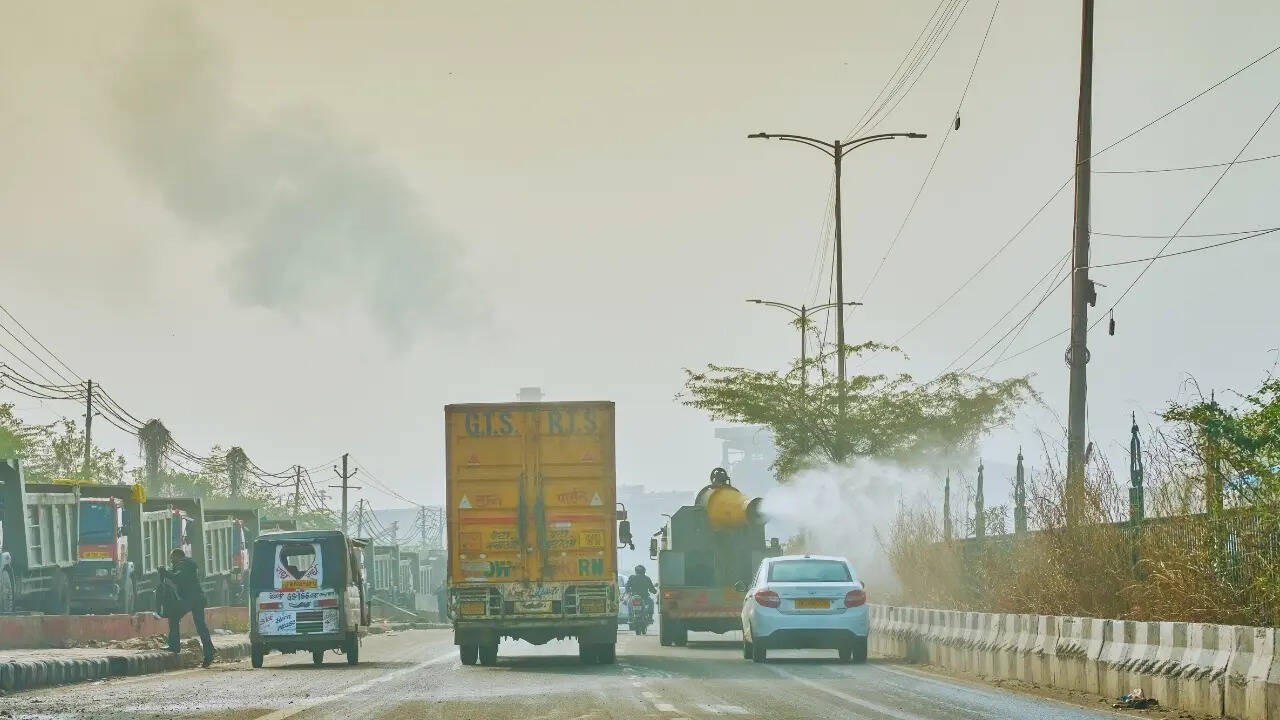
Air pollution in India
What makes these countries so polluted?
Unlike many other problems, air pollution is caused by a number of different aspects rather than just one thing.Some of the major contributors include:
- Vehicle emissions from rapidly growing urban populations.
- Coal-fired power plants and industrial activities.
- Construction dust and unpaved roads.
- Agricultural practices such as crop residue burning.
- Household use of biomass fuels for cooking and heating.
- Seasonal weather patterns that trap pollutants close to the ground.
The high population density, along with industrial growth, adverse climatic conditions, and other factors, contributes to the presence of extended periods of poor air quality in South Asia.
A worldwide issue
Perhaps the most worrying revelation made by IQAir's study is the fact that air pollution affects more than just a few select countries.According to the findings presented by IQAir, as many as 91% of the countries examined by the organization failed to meet WHO's annual PM2.5 guideline value.
Why travellers should pay attention
Air quality is becoming a growing factor in travel considerations. Individuals visiting places which suffer from pollution may experience limited visibility, delays in flights, and even health risks, especially those who have asthma, heart diseases, or any other respiratory illnesses.Travellers can decrease exposure through checking air quality information prior to travel, minimizing outdoor activities on days when the pollution levels are high, drinking more water, and wearing high-quality masks.
The road forward
Pollution in the air is known to be a silent crisis since one cannot feel the impact of it easily. Nevertheless, the impacts of this crisis are tremendous and range from health issues to economic challenges.The latest list compiled by IQAir reminds us that there is still much that we need to do in order to improve air quality in the world.Until that happens, the ability to breathe clean air will remain out of reach for many people across the globe.








 English (US) ·