

 1 week ago
13
1 week ago
13
ARTICLE AD BOX
Last Updated:June 08, 2026, 08:51 IST
As the Iran-US war completes 100 days, the conflict has strengthened some players, exposed others, and turned into a test of endurance across the Middle East.


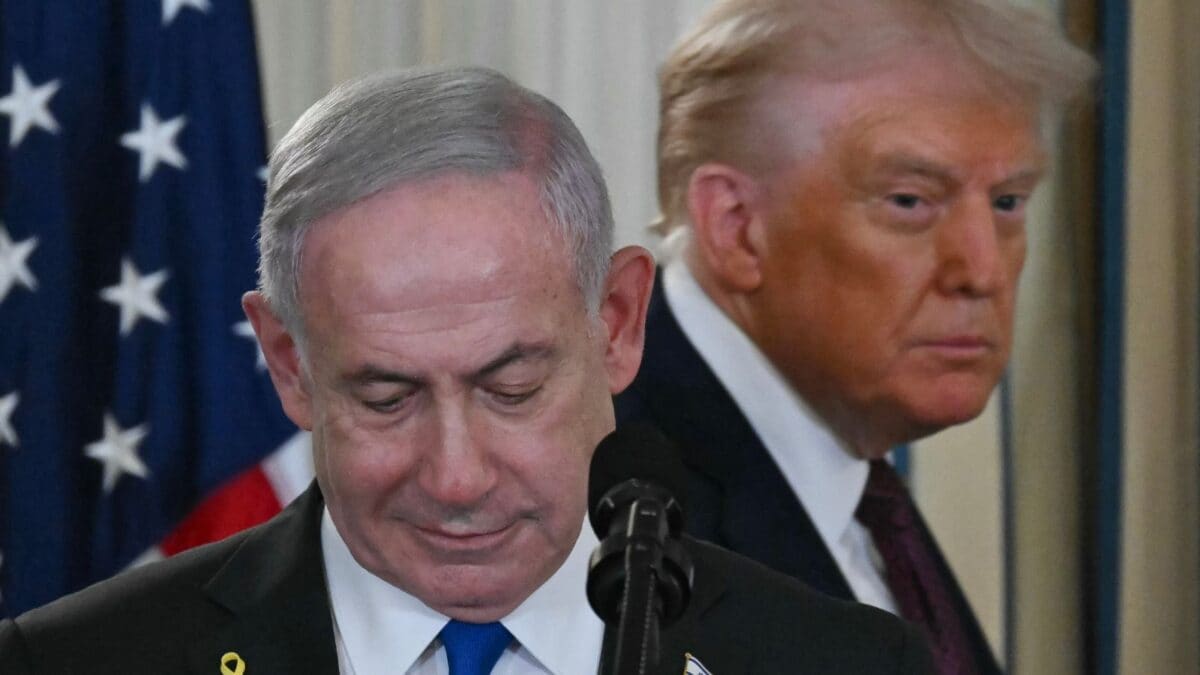
US President Donald Trump had said the Iran operation would be over “quickly”. Instead, the conflict has entered its fourth month. (AI generated image)
The US-Israel war on Iran has completed 100 days without producing the quick outcome Washington had initially projected or the decisive strategic victory Israel was seeking.
What began as a military campaign against Iran’s air defences, missile launchers, naval assets and nuclear-linked facilities has now expanded into a wider regional crisis. Lebanon has become an active front, Gulf countries have been pulled into the economic and security fallout, the Strait of Hormuz has turned into a pressure point for global energy markets, and diplomacy is stuck in a partial deadlock.
The war began with the killing of Iranian Supreme Leader Ayatollah Ali Khamenei and other top officials in the opening US-Israeli strikes. US President Donald Trump had said the operation would be over “quickly". Instead, the conflict has entered its fourth month.
There is no clean winner yet. But the first 100 days have produced a clearer picture of who has gained leverage, who has suffered the heaviest losses and who remains trapped in an uncertain middle ground.
Winners
Iran’s Regime
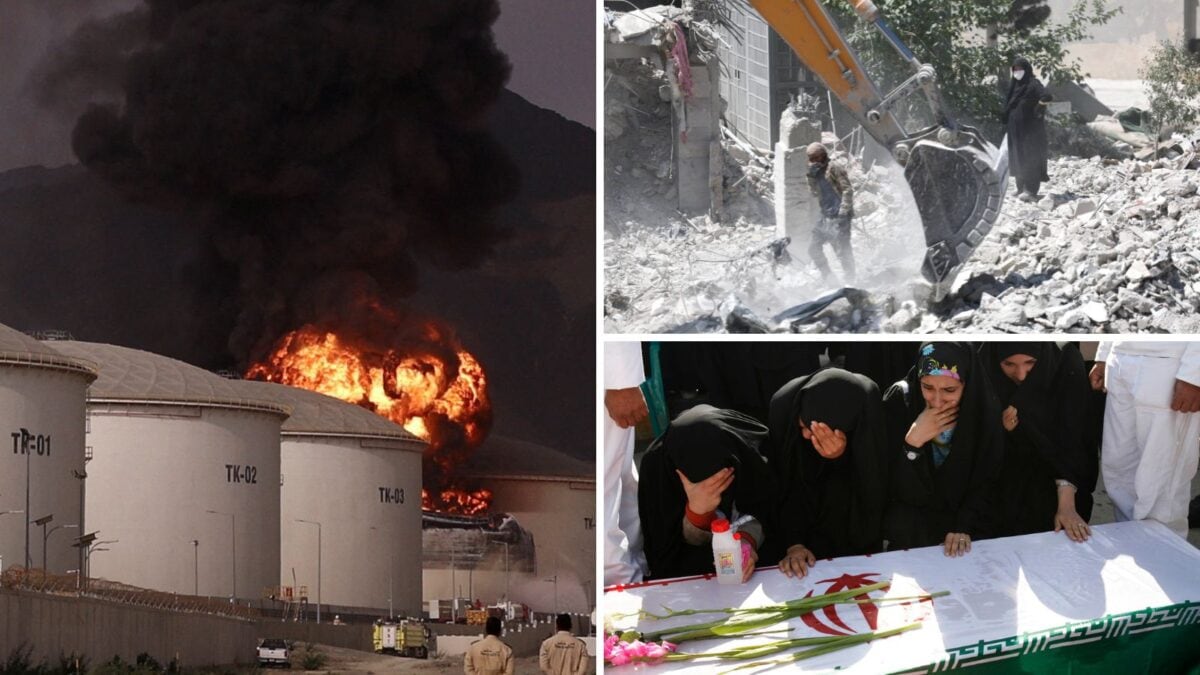
Iran has suffered heavy military, economic and infrastructural damage. Its critical energy exports have been hit after the US imposed a blockade on ships entering and exiting Iranian ports on April 13. Its military assets have been targeted, and the pressure on its already weak economy has intensified.
Yet the regime itself remains standing. That is why Iran appears, at least politically, to be one of the early beneficiaries of the war. The initial US-Israeli campaign raised expectations that Tehran could be pushed towards collapse. Trump also used sharper rhetoric earlier about Iranians taking over the government. But 100 days later, Washington’s public objective has narrowed to stopping Iran’s ability to acquire a nuclear weapon.
Iran has also managed to impose costs on its adversaries. It has damaged US bases and missile defence assets in the region, forced the US, Israel and Gulf states to use slow-to-replenish offensive and defensive munitions, and turned the Strait of Hormuz into a strategic bargaining tool.
The nuclear issue remains unresolved. Rafael Grossi, the chief of the International Atomic Energy Agency, said access for inspectors remains limited. Senior Iranian cleric Mohammad-Mehdi Hosseini Hamedani also reiterated that Tehran’s nuclear technology and uranium enrichment cannot be negotiated away.
That does not mean Iran is winning militarily. Its infrastructure has been damaged and its economy is under further pressure. But it has survived the opening shock, kept regional pressure alive through multiple fronts, and retained leverage at the negotiating table.
China
China has not entered the war, but it has gained from the diplomatic opening created by US strain in the region.
Beijing buys around 90 per cent of Iran’s crude oil exports and is Tehran’s most important trading partner. That gives Chinese President Xi Jinping influence over Iran at a time when Washington is struggling to secure a diplomatic breakthrough.
The crisis has also raised questions about the US role as the dominant Middle East security guarantor. As Gulf facilities face Iranian attacks and the Strait of Hormuz remains unstable, China has been able to present itself as a more measured diplomatic player.
Allen Carlson, a Chinese foreign policy expert and associate professor of government at Cornell University, told Newsweek: “In terms of optics over the past three weeks, Xi has been able to present himself as a kingmaker on the world stage."
He added: “Xi and China are in a stronger position, especially when it’s implicitly contrasted with the strategic incoherence of Washington’s approach to the world today."
The gain is more diplomatic than economic, with China still facing uncertainty over the wider market impact of the war.
Ukraine
Ukraine has gained unexpected relevance in the Iran war because of its experience in countering Iranian-designed Shahed drones used by Russia. As the US and Gulf partners face Iranian missile and drone attacks, Kyiv’s battlefield expertise has become more valuable beyond the Ukraine front.
Zev Faintuch, head of research and intelligence at Global Guardian, told Newsweek that Ukraine has emerged with “new partnerships in the Gulf" and fresh interest in Washington because of its drone and counter-drone capabilities.
“So it has new cards with Washington, and it has new benefactors in the Gulf. Ukraine has come out stronger from the war. It probably means that Russia has come out of this a bit weaker," he said.
Losers
United States
The United States has inflicted damage on Iran, but the war has become far more expensive and politically complicated than a short operation.
The conflict cost Washington an estimated $11.3 billion in the first six days alone. A few Democrat leaders have said the war could cost between $630 billion and $1 trillion, Al Jazeera reported. Fuel costs have added tens of billions more because of disrupted oil supplies.
The political pressure is also visible at home. The US House voted 215-208 on June 3 to restrict Trump’s authority to continue the war. Trump has continued to describe the campaign as a success, saying the US is seeing “great success" and that Iran is “in no position" to develop nuclear weapons. But stalled talks, limited IAEA access and the continuing Lebanon front have made that claim harder to translate into a clear strategic outcome.
A senior adviser to Iran’s leadership said “the ball is in Trump’s court", pointing to Tehran’s demand for concessions, including the release of billions of dollars in frozen assets. Iran has also linked any agreement to a wider regional ceasefire, especially in Lebanon.
Energy Markets
Energy markets are among the clearest losers because the war has already disrupted shipping and trade routes linked to the Strait of Hormuz.
A form of blockade, increased naval presence and military activity in the area have affected shipping and created uncertainty for traders and shipping companies.
That disruption has fed directly into oil prices. Brent crude rose to around $96 a barrel from its pre-war level of $71, with prices above $100 becoming a regular feature during the conflict.
Russell Shor, senior market analyst for FXCM, told Newsweek that the biggest impact has not been a complete supply breakdown but the higher geopolitical risk premium attached to oil prices.
“The energy market has certainly felt the impact of the war, but the bigger challenge has been uncertainty rather than a complete breakdown in supply," Shor said.
For consumers, governments and airlines, the result has been higher costs. For global markets, the war has shown how quickly a regional conflict can hit energy prices when a critical shipping route like Hormuz is disrupted.
Lebanon
Lebanon is one of the clearest losers because it has become a major battlefield in a war being driven largely by Iran, Hezbollah, Israel and the US.
The Lebanon front opened on March 2, when Iran-backed Hezbollah fired rockets from Lebanese territory into northern Israel. Israel responded with strikes against Hezbollah positions in southern Lebanon. Since then, the fighting has moved deeper into Lebanon.
This has left Lebanon trapped between Hezbollah’s role in the war and Israel’s military response. The Lebanese government does not control Hezbollah, but Lebanese civilians and infrastructure are paying the price. The war has killed at least 3,500 people in Lebanon, injured more than 10,600 and displaced more than 1 million. Damage has been estimated at at least $3 billion.
Israel’s Position – Too Early To Call
Israel has made visible military gains, but the wider outcome of the war remains unsettled.
One of Israel’s aims was to weaken Iran’s proxy network, especially Hezbollah in Lebanon. On that front, it has inflicted significant damage. Zev Faintuch, head of research and intelligence at Global Guardian, told Newsweek that Israel has hit Iran’s proxies hard, including eliminating up to 3,000 Hezbollah fighters since the war began.
But that has not ended the Lebanon front. The US, Israel and Lebanon issued a joint statement on June 3 calling for a ceasefire if Hezbollah stopped attacks and withdrew its fighters south of the Litani River. However, Hezbollah and Iranian leaders have continued to reject ceasefire terms that do not meet their demands.
Israel’s broader objective was also to damage Iran’s nuclear capacity and weaken the regime’s regional reach. Faintuch said Israel’s aim “may have been a bit lofty" in trying to create conditions for Iranians to rise up. “That hasn’t happened yet, but that’s something that’s going to be judged on a much longer time scale," he said.
So Who Is Winning After 100 Days?
The first 100 days show that the war has produced relative winners and clear losers, but not a final victor.
The war has moved from the promise of a quick military campaign to a long contest of endurance. After 100 days, the real question is no longer only who is winning. It is whether any side can still define what winning would look like.
Handpicked stories, in your inbox
A newsletter with the best of our journalism
About the Author
Karishma Jain, Chief Sub Editor at News18.com, writes and edits opinion pieces on a variety of subjects, including Indian politics and policy, culture and the arts, technology and social change. Follo...Read More
News world Who Is Winning The US-Iran War? 100 Days On, The Answer Is Complicated
Disclaimer: Comments reflect users’ views, not News18’s. Please keep discussions respectful and constructive. Abusive, defamatory, or illegal comments will be removed. News18 may disable any comment at its discretion. By posting, you agree to our Terms of Use and Privacy Policy.
Read More





 English (US) ·