

 1 hour ago
4
1 hour ago
4
ARTICLE AD BOX
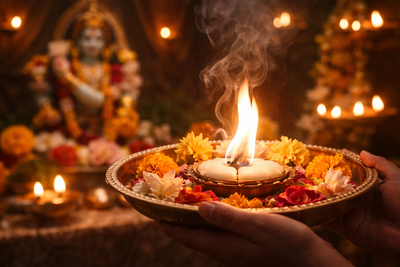
In almost every Hindu prayer ritual, one moment stands out in quiet brilliance: the lighting of camphor during aarti. The flame rises swiftly, bright and steady, and then disappears without leaving a trace.
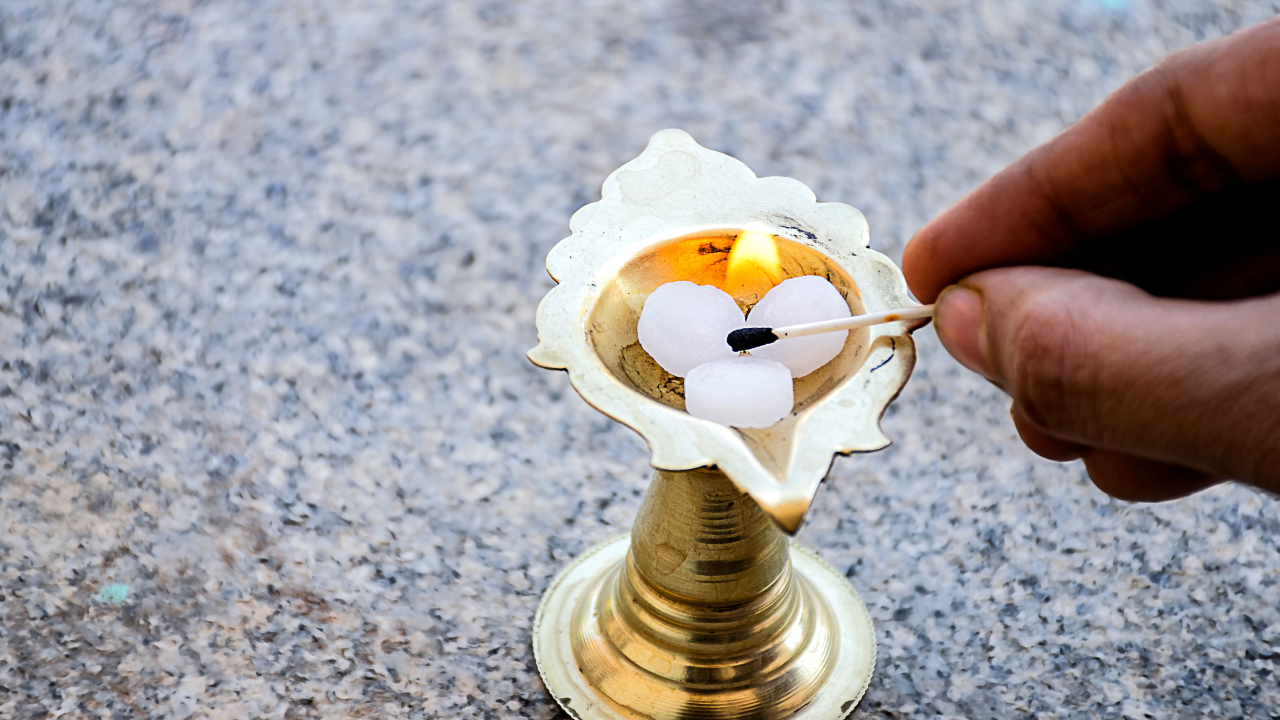
No smoke or residue. Just light, warmth, and a lingering sense of completion. This is no coincidence. Camphor is not chosen randomly for aarti. In Hindu tradition, nothing placed before the divine is ordinary, and camphor carries layers of meaning that go far beyond fragrance or flame. Scroll down to read more. Why camphor and not oil or wax? Unlike oil lamps or candles, camphor burns completely. When lit, it transforms directly from solid to flame and vanishes into the air.
There is no ash, no wick, no remains. This rare quality is precisely why camphor holds such spiritual significance. In ritual symbolism, camphor represents the ego, the sense of “I” that clings, accumulates, and seeks recognition. When camphor is offered in aarti, it symbolises the burning away of ego in the presence of the divine. Nothing is held back. Nothing is preserved. The offering is total. The devotee, in essence, says, “Let me dissolve as completely as this flame.”
Light as awareness, not decoration

The camphor flame is intensely bright yet gentle. It does not flicker excessively or smoke. In Hindu philosophy, light is not merely illumination; it is awareness. Ignorance is darkness; knowledge is light. During aarti, when the camphor flame is waved before the deity, it is believed to awaken inner clarity. The ritual reminds the devotee that spiritual awakening is not about the accumulation of information but the removal of ignorance.
The light is external, but the message is internal. The symbolism of self-sacrifice Camphor does not melt before burning; it sacrifices itself instantly. This quality makes it a powerful metaphor for tyaga, or selfless offering. In everyday life, sacrifice is often conditional. We give, but we expect. Camphor teaches a different lesson: true offering leaves nothing behind. When placed before the divine, it does not ask to be remembered. It simply gives.

That is why camphor is associated with purity of intention. It represents action performed without attachment to outcome, a core principle of Hindu spiritual thought. Why camphor is offered at the end of worship Aarti is usually performed at the conclusion of a prayer or ritual. This timing is intentional. After chanting, offerings, and silent prayer, camphor marks the moment of surrender. It symbolises that after all effort, all words, and all desires, the final act is letting go.
The devotee releases control and places trust in the divine order. The flame’s disappearance reminds us that even devotion must dissolve into humility. The sensory impact on the mind Beyond symbolism, camphor has a noticeable effect on the senses. Its aroma is sharp, cooling, and cleansing. Traditionally, it is believed to purify the surrounding environment, but it also does something subtle: it shifts attention.
The sudden brightness of the flame draws focus. The fragrance clears mental heaviness. For a few moments, the mind becomes still, attentive, and present. In modern terms, this is a moment of mindfulness.
Ancient rituals understood what neuroscience now confirms: sensory focus calms the mind. Why devotees pass their hands over the flame After aarti, devotees cup their hands over the camphor flame and touch their eyes or forehead.
This gesture is symbolic, and it does not favour superstition.
It represents the conscious act of receiving wisdom. The flame that stood before the divine is now brought inward, into vision, thought, and awareness. It is a reminder to carry clarity beyond the prayer space and into daily life. A lesson in impermanence Perhaps the deepest symbolism of camphor lies in its impermanence. The flame burns bright, but briefly.
It reminds us that life itself is transient. By offering camphor, the devotee acknowledges this truth, not with fear, but with acceptance. The ritual gently teaches detachment, urging us to live fully while realising that nothing truly belongs to us. More than a ritual flame Camphor in aarti is not just about tradition. It is a philosophy expressed through fire. It teaches surrender without loss, light without pride, and devotion without expectation. In a world that constantly asks us to hold on, camphor teaches the opposite. Sometimes, the most sacred act is to burn, quietly, completely, and without leaving a trace.









 English (US) ·