

 3 hours ago
4
3 hours ago
4
ARTICLE AD BOX
History often celebrates specialists, kings who ruled, warriors who fought, thinkers who reasoned. Mythology, however, remembers something rarer: figures who function like forces of nature, impossible to reduce to a single role.
Krishna belongs unmistakably to that second realm.He was not confined to divinity alone, nor neatly defined as strategist, lover, philosopher, or trickster. He moved through all of these identities fluidly, sometimes embodying several at once, without contradiction or collapse. Child and cosmic guide. Diplomat and disruptor. Detached philosopher and deeply involved friend. Krishna resisted categorisation because his purpose was never to fit a role, it was to respond to the moment.
His brilliance did not lie in moral rigidity or spotless perfection, but in range. In the ability to shift tone without losing truth, to engage the world fully without being consumed by it. Scroll down to read more.Warrior without a weapon
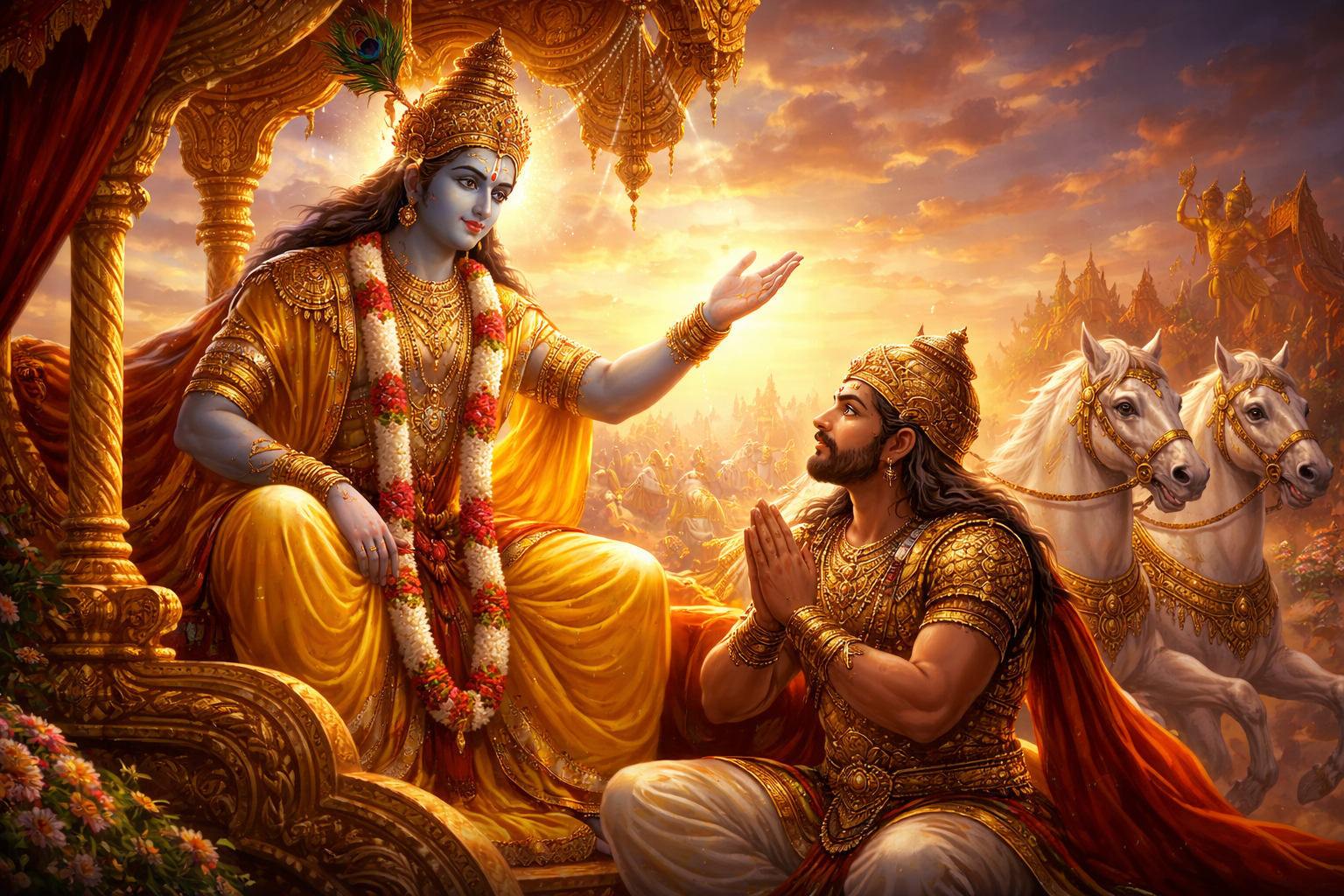
On the battlefield of Kurukshetra, Krishna chose not to fight. No weapons or armour. Yet the war turns around his presence. Strategy, morale, psychological clarity - all flow through him.
He understands timing better than brute strength. He knows when to provoke, when to withdraw, and when silence itself becomes an act of power. This wasn’t weakness; it was mastery over ego. The greatest control he exercised was over himself.A philosopher who spoke to everyone The wisdom of the Bhagavad Gita is not abstract philosophy meant only for monks. It was delivered to a conflicted warrior moments before battle.
Krishna didn’t preach escape from life; he taught engagement without entanglement. His ideas worked for kings, soldiers, householders, and seekers alike. Few thinkers have managed to speak across social roles without diluting depth. Krishna did, calmly, clearly, and without moral panic.
Lover who understood emotion

In Vrindavan, Krishna is not a king or guide, he is human emotion at its most alive. Playful, teasing, deeply present.
His bond with Radha and the gopis is not about possession or permanence but about intensity and truth of feeling. He understands that devotion is not fear-based obedience but joy-driven connection. Emotional intelligence wasn’t an afterthought for him; it was central to how he related to the world.King who ruled without attachment As the ruler of Dwarka, Krishna lived amidst wealth, politics, and power. Yet nothing owned him.
He built alliances, resolved disputes, and governed decisively, while remaining inwardly free. He showed that spirituality does not require renunciation of responsibility, only renunciation of obsession. Power, in his hands, became service rather than self-extension.Strategist who played the long game
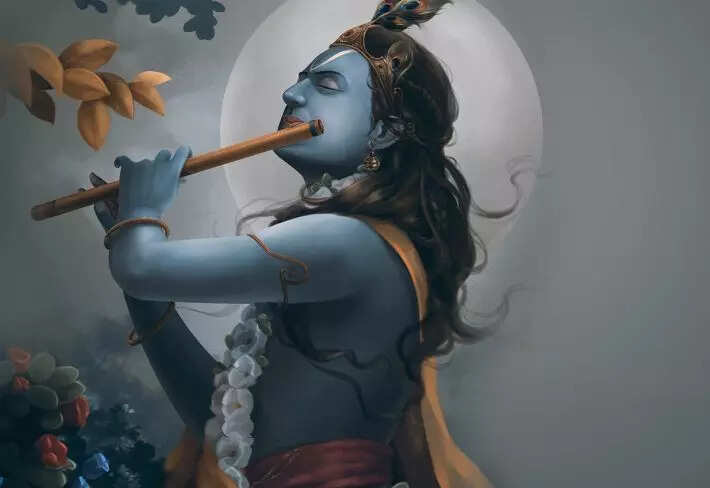
Krishna is often misunderstood as manipulative. In truth, he was strategic in a morally complex world. He knew that rigid ideals collapse in real life.
His choices were not about personal purity but about restoring balance. He adapted ethics to context without abandoning values, a skill desperately relevant even today. Krishna understood that doing the right thing is sometimes about outcomes, not optics.A teacher who never forced beliefWhat makes Krishna exceptional is restraint. He never demanded belief or obedience. Even after delivering the Gita, he steps back and tells Arjuna to reflect, decide, and choose.
It is guidance without coercion. Authority without fear. He places trust in free will rather than submission. That confidence - allowing others to arrive at truth on their own instead of being pulled toward it, is rare in any age and rarer still in figures of power.
Divine, yet deeply lived

Krishna laughs, schemes, loves, withdraws, advises, and occasionally breaks hearts, including his own. His divinity never erased lived experience; it absorbed it.
He didn’t model sainthood as distance from life, but as fluency within it. Joy and sorrow, success and loss, detachment and love - he carried all of it without fragmentation, moving through contradiction with an ease that made wholeness look natural.
The all-rounder legacy Krishna’s relevance lies in his flexibility. He teaches that one can be strong without cruelty, wise without arrogance, emotional without weakness, and spiritual without escape.
In a world obsessed with single identities and fixed labels, Krishna remains fluid, responding to each moment as it demands. That is what makes him the ultimate all-rounder. Not because he did everything, but because he understood everything.Why he was the ultimate all-rounder Krishna earns that title because he never outsourced any part of life to someone else. He didn’t hand emotion to poets, ethics to philosophers, action to warriors, or power to kings.
He carried all of it himself, simultaneously, without letting one dimension dominate the rest. Where most people become distorted by a single role, Krishna stayed proportionate. His strength did not cancel tenderness. His intelligence did not weaken compassion.
His detachment did not dilute responsibility. He understood that life is not lived in compartments, and mastery comes from integration. That ability to remain whole while operating in every sphere is what makes Krishna not just versatile, but complete.








 English (US) ·