

 1 hour ago
6
1 hour ago
6
ARTICLE AD BOX
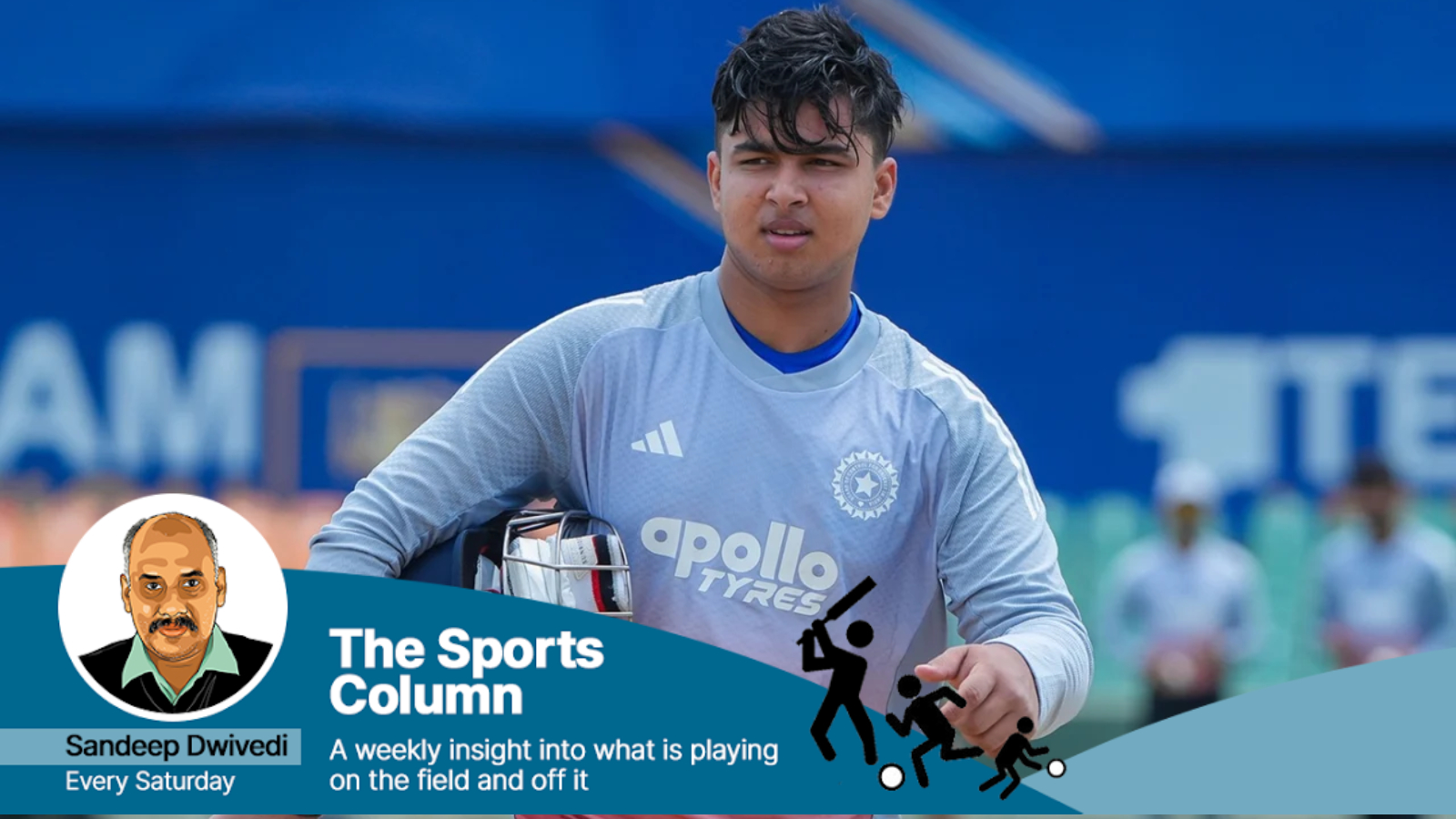 Sooryavanshi wasn't part of the Indian team that lost to Ireland in the tour opener. He will likely play the next game. (SLC)
6 min readJun 27, 2026 07:06 AM IST First published on: Jun 27, 2026 at 07:06 AM IST
Vaibhav Sooryavanshi is 15, on his first tour with the Indian senior team, and everyone is asking the same question: will the high backlift survive tall pacers in English conditions? Before you worry, there’s a YouTube playlist worth putting together. Not of his sixes. Of something less discussed.
Starting with a video story of village-cricket in rural Bihar. It’s from a time when the world hadn’t heard of Sooryavanshi. He’s barely 13, looks much younger. He is playing a game at Barauni refinery ground, a 50 km bumpy road ride from his home in Samastipur. It’s the final of the Shyamlal Sinha junior tournament – as the colourful banner says – where he has hit 218 from 121 balls in his team’s total of 289 in 40 overs.
The report starts with the anchor, in that delightfully Chand Nawab tone, showering unadulterated praise on the “chhota bacha” who he is blown away by. He repeats words like “Karaamat pe karaamat kar rahe ho”, “century pe century diye ja rahe ho”, “taabad-tod batting kar rahe ho”. They all mean broadly the same – the boy is killing it.
ALSO READ | Sooryavanshi storm brews: tickets rush, windows under threat, Irish rattled
Soon the camera is on little Aryan, the captain of the losing side. He goes beyond the usual Sooryavanshi cliches. “Shuru mai woh neeche neeche khel raha tha… pakad pakad ke khel raha tha …last mai maara bhi … koi galat shot nahi khela, koi rash shot nahi khela. (At the start of his innings he mostly played along the ground strokes, he was holding back but he started hitting later but he had no rash strokes),” he says. It is clear, little Aryan has read the Sooryavanshi book beyond the cover.
There is someone at the higher echelons of Indian cricket who would agree with Aryan. That is because he, too, has followed Sooryavanshi and the few others like him, those who not only promised much but also delivered on it.
Vikram Rathour, back in the 90s, played his first ODI as Sachin Tendulkar’s opening partner. As a batting coach he has worked closely with Virat Kohli, Shubman Gill and now has been on Sooryavanshi’s side at Rajasthan Royals. To say Rathour has seen every Indian batting prodigy since the 1990s more closely than anyone else, would not be an exaggeration.
He is on a podcast hosted by the 2006 u-19 world champion batsman Taruwar Kohli. Rathour has coached this Kohli too. They talk serious cricket.
After calling Sooryavanshi the cleanest and most consistent hitter he has ever seen, he talks about a dimension of his batting that many don’t see. Here he mentions the IPL semifinal against Gujarat Titans, where at one point he had scored just 34 in 21 balls – a virtual crawl by the little smasher’s standards – but finished with a 53-ball 96.
“The wicket was up and down .. He showed a completely different side of his batting. Took time, took it deep. Once he was set he started hitting,” he says, sounding not too different from little Aryan at the Barauni refinery ground many years back.
https://www.youtube.com/watch?v=L_QPTOWxXx0
It’s Rathour’s details on how Sooryavanshi avoided second-season IPL blues that gives an idea about the teenager’s batting flexibility. It starts with the Rajasthan Royals training staff being aware that their star player would be on the target of rival bowlers. They knew they would try to exploit his high backlift. But Sooryavanshi had it in him to deal with this challenge.
“We knew bowlers would try bowling wide lines to him, some will bowl short or try yorkers at the start of the innings. But he was prepared for those challenges. His off-side game is better this year. So when people tried to go wide to him he started hitting them over covers and extra cover,” he says. “People tried to bowl full to him but he handled it pretty well. In between, they started bowling slow balls at him but he would change his swing. He would stop a bit and hit the ball. He is a special talent, it is this adaptability that makes him special.”
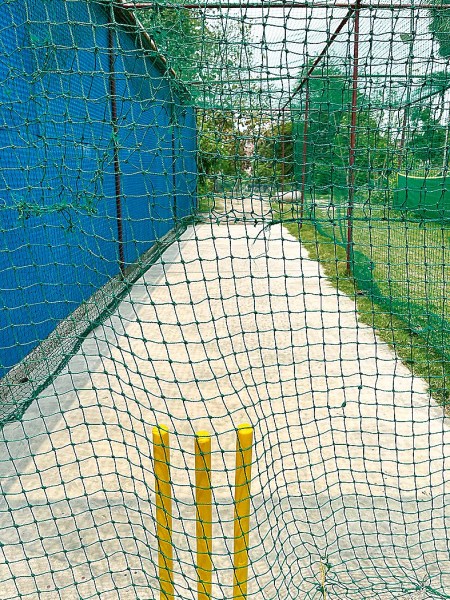 Vaibhav’s practising space adjoining his house. (Sandip G)
Another amateur vlog, a hidden gem, gives more clues about the making of a multi-dimensional player. It’s by a young man who first shows the world the route to the star’s home in Samstipur’s Tajpur village. He launches into a monologue outside the sprawling home that he says is painted in the RR colours. There is a barren plot close to it that has two pitches – one that has black soil and the other is cemented. There was also an uncle at home to explain Vaibhav’s training routine from the day he was barely 4 years old and the sacrifice of the family.
The story is similar to many Indian batting greats whose fathers were their coaches. So Sooryavanshi Sr, Sanjeev, would ask bowlers from the neighbourhood to be at the net where his son is the only batsman. As the father realised that his son needed expert coaches, he enrolled him at an academy in Patna. Coach Manish Ojha would give personal training to boys from Samastipur three days a week. The Sooryavanshi household would now have a new routine.
So thrice a week, Sooryavanshi’s mother would wake up at 4 am, cook lunch for her son and five of the bowlers who would accompany him. The entire party would stay all afternoon and early evening. Ojha had many hours to work on his pet student. The coach says he would design drills that would make him a complete player. For an entire day for close to 4-5 hours, Sooryavanshi would be asked to master one stroke at a time. So it could be cover-drive on Monday, a pull on Wednesday and lofted shots on Thursday.
Sooryavanshi wasn’t part of the Indian team that lost to Ireland in the tour opener. He will likely play the next game. In Tajpur, a mother who once woke at 4 am to cook lunch for five neighbourhood bowlers, is probably watching. She has seen this preparation up close, day after day, for years. The English conditions may be new. The challenge isn’t.


 English (US) ·